The Island and Bridge of San Bartolomeo, Rome by Corot, Jean-Baptiste-Camille
Jean-Baptiste-Camille Corot's "The Island and Bridge of San Bartolomeo, Rome," painted between 1825 and 1828, offers a tranquil glimpse into the daily life of 19th-century Rome. This oil on paper work, now at the Museum of Fine Arts, Boston, was created during Corot's formative years in Italy, where he developed his unique approach to landscape painting.
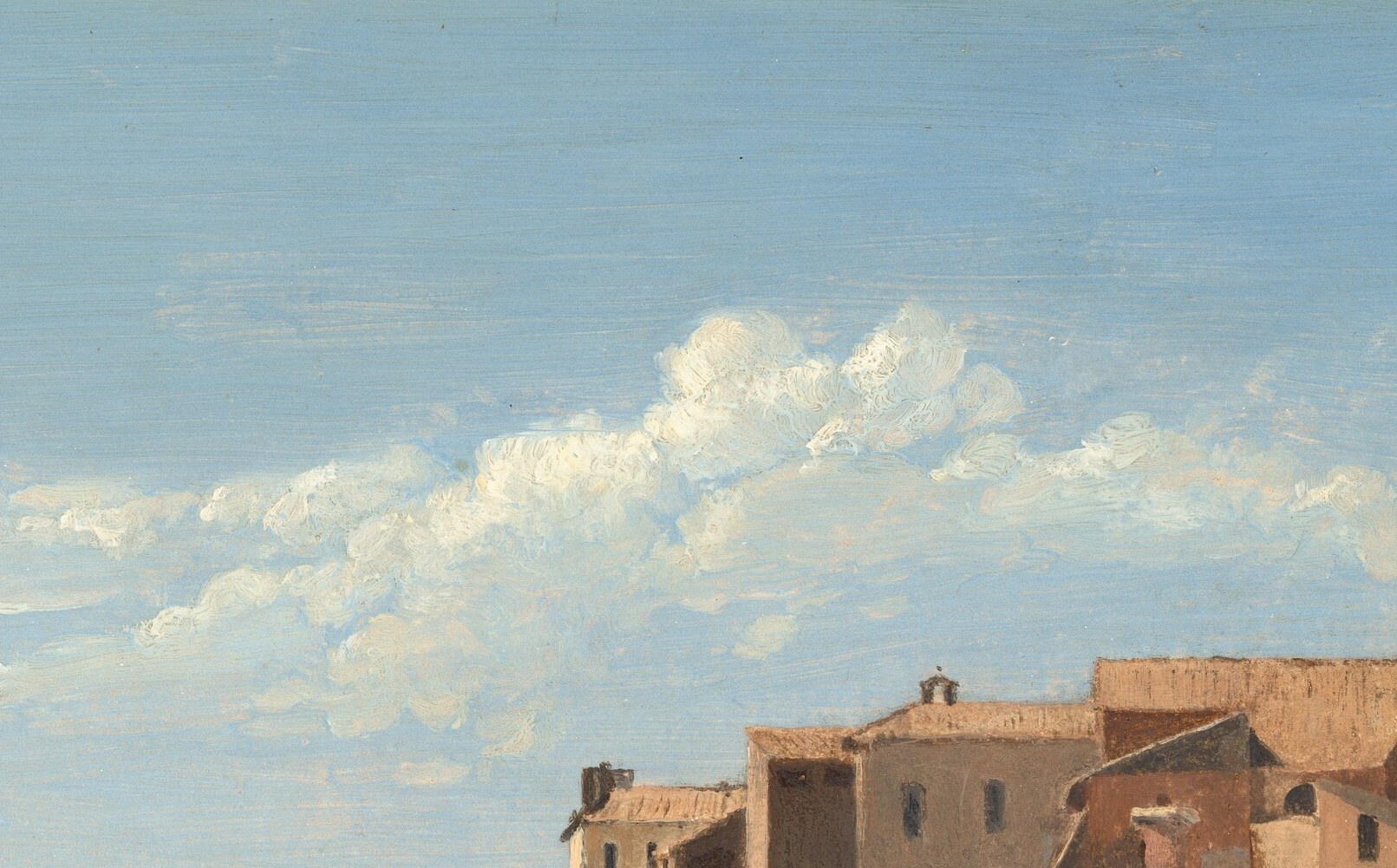
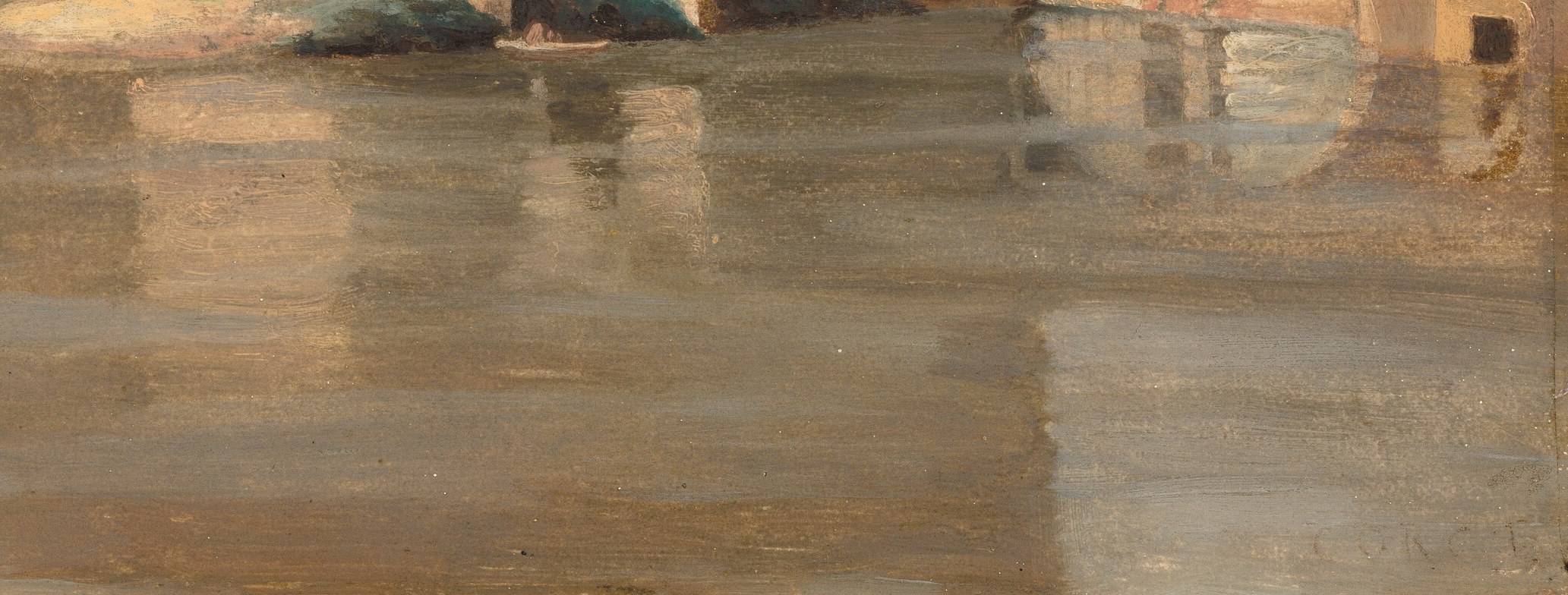
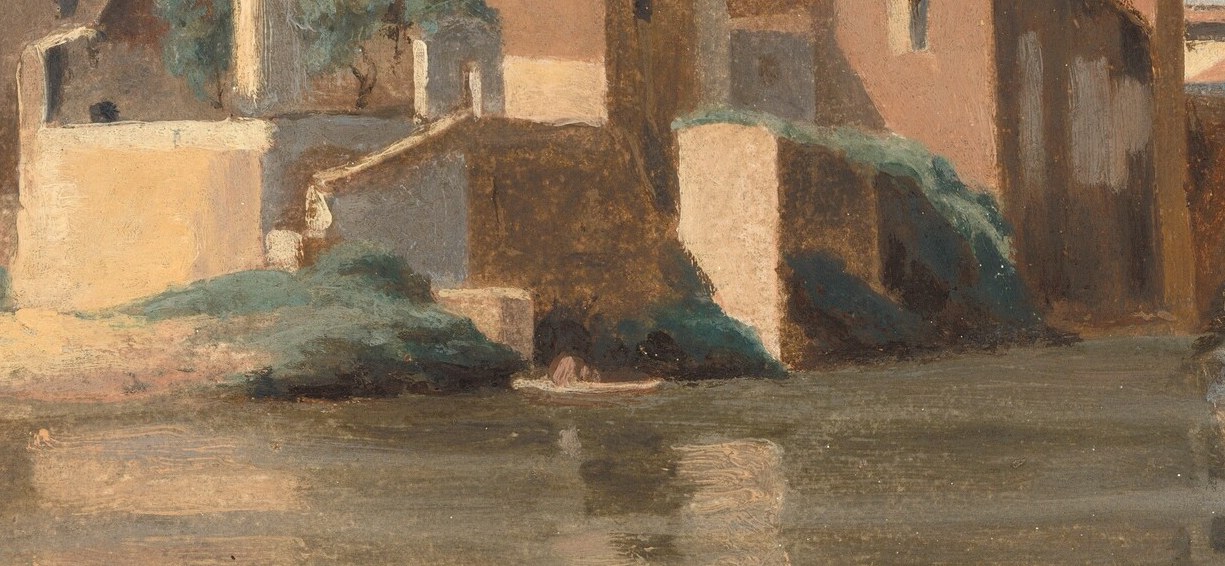
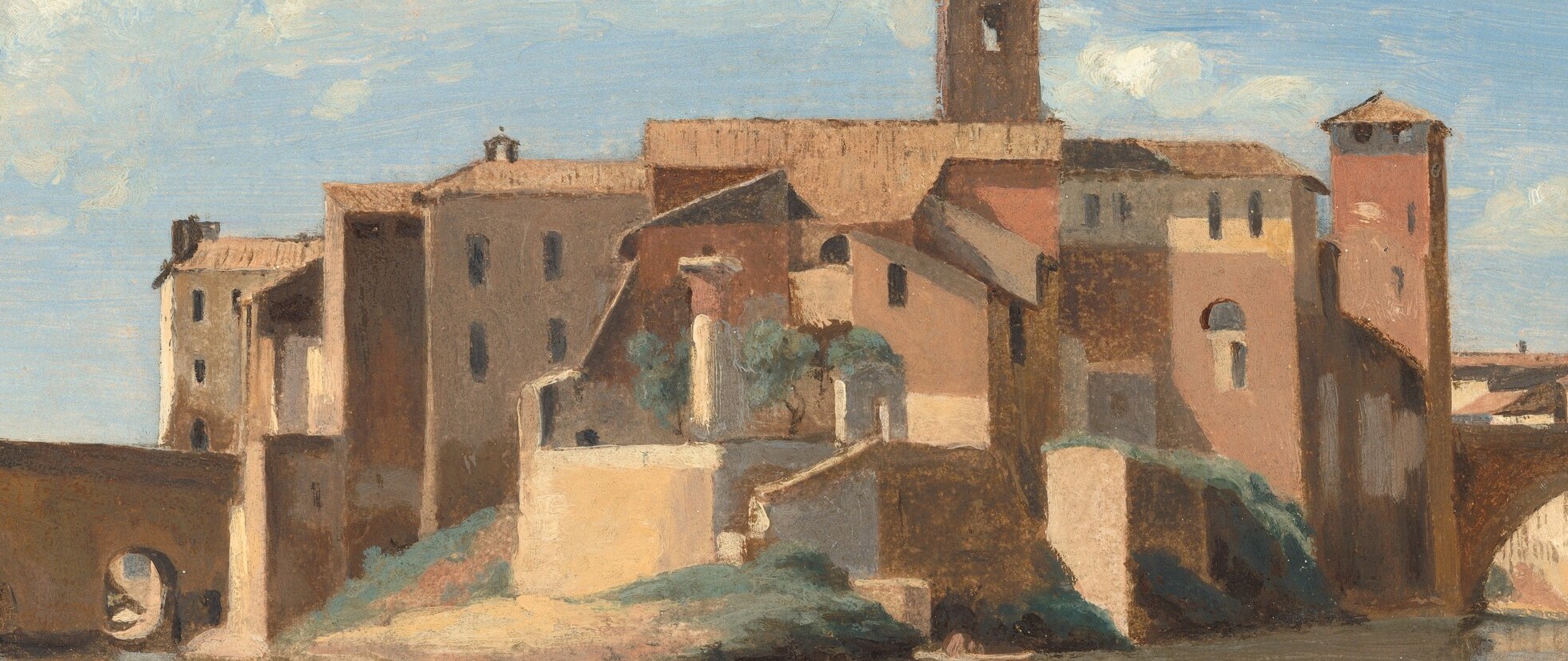
Notice how he captures the soft light reflecting on the Tiber River and the quiet dignity of the buildings nestled on the island. The ancient San Bartolomeo bridge, a central feature, is depicted with a timeless quality, connecting the city's past with its present.
Corot, a pivotal figure in French landscape painting, was known for his plein-air (outdoor) technique, which allowed him to directly observe and render the nuances of light and atmosphere. This early work showcases his move towards naturalism, bridging classical traditions with the innovations that would later influence Impressionism.
The painting invites us to pause and appreciate the quiet beauty of an ordinary Roman day, nearly two centuries ago. What details draw your eye in this historic scene?
Details
Transcript
This is Rome, in the 1820s. Along the Tiber River. The painter was French, visiting Italy to learn his craft. He painted this scene outdoors, capturing the light directly. See the old stone bridge of San Bartolomeo, still used today. And the quiet island homes that hug the water's edge. This captured a serene moment in a bustling ancient city.