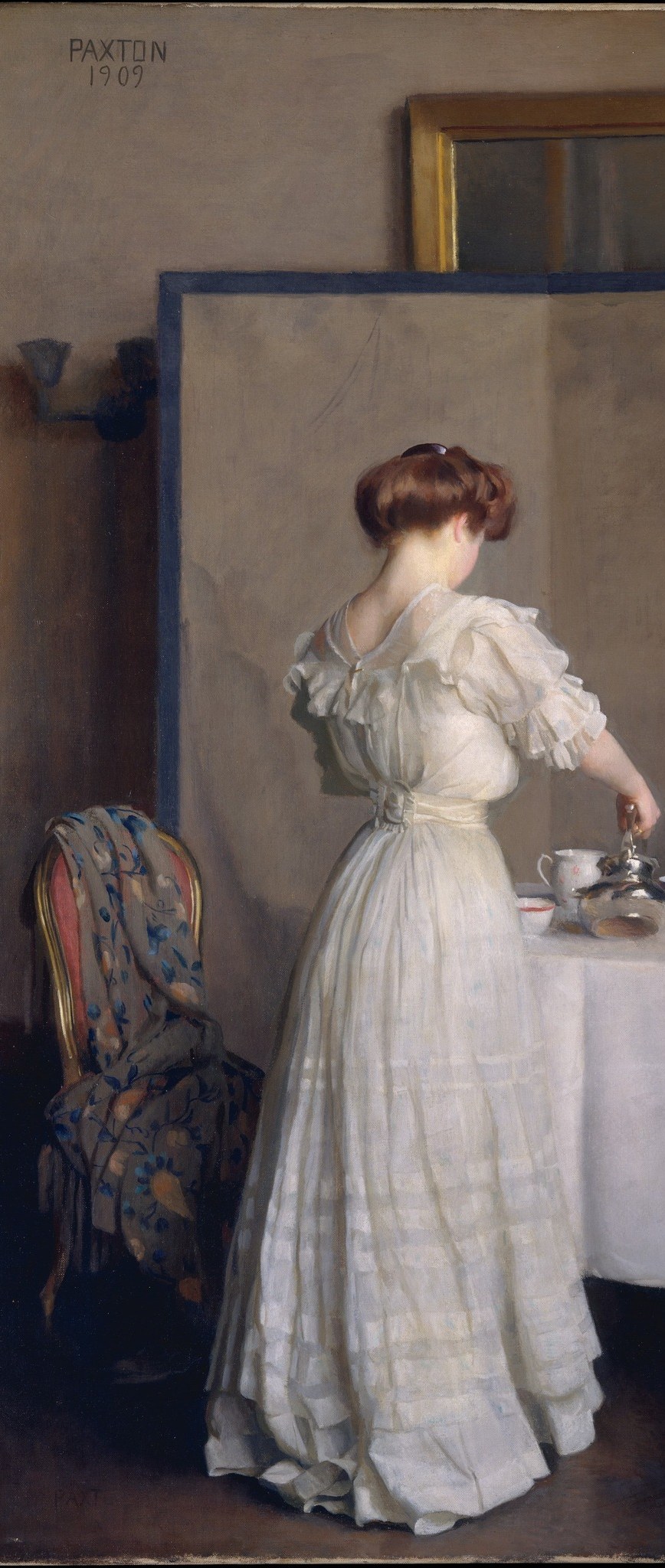
Tea Leaves by William McGregor Paxton
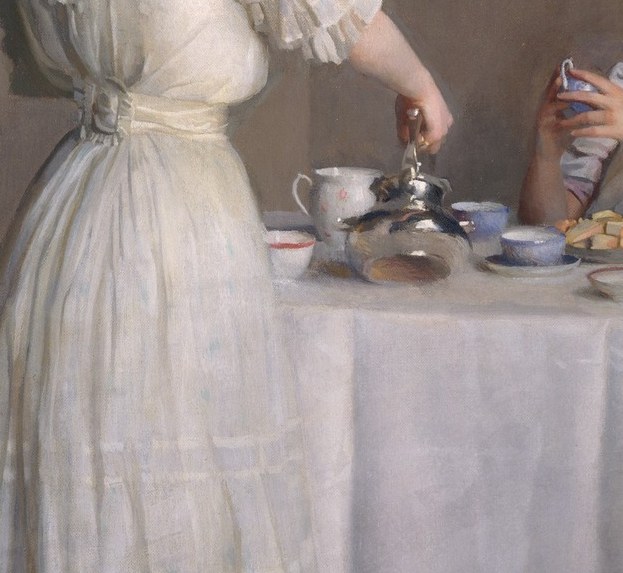
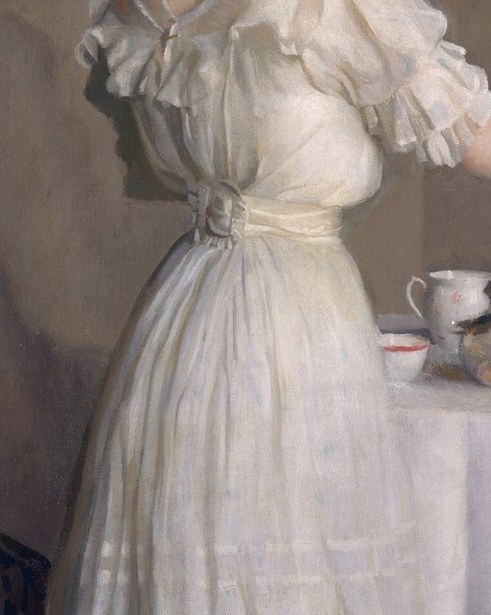
William McGregor Paxton's "Tea Leaves" (1909, Metropolitan Museum of Art) is often described simply as a genteel Boston interior. But look closer: the tea has been drunk, the cups are down to their dregs, and the hostess is pouring the very last drops onto a saucer to swirl the leaves. This is not refreshment. This is a fortune-telling ritual.
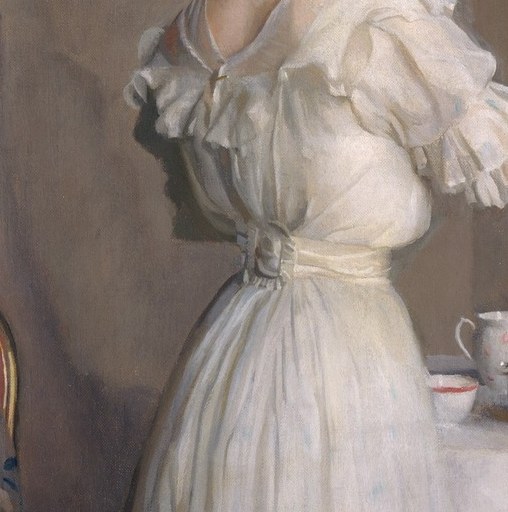
Paxton was the leading figure of the Boston School, a group of painters obsessed with light, texture, and the quiet drama of interior life. He painted his wife Elizabeth repeatedly, and the luminous white-on-white passage here, white dress against white tablecloth against sunlit white wall, was a notorious technical test he set for himself. The light flooding from the upper left is pure Boston School impressionism: warm, indoor, and almost palpable.
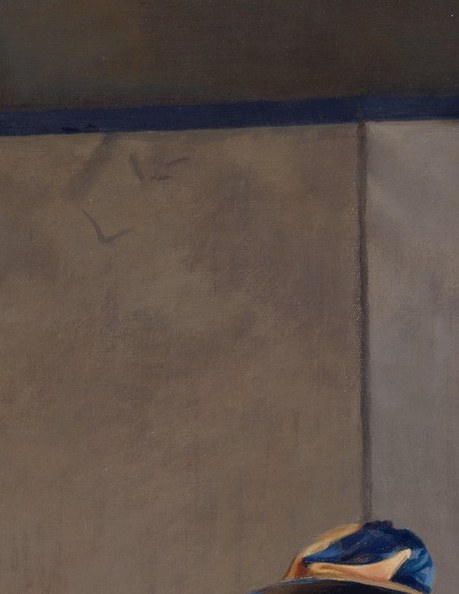
Tasseography, the reading of tea leaves, was a fashionable parlor practice among Edwardian women. The visitor's formal blue hat tells us this is a social call, but the drained cups and the hostess's careful pour tell us the real reason she came. She is waiting, with a watchful, almost vulnerable expression, to hear what the leaves will reveal about love, or money, or loss. The globe tucked into the lower-right shadow quietly insists this is a worldly, thinking household; fate here is a civilized curiosity, not superstition.
Two women, a pot of tea, and the thin line between an ordinary afternoon and a glimpse into the unknown. What would you ask the leaves?
Details
Transcript
Afternoon tea in a Boston townhouse. The hostess in white is mid-pour. But look at the seated woman's face. She is expectant, almost watchful. The tea is already drunk. The cups are nearly empty. Now the hostess pours the last drops onto a saucer. This is the moment before the fortune is read. Swirling those few leaves told an Edwardian woman what her future held.