Pawnee Indians Approaching Buffalo by Catlin, George
George Catlin, a lawyer-turned-painter, dedicated his career to documenting Native American life in the 19th century American West. His painting, *Pawnee Indians Approaching Buffalo*, created in 1861 and now at the Smithsonian American Art Museum, captures a moment from a vital cultural practice.
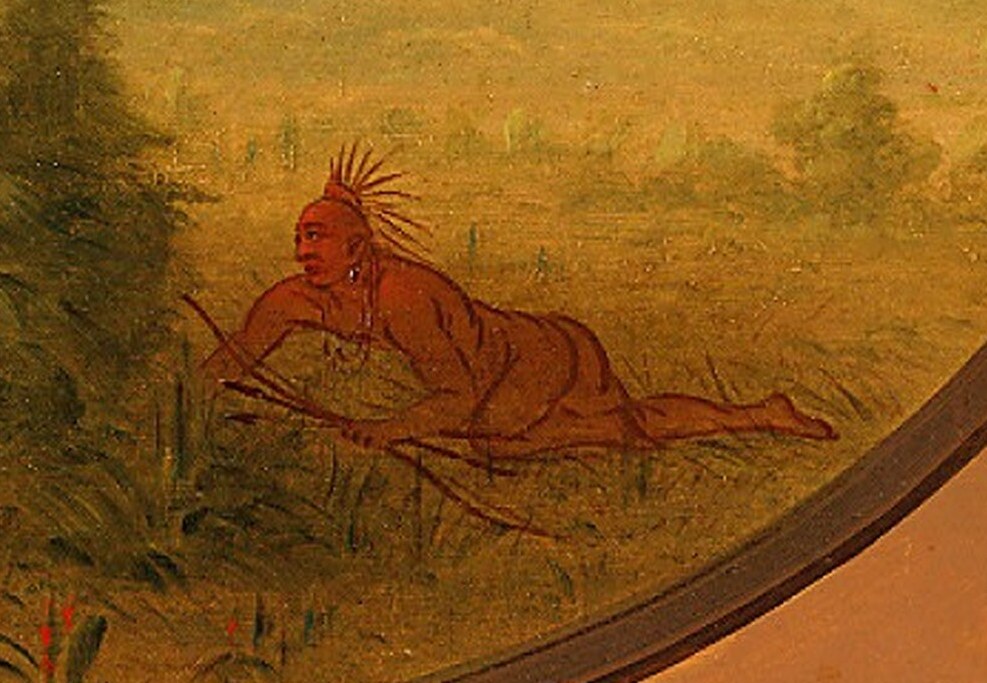
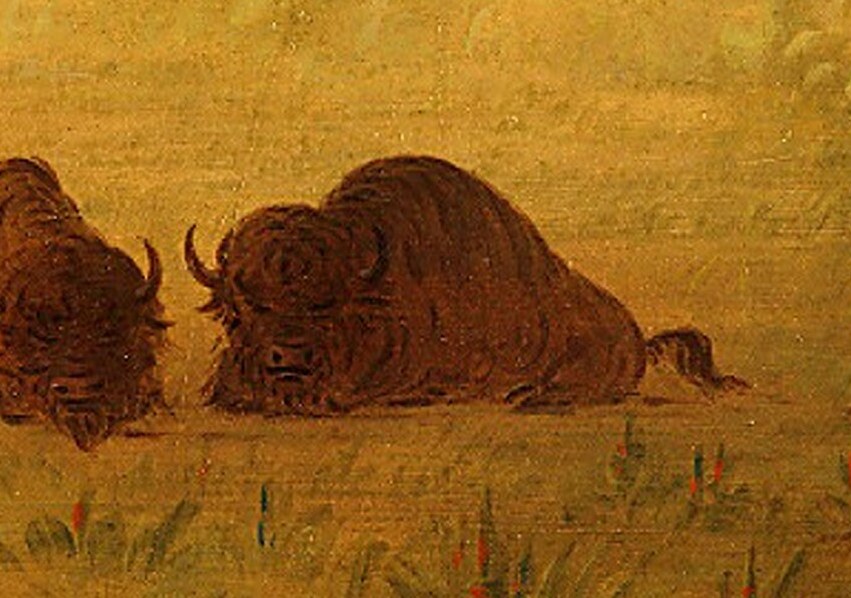
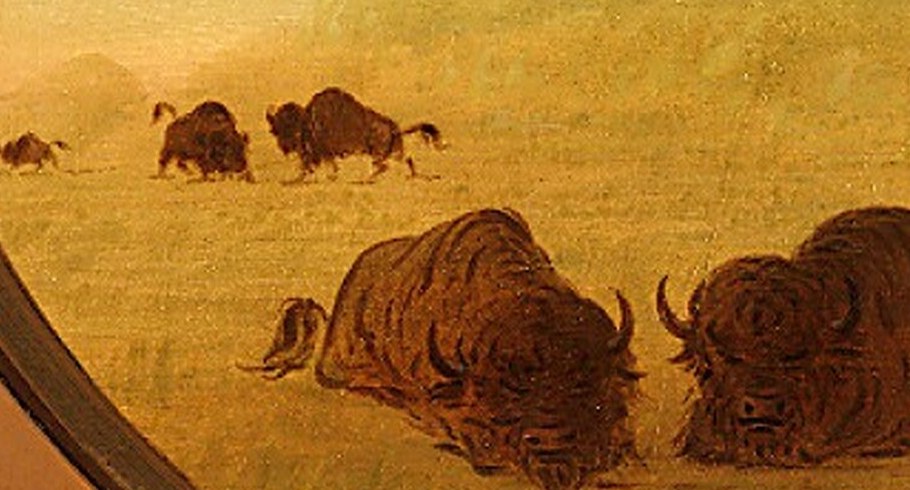
Here, Pawnee hunters strategically approach a buffalo herd. Observe the lone hunter lying in the foreground, poised for the hunt, and the larger group of horsemen subtly closing in on the majestic animals that were central to their sustenance and culture.
Catlin made five extensive journeys across the American West during the 1830s, creating numerous portraits and scenes to preserve a visual record of Native American life as he encountered it. This work is a testament to his ambition to capture a vanishing world.
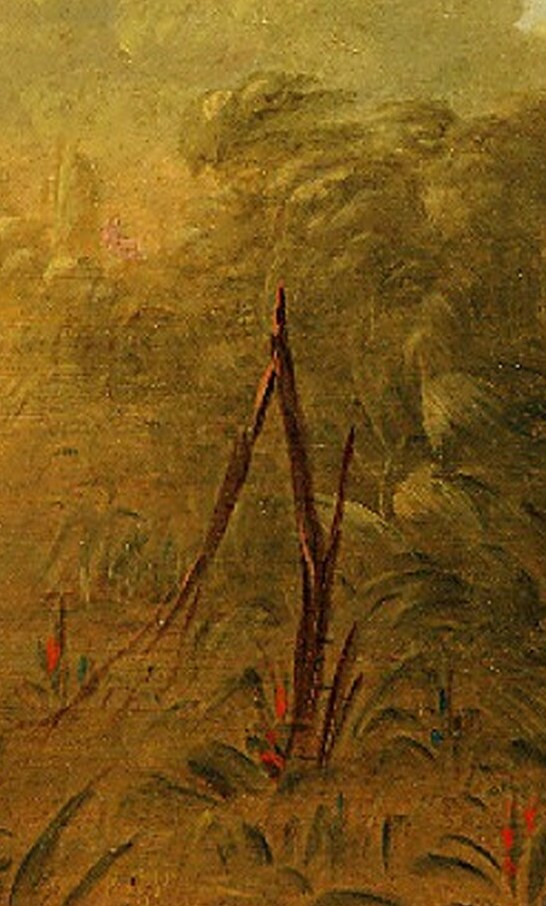
What details do you notice in the vastness of the prairie?
Details
Transcript
In 1861, this painter documented the American West. He saw the Pawnee people hunting buffalo on the vast plains. A lone hunter lies in wait, anticipating the charge. Buffalo, essential to their survival, graze nearby. Other Pawnee horsemen approach stealthily for the hunt. The artist journeyed five times to capture this way of life.