Still Life with Flowers by Félix Vallotton
Félix Vallotton's "Still Life with Flowers" (1925) at The Metropolitan Museum of Art is more than just a beautiful arrangement of everyday objects; it may hold a subtle coded message, a tradition in still life painting for centuries.
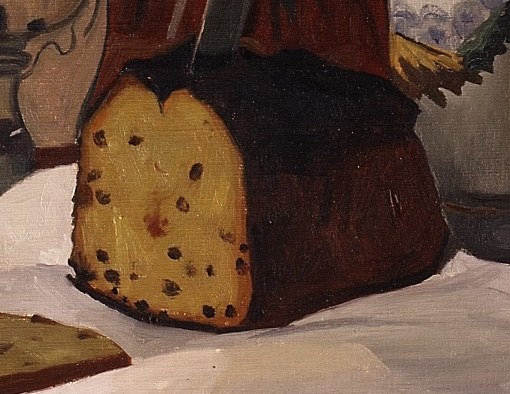
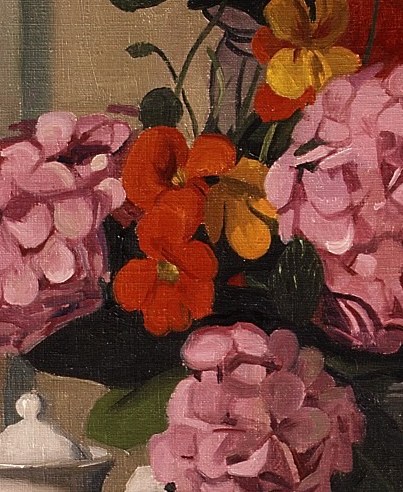
Look closely at the table. The loaf of bread, freshly sliced, can be seen as a symbol of life and daily sustenance. The vibrant pink hydrangeas, overflowing from the vase, speak to abundance and the transient beauty of the natural world.
Yet, a small, almost unnoticed framed picture on the wall suggests a deeper narrative. It's a tiny landscape, hinting at the vast world beyond this domestic scene. Vallotton painted this work in 1925, the very year of his passing.
This makes the painting a poignant, perhaps unconscious, reflection on life's simple pleasures, fleeting beauty, and the profound mystery of what lies beyond.
Details
Transcript
Still life paintings often hold hidden meanings, or coded messages. This loaf of bread, sliced for eating, represents life and sustenance. The vibrant pink hydrangeas suggest abundance and the fleeting nature of beauty. But the small, framed picture on the wall tells another story. It’s a tiny landscape, a symbol of the world beyond these domestic objects. Félix Vallotton painted this in 1925, the year he died. Perhaps it's a quiet reflection on life, beauty, and what lies beyond.