明 王紱 江山漁樂圖 卷|Joys of the Fisherman by Wang Fu
Wang Fu painted Joys of the Fisherman around 1410, on a long handscroll of paper, using nothing but black ink and water. It is held today in a museum collection and remains a quiet masterclass in ink painting. At a time when many Chinese painters were copying old masters, Wang Fu looked at real rivers and painted what he saw.
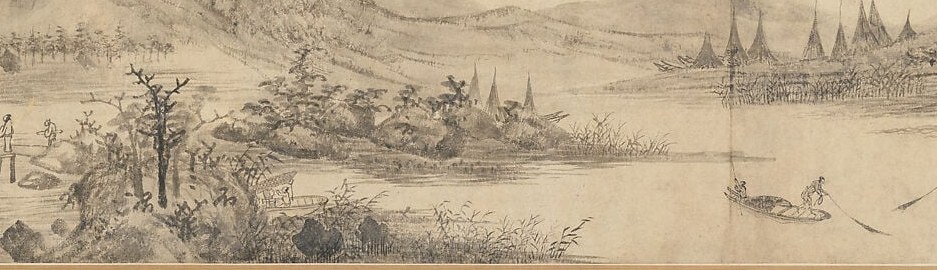
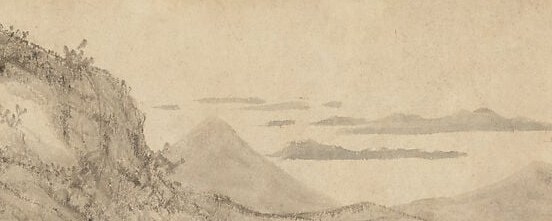
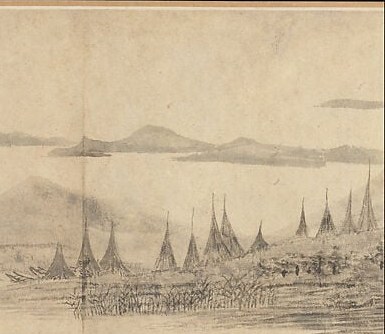
Three technical feats sit side by side in this scroll and you can see them in a single frame. The broad center is bare paper standing in for water, a radical act of restraint. The distant hills are pure mist, made by diluting ink until it barely registers. And the jagged cliff on the left was painted with a nearly dry brush, its bristles splitting to leave trails of white paper showing through. In China this is called fei bai, flying white.
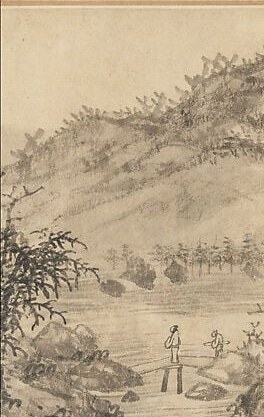
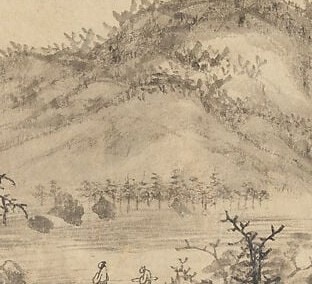
The scroll's subject is fisherman, but you have to search for them. Tiny figures dot the shore and boats, almost invisible against the vast river and mountains. That scale is the painting's real argument: people belong inside the landscape, not on top of it.
Next time you see an ink painting, ask yourself what the paper itself is doing. Sometimes the most important color is the one you never apply.
Details
Transcript
This is pure, unpainted paper. The painter didn't paint water. He left the paper bare. Now look above: ink becomes mist. He diluted the ink until it was almost water. Depth without color. And here? A dry, dragged brush clawing across the paper. The Chinese call it fei bai: flying white. The bristles split, and the paper shows through. Three techniques. One scroll. No color, just ink.