The Champion Single Sculls (Max Schmitt in a Single Scull) by Thomas Eakins
View the artwork: The Champion Single Sculls (Max Schmitt in a Single Scull) →
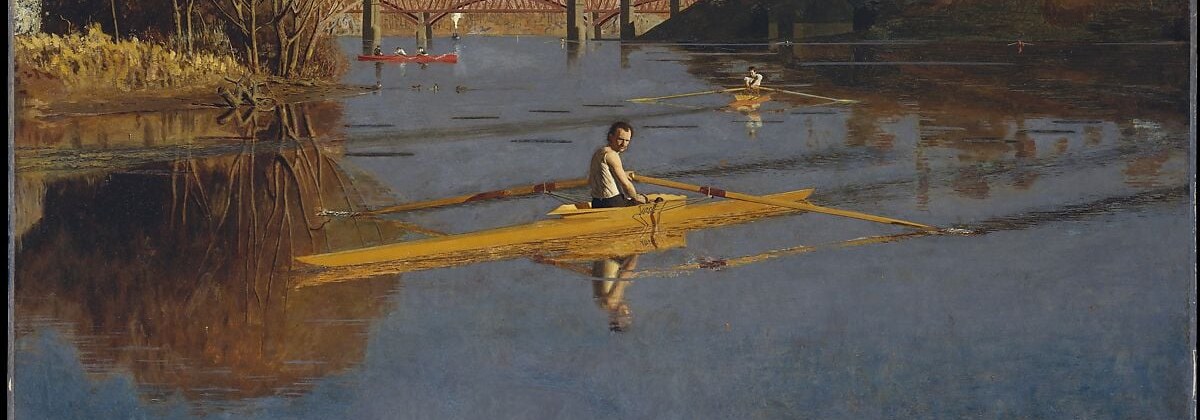
Thomas Eakins painted The Champion Single Sculls in 1871 to commemorate his friend Max Schmitt's victory in an amateur rowing race on Philadelphia's Schuylkill River. The painting hangs today at the Metropolitan Museum of Art. Eakins was exacting about realism, studying anatomy and perspective, and he painted the people and places of his own city with scientific precision.
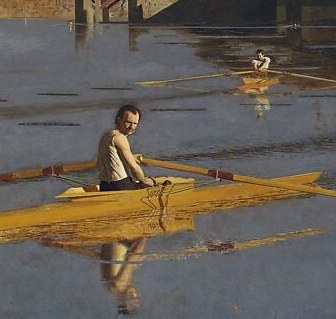
First, look at the champion. Max Schmitt rests his oars in a moment of earned stillness, his face and white shirt anchoring the entire composition. Now check the stern of his boat. Eakins lettered his own name and the date directly onto the scull, a quiet artist's signature doubling as a date stamp.
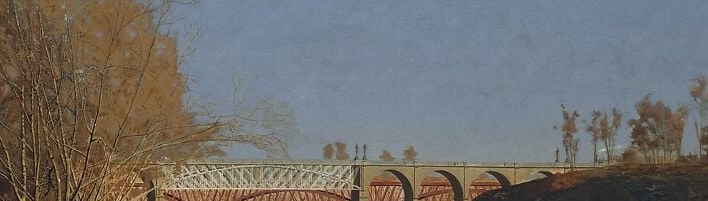
Then scan the river past the iron trestle of the Columbia Railroad Bridge. A second rower enters the scene in the distance. That figure is Eakins himself. The artist encoded a self-portrait into the middle ground, turning what looks like a simple commemorative portrait into a painting about friendship, athletics, and the artist's own presence inside the world he documented.
Two insertions, both hidden in the open. One name on a boat. One man in the distance. What other details might you find the longer you look?
#arthistory #thomaseakins #americanrealism
Details

Transcript
A champion oarsman rests mid-stroke on the Schuylkill River. Look at the stern of his fragile racing scull. Eakins inscribed his own name and the date right on the boat. That is one signature. There is a second. Now scan the river, far beyond the bridge. A distant rower labors alone in the middle ground. It is Thomas Eakins. He painted himself into his friend's victory.