Rest on the Flight into Egypt by http://www.wikidata.org/.well-known/genid/c5e97492ed7c314cbe562219f7c198b2
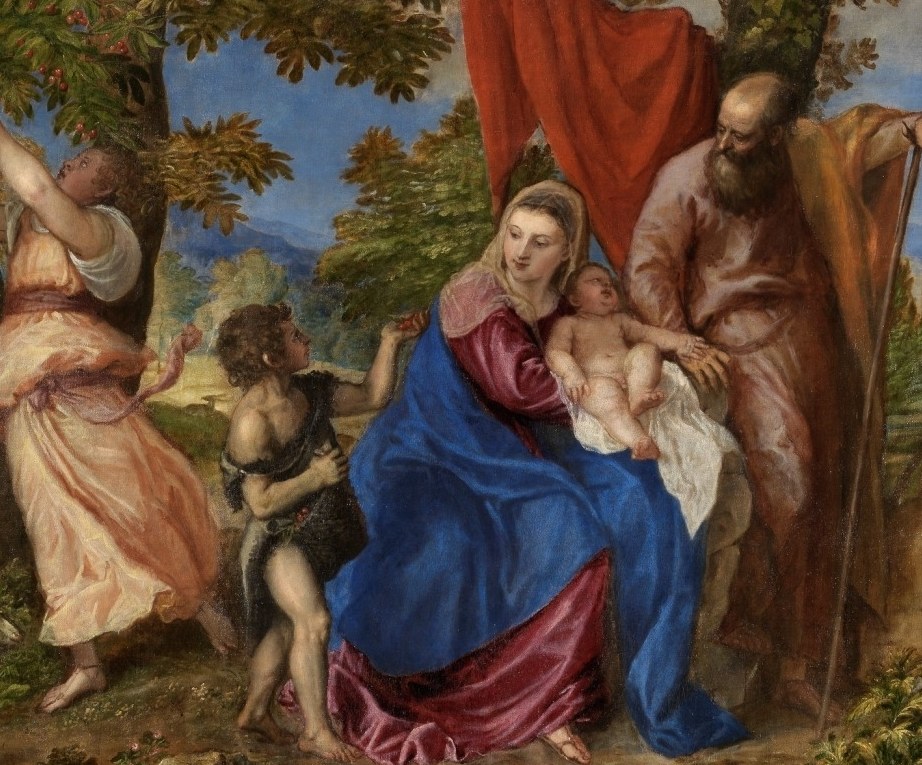
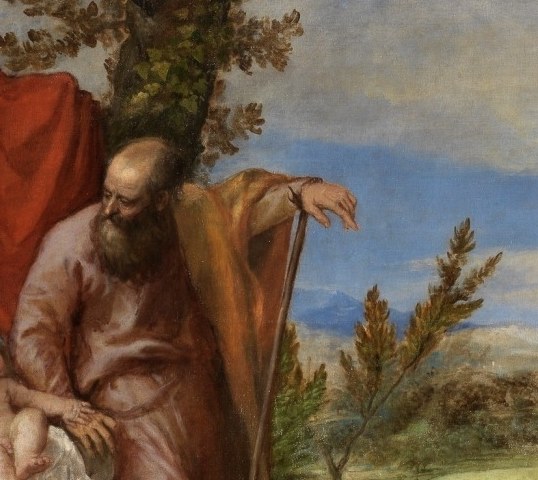
This is Rest on the Flight into Egypt, an oil painting from around 1535 attributed to the Venetian painter Paris Bordone. It hangs in the Uffizi Gallery in Florence. The story is the Holy Family pausing during their escape to Egypt, but the real subject is a lesson in how Venetian painters used color the way sculptors use mass.
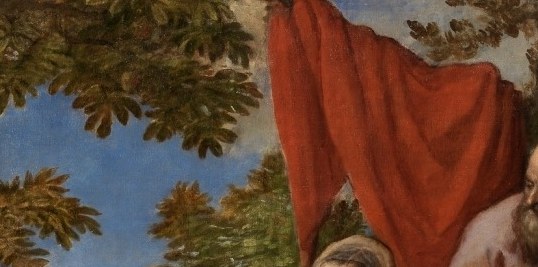
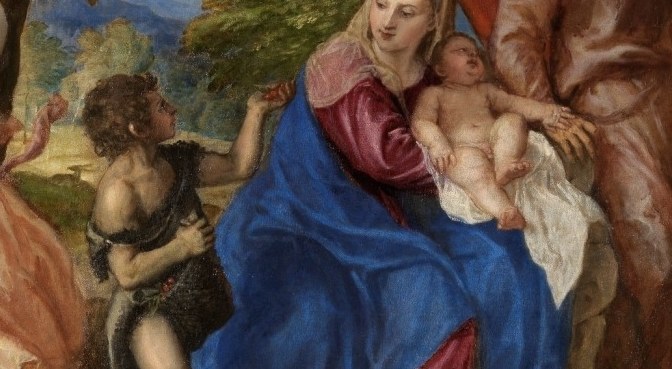
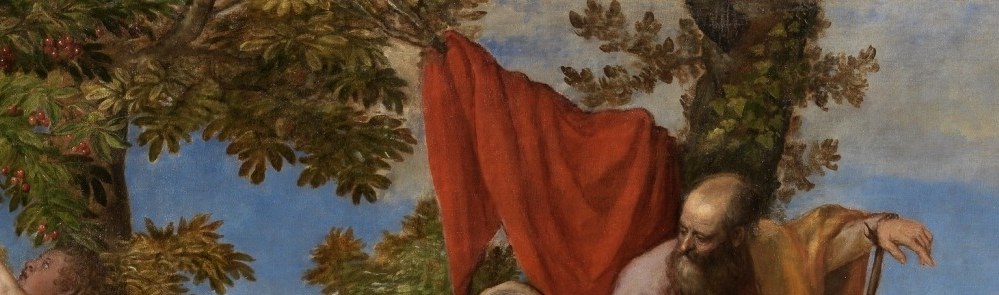
The first thing you see is the blue. It is ultramarine, ground from lapis lazuli stone that came from a single mountain range in Afghanistan, and in the 1530s it literally cost more than gold by weight. The patron who paid for this painting knew exactly what that expanse of blue was saying. The painter then did something very deliberate: he hung a canopy of brilliant crimson directly above it. Venetian color theory taught that red tones advance toward the viewer while blue tones recede. Placing a hot, advancing red on top of a vast, receding blue creates an optical push-pull that forces the eye to read depth and volume where only a flat canvas exists.
Paris Bordone trained under Titian, the supreme colorist of the Venetian Renaissance, and this painting is a compact workshop in what that tradition valued most. The figures themselves are composed with the same logic: the bright white-pink robe of the attendant on the left pulls you in from the margin, while the dark, weather-worn face of Saint Joseph looms protectively behind. Even the distant landscape is a color choice: the hazy, pale hills use aerial perspective, a cooler, lighter palette receding into blue-grey, to suggest the long road still ahead.
Next time you see a Renaissance blue that seems to glow from inside the canvas, ask whether the painter paid for it with gold. And look for the red he placed beside it, doing the quiet work of making the blue feel infinite.
Details
Transcript
In 1535, one pigment cost more than gold by weight. Ultramarine blue. Ground from lapis lazuli, shipped from Afghanistan. The painter lavished it on Mary's mantle, flooding the center with blue. A deep, costly silence around the child. Then the painter set a trap for your eye. Slashed across the top: a canopy of pure crimson. Blue and red in Venetian color theory are not equals. Red advances, blue recedes. He hung a hot red curtain right on top of the cold blue abyss. The flat paint now has a third dimension the canvas never had.