The Dock of Deauville by Eugène Louis Boudin
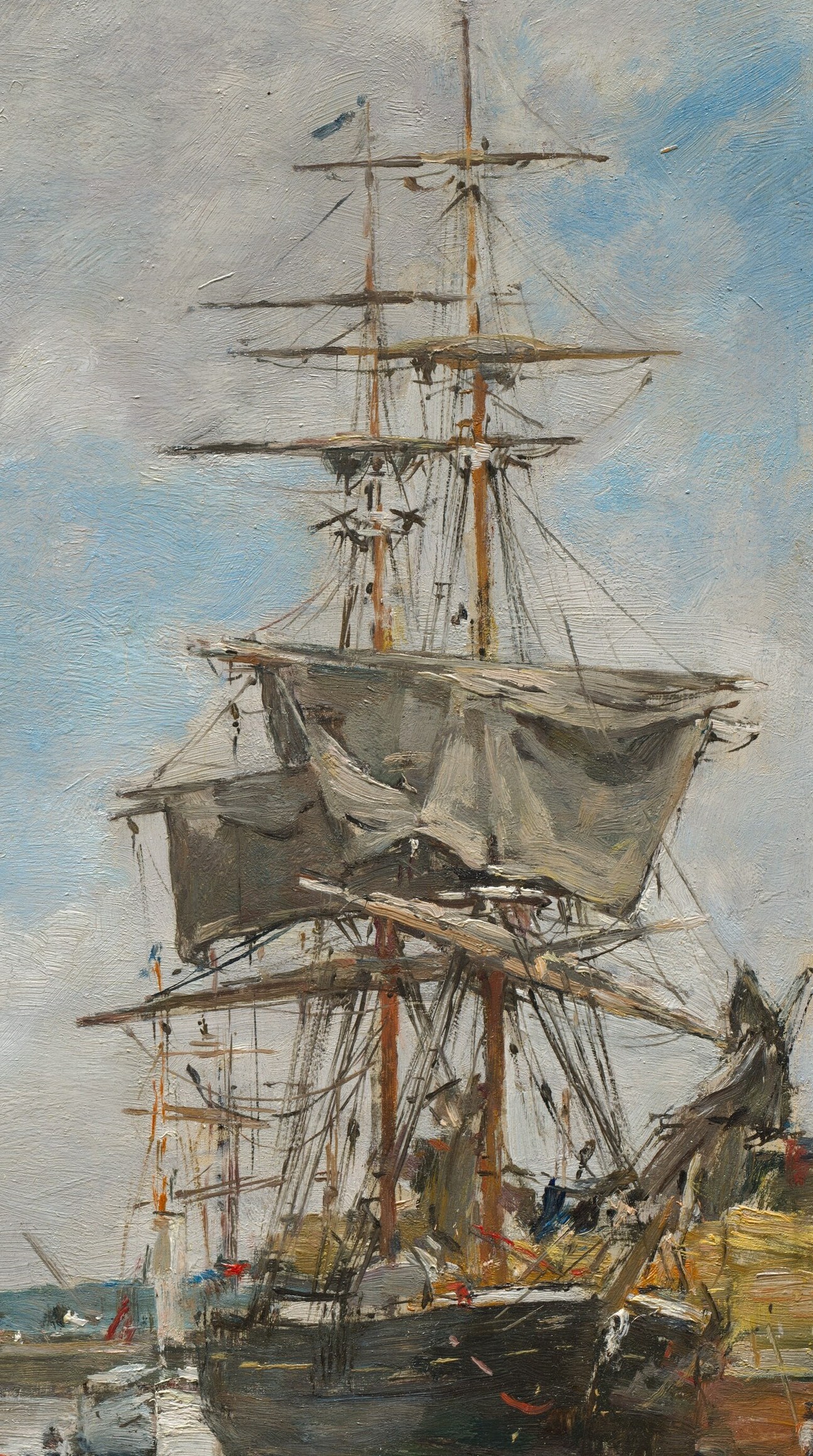
Eugène Louis Boudin's 1896 oil painting, The Dock of Deauville, is a masterful example of Impressionist technique, held at The Cleveland Museum of Art. Boudin, a pioneer of painting en plein air, excels at capturing the transient effects of light and atmosphere.
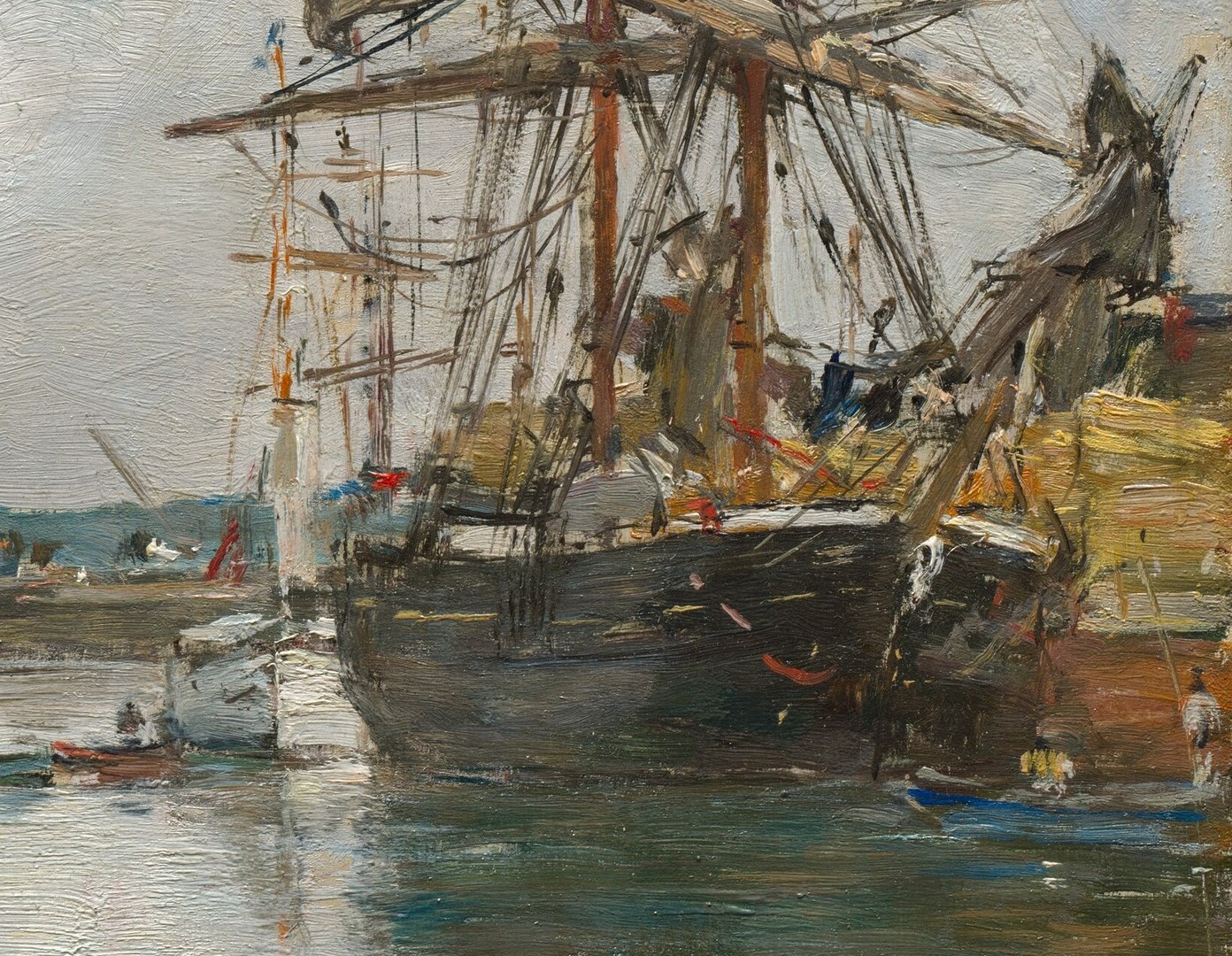
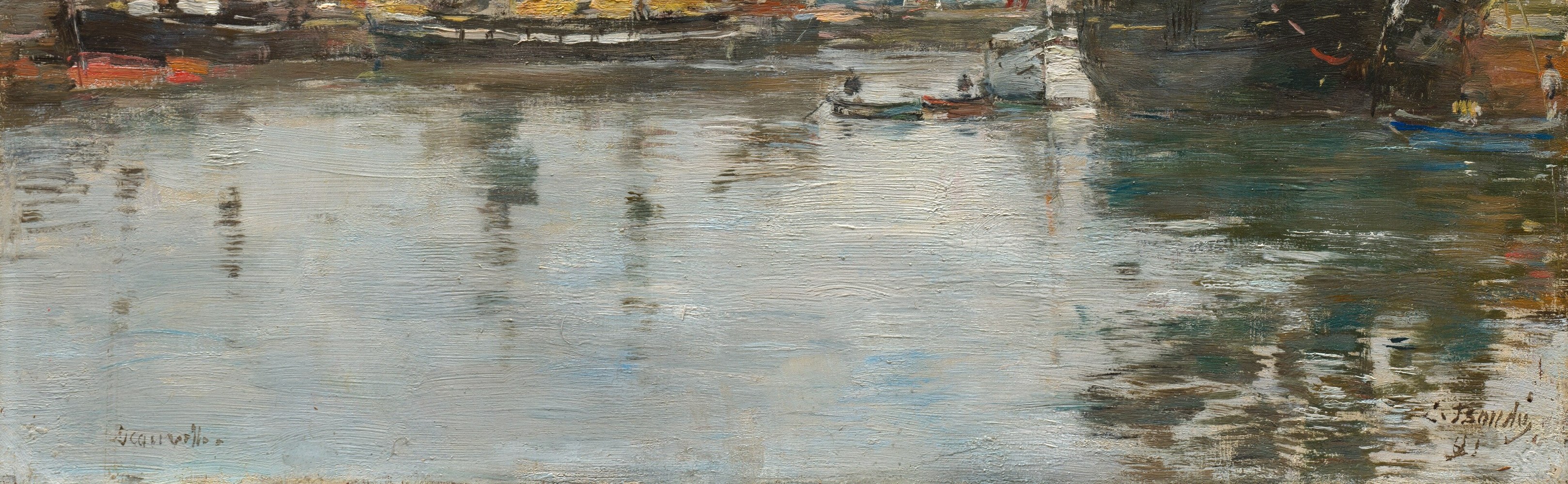
Notice the immediate foreground. The dark hull of the main ship grounds the composition, contrasting with the lighter tones and lively brushwork of the water. The artist's skill is most evident in the shimmering reflections, where loose strokes of paint suggest the fluid, ever-changing surface of the water.
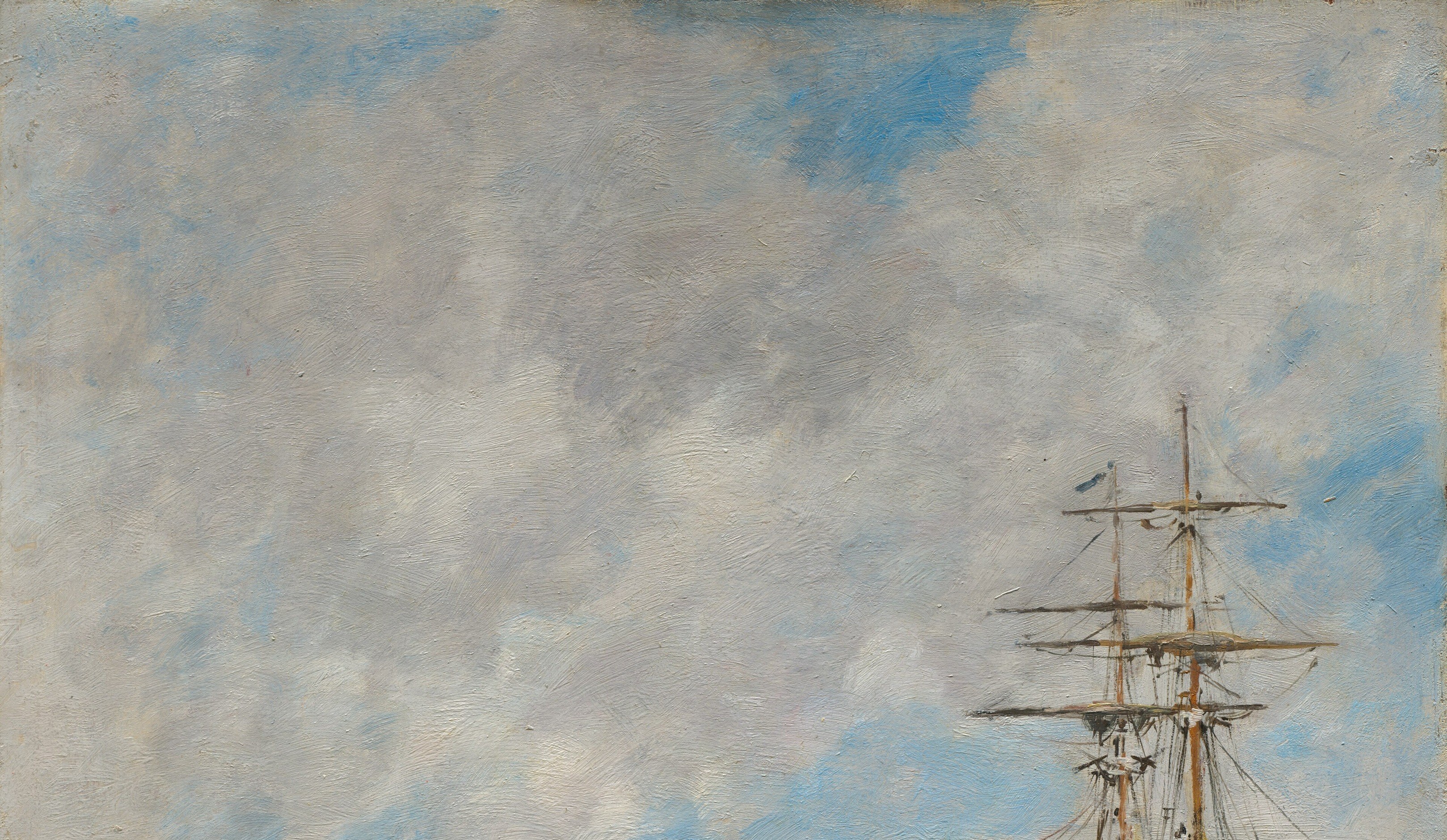
Boudin painted this scene in 1896, a period when Impressionism was in full bloom. He was particularly renowned for his marine subjects and skies, earning him the title "King of the skies" from Corot. His technique here, using economical brushstrokes to define form and light, was revolutionary for its time.
Observe the painting closely to see how Boudin makes you feel the breeze and see the light, all through the magic of oil paint.
Details
Transcript
Look at the dark hull. It anchors the whole scene. See how the water captures everything. Reflections move, not with harsh lines, but with loose paint. The artist painted the sky last. See the soft clouds. He captures fleeting light. The trick is in the paint. A signature placed lower left. Boudin was here.