Trompe-l'œil of a Table in a Mess with Paintings, a Hurdy-Gurdy, Books and Other Objects by Charles Joseph Flipart
Charles Joseph Flipart's "Trompe-l'œil of a Table in a Mess with Paintings, a Hurdy-Gurdy, Books and Other Objects" (1790) at the Museo del Prado is a masterful exercise in visual deception. The painting uses the trompe-l'œil technique to make objects appear three-dimensional and real.
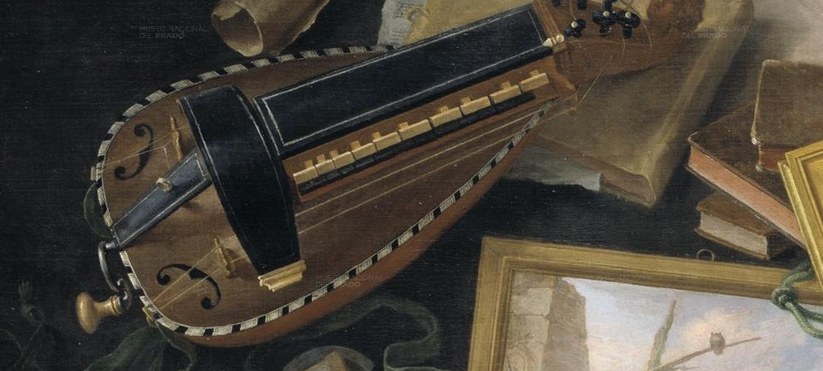
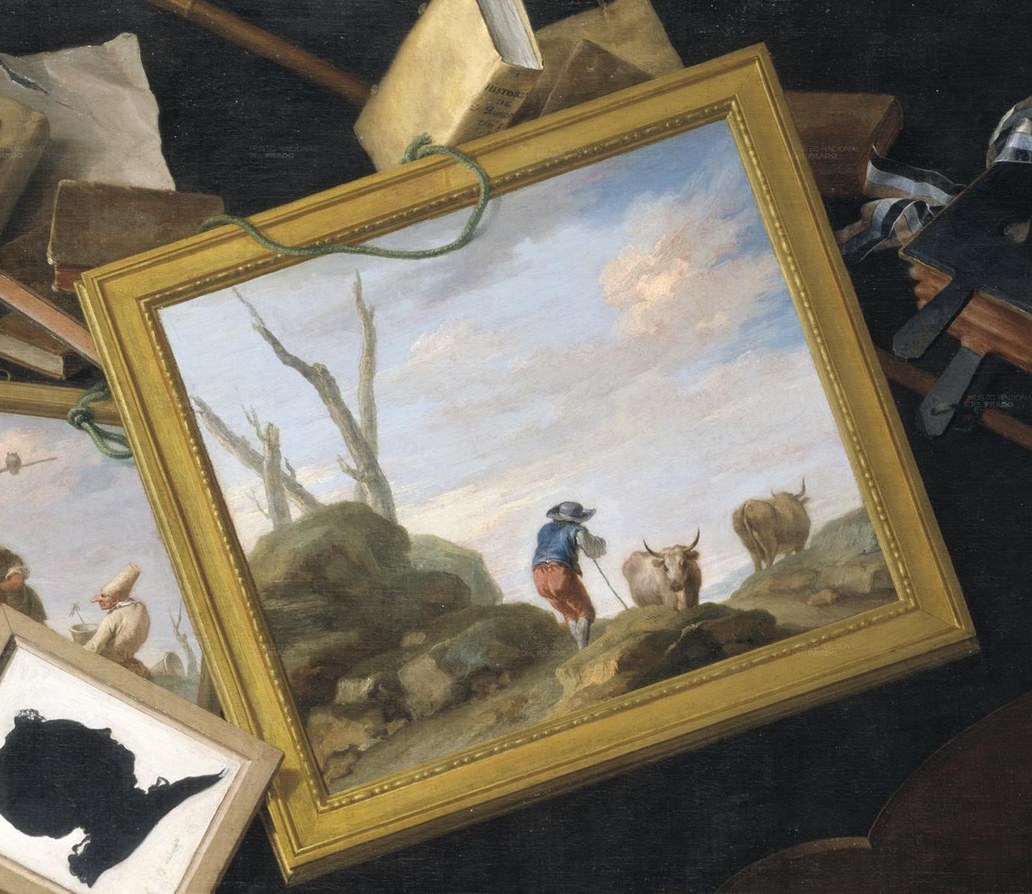
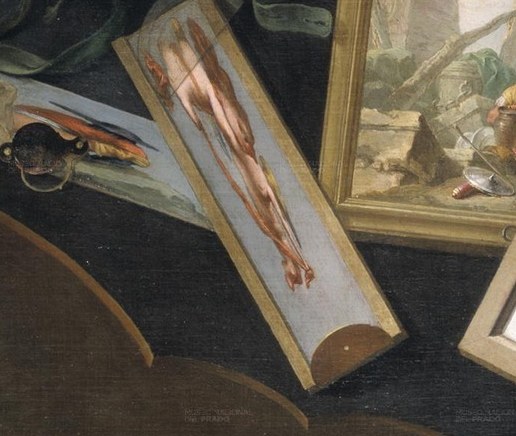
Observe how the artist renders a cluttered table with remarkable verisimilitude. Items like the hurdy-gurdy, books, and even framed pictures seem to leap off the canvas, inviting you to reach out and touch them.
Flipart, born in Paris in 1721, was known for his skill in creating these illusionistic effects. This still life from 1790 exemplifies his ability to play with the viewer's perception, making the flat surface of the canvas feel tangible.
Can you spot all the painted elements that are meant to look real?
Details
Transcript
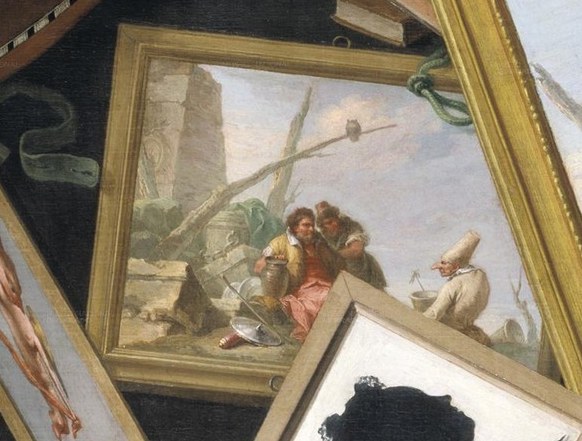
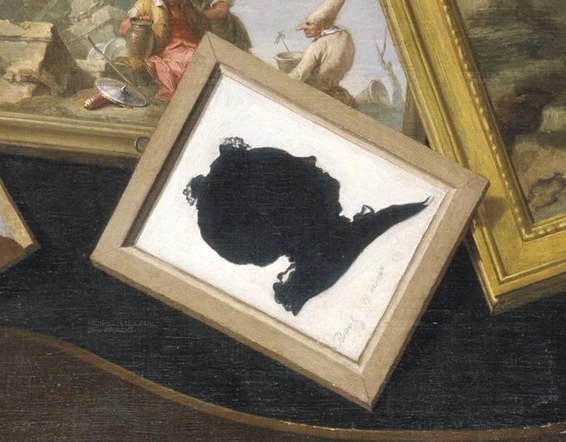
This table seems to overflow with objects. Look at the trompe-l'œil effect here. A hurdy-gurdy sits beside scattered books. This smaller painting shows figures inside. Flipart painted this illusion in 1790. Even the framed silhouette is painted. The artist wanted to fool your eyes.