Lake George, 1872 by John Frederick Kensett
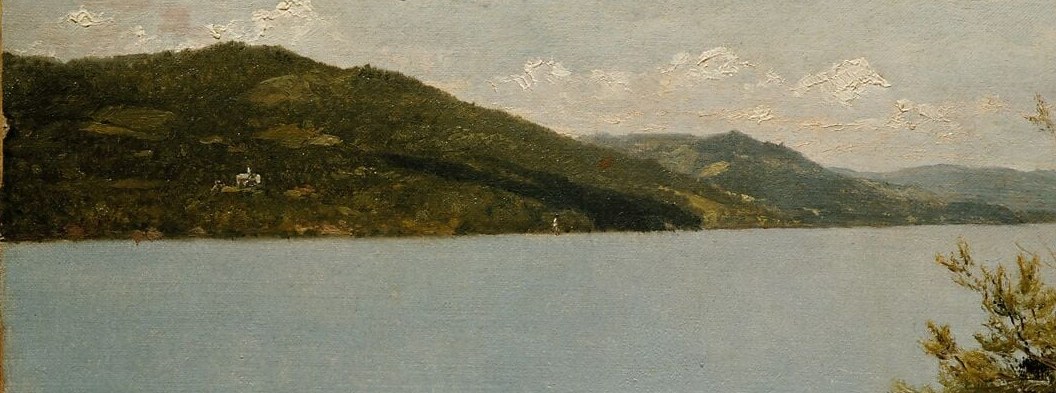
This is Lake George, 1872, by the American painter John Frederick Kensett. It hangs in a museum now, but it was painted in the last year of his life as a precise record of a specific afternoon on an Adirondack lake. Kensett died of pneumonia in December of 1872, just months after completing this canvas.
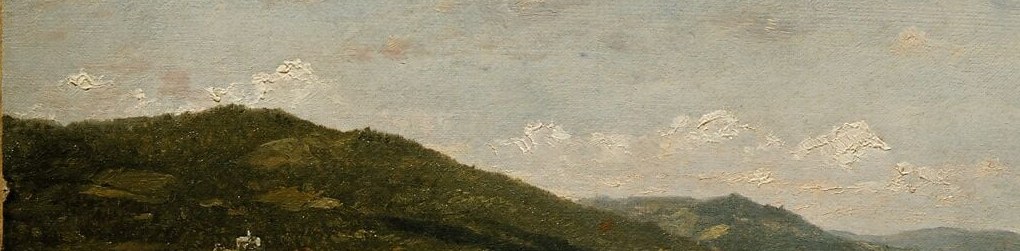
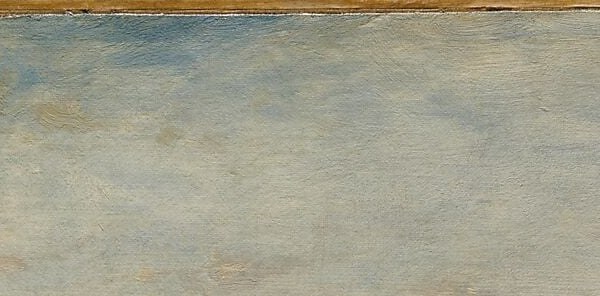
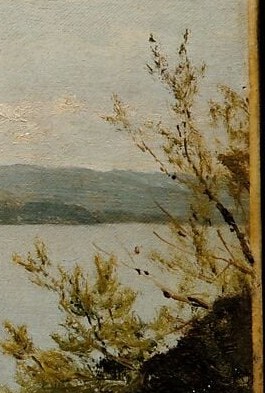
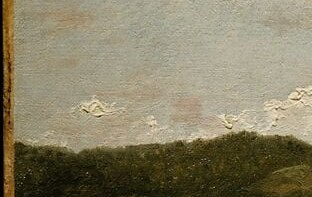
Look first at the absence. Kensett removed every boat, bird, and human figure from the scene. The water is polished to a mirror stillness, and the sky above the hills shares nearly the same pale value. This unity of air and lake is the signature of the Luminist movement, and Kensett was its quiet master. Then look at the far left shore, where a few pale forms sit low on the water. They are so small you could scroll past them. They are the only sign of human life in the painting.
Kensett grew up in Connecticut as the son of an engraver and rose to become one of the most respected landscape painters of his generation. He was a full academician of the National Academy of Design and a founder of the Metropolitan Museum of Art. Unlike Thomas Cole and Frederic Church, who painted drama and spectacle, Kensett pursued restraint. His late works strip the American landscape down to light, water, and a long exhale.
The painting is a witness to two things: the physical truth of Lake George on a calm afternoon in 1872, and the vision of a man who knew he was near the end and chose to leave behind silence instead of noise.
Details
Transcript
No boats. No birds. No people. This is Lake George, New York, in 1872. The water and the sky share the same pale light. Kensett was a founder of the Metropolitan Museum of Art. He painted this in the final months of his life. Look closely at the far left shore. Faint pale forms. A settlement. The only sign of people for miles. He chose to keep it tiny, almost invisible, against the silence.