Possibly Mrs. William Sheldon by Powers, Asahel
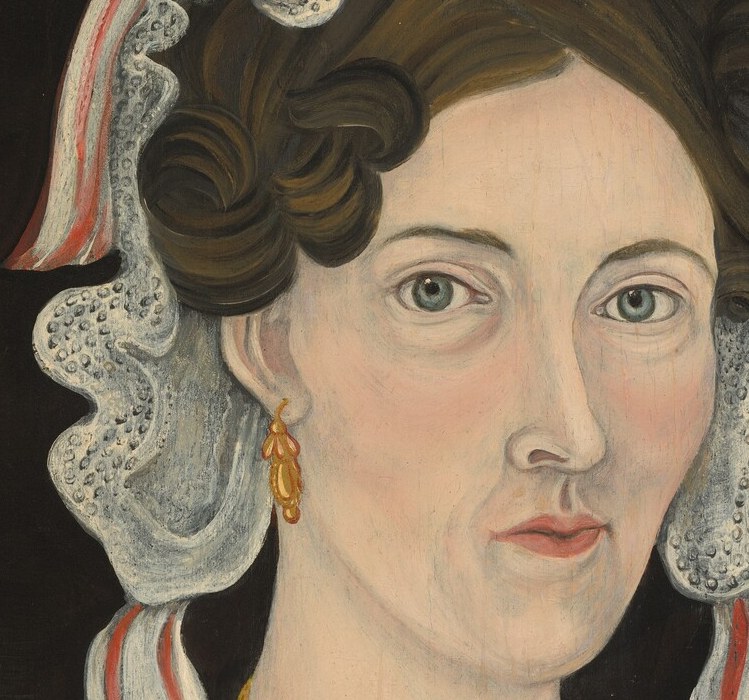
This is "Possibly Mrs. William Sheldon," a portrait painted around 1831 by Asahel Powers. Powers was just 18 years old and already an established itinerant artist, traveling through Vermont, Massachusetts, and New Hampshire to paint the local community. The painting now lives in the collection of the Shelburne Museum.
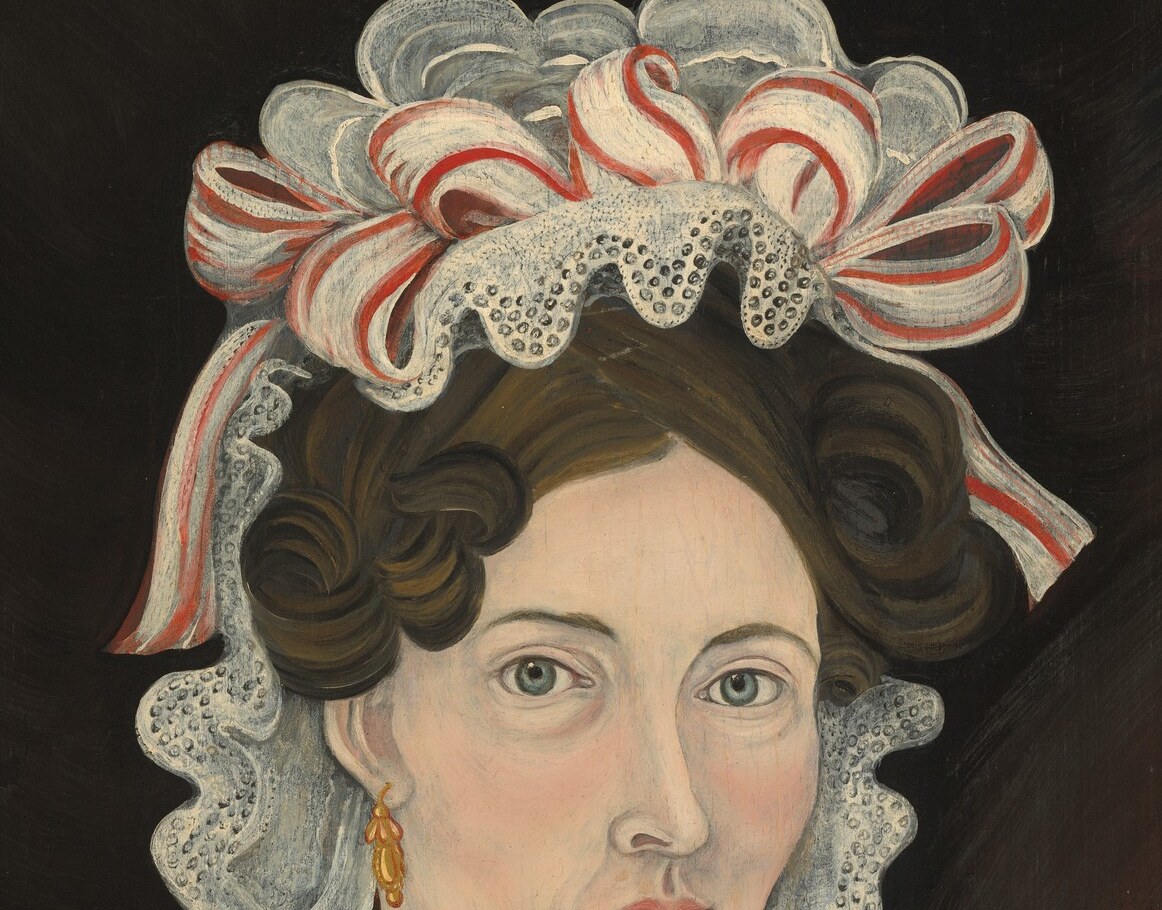
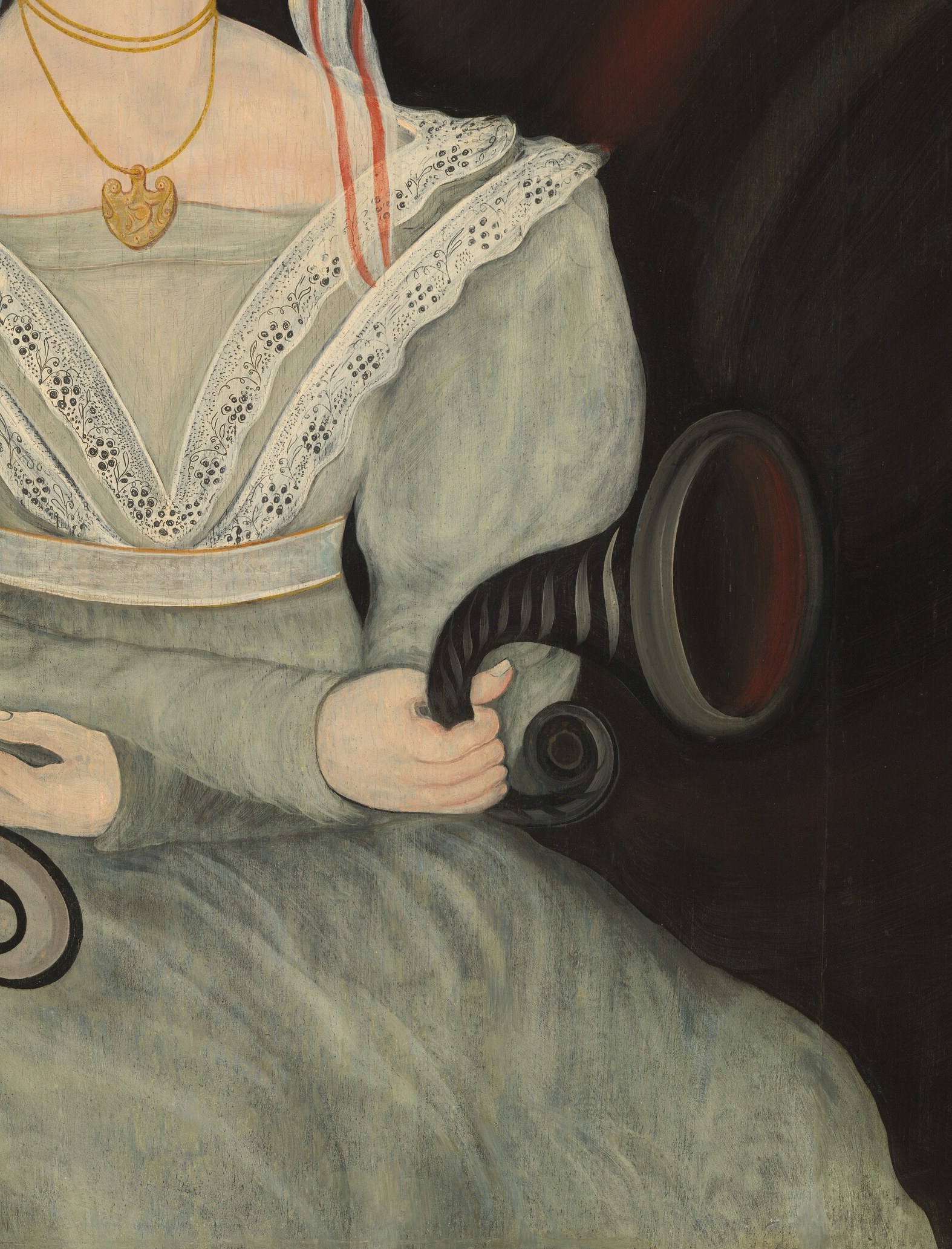
It is a quiet, direct record of a New England woman, but her accessories speak loudly. The heart-shaped pendant is a clear sign of affection, likely a betrothal or marital token. The wide, ruffled bonnet with its red ribbons announces her fashion and her financial standing. Even the fan, partially visible, is a standard prop of genteel portraiture, marking her as a lady of leisure and refinement.
Powers was a folk artist, working in oil on wood panels with a straightforward, unembellished style. His portraits were not dramatic; they were documents. This painting is a visual receipt of a person's existence and their place in a rapidly changing early America. It is a record of virtue, modesty, and domesticity as much as a likeness.
There is no signature or diary entry to solve the mystery of this woman. The title "Possibly Mrs. William Sheldon" is a tentative identification passed down through history. But 190 years later, her clear blue eyes and her symbolic heart still do the work she wanted them to do: they tell us exactly who she was in her world.
Details
Transcript
In 1831, a young itinerant painter arrived at a New England home. His name was Asahel Powers. He was 18. A heart-shaped pendant. A token of love or betrothal. An elaborate bonnet. Lace and ribbons were costly. The fan: a fashionable accessory, a symbol of refinement. Together, they announce her as a respectable wife and woman of means.