The Birth of the Virgin by Francesco Solimena
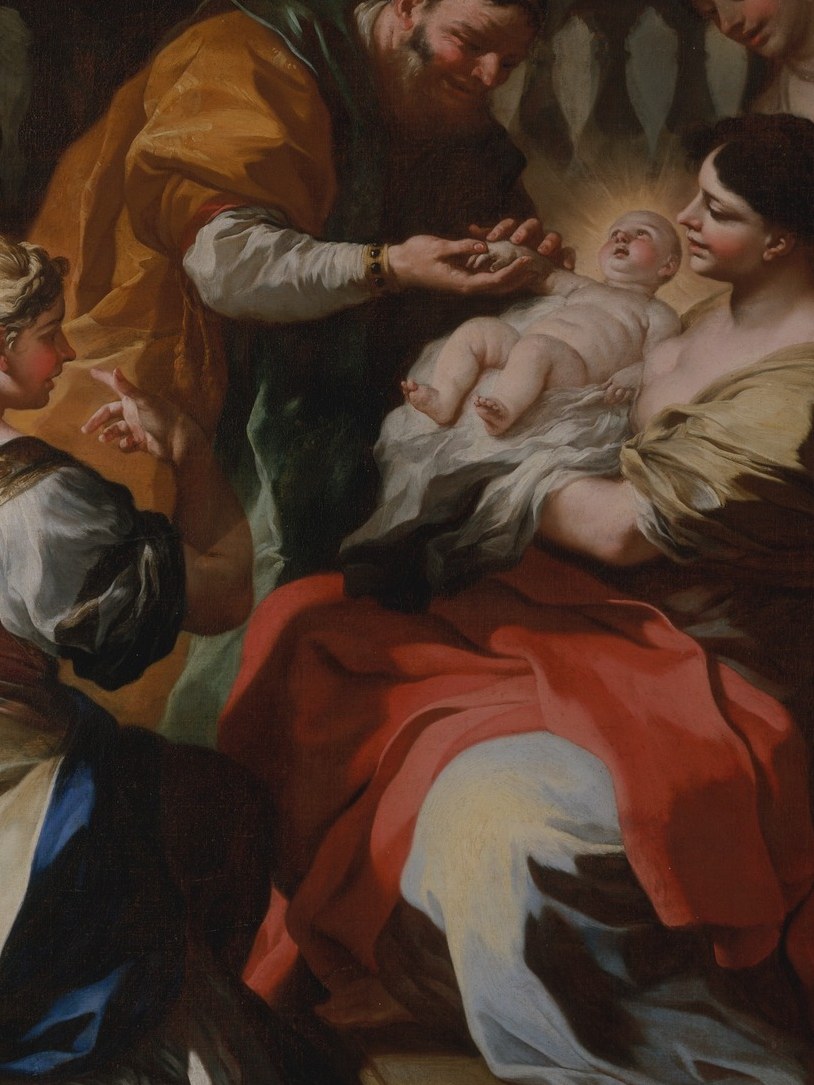
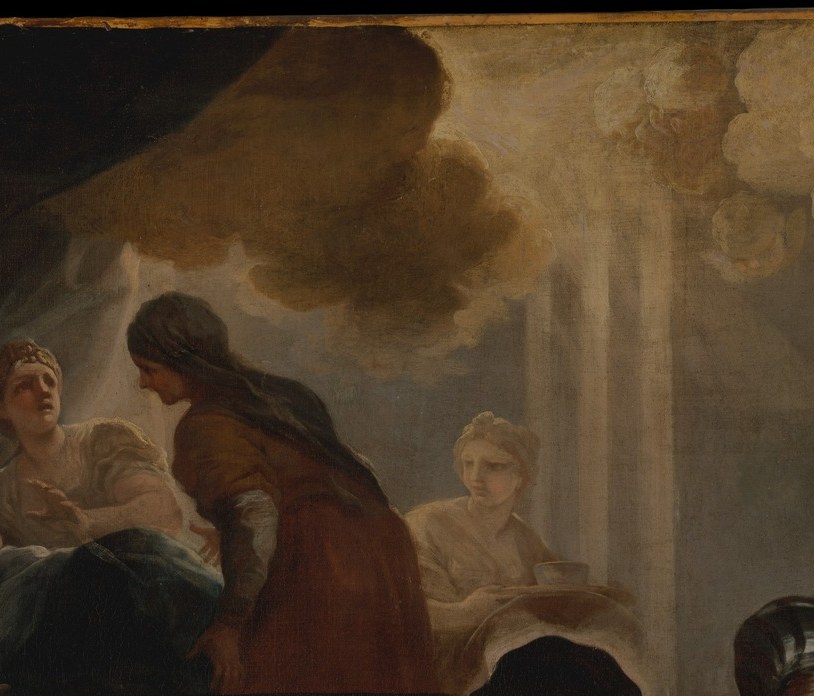
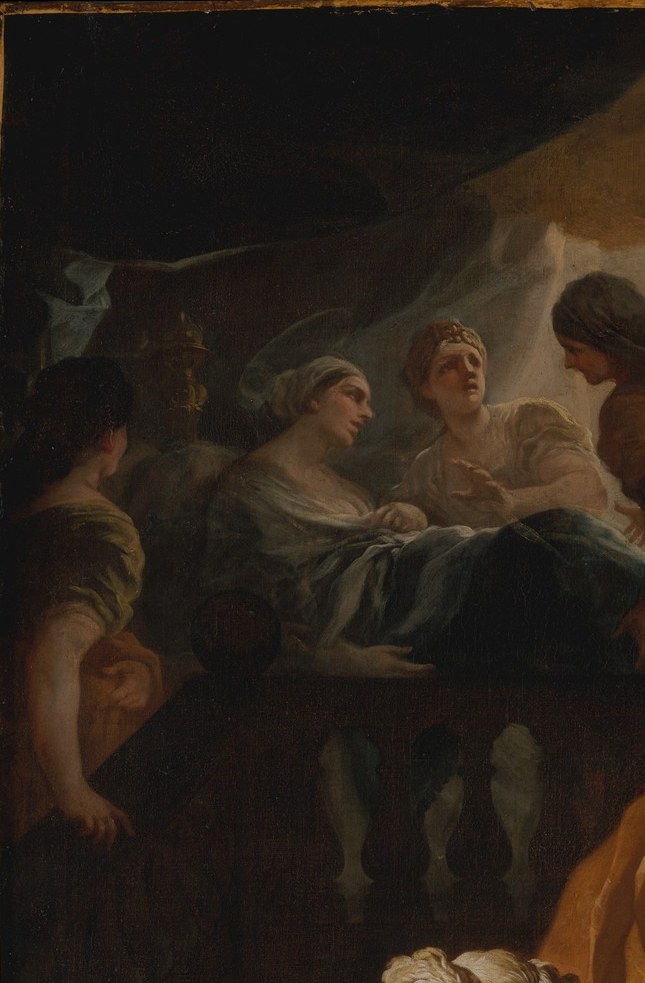
This is Francesco Solimena's "The Birth of the Virgin," painted in Naples around 1690. It is not a simple domestic scene but a tightly coded theological argument in oil paint.
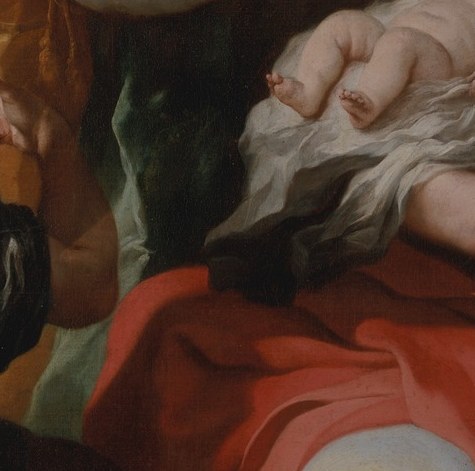
Two details carry the hidden message. The newborn Mary is wrapped in a swaddling cloth of brilliant white, the brightest highlight in the entire composition. In Marian iconography of the Counter-Reformation, this white linen prefigures the burial shroud of her future son. Her life begins wrapped in what prefigures his death.
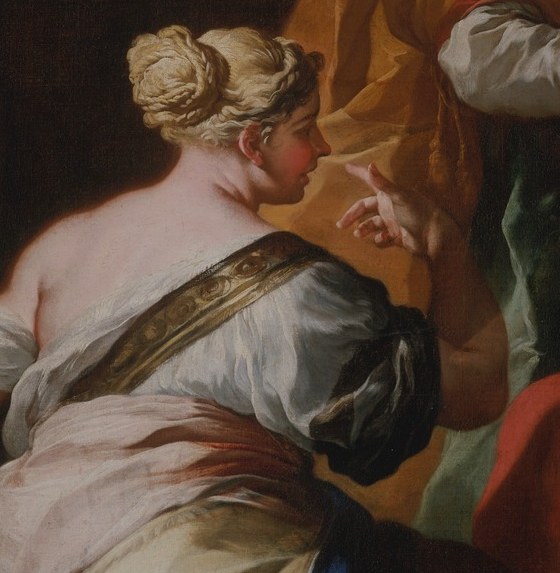
The shaft of warm, overhead light falls only on the infant and the woman who holds her. Solimena, a master of Baroque chiaroscuro at the height of his early powers, used this selective illumination as a spiritual index: whoever the light touches is touched by God. The midwife at upper left and the richly dressed attendant at left remain in relative shadow, grounded in earthly reality, while the sacred center glows.
Solimena dominated Neapolitan painting for nearly sixty years, training a generation of artists and filling the city's churches with works exactly like this one: dramatic, legible, and thick with doctrinal meaning for a Catholic world reasserting its visual language.
Details
Transcript
In Baroque Naples, a painter hides a sermon in plain sight. This is not just a birth. It is the Birth of the Virgin. Look at the swaddling cloth, the whitest point in the painting. White linen at Mary's birth prefigures her son's burial shroud. A shaft of divine light touches only her and the child. Baroque painters used light to mark who is blessed by God. This elder midwife grounds the miracle in real human care. Every gesture says: from her first breath, Mary was set apart.