元/明 佚名 舊傳 燕文貴 秋山蕭寺圖 軸|Buddhist Temples amid Autumn Mountains by Yan Wengui|Unidentified artist
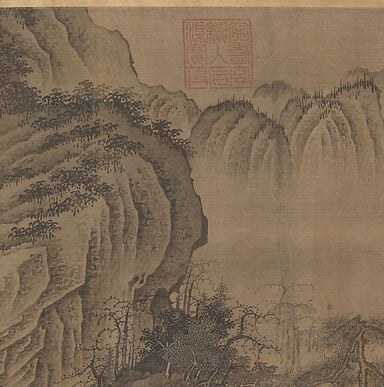
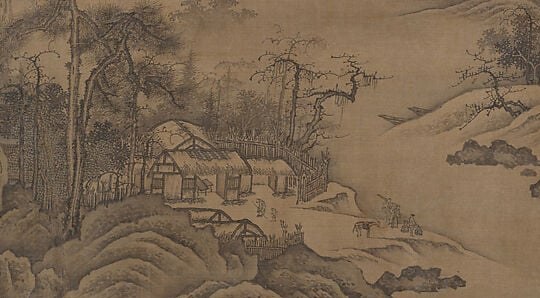
This is Buddhist Temples amid Autumn Mountains, a 14th-century handscroll painted with ink and pale color on silk. The artist is unknown, it was once attributed to the Song master Yan Wengui, but scholars now place it in the Yuan or Ming dynasty, a period when many literati painters refused to serve the Mongol court and turned instead to landscape as a form of principled silence.
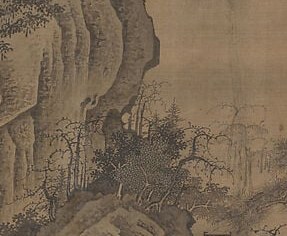
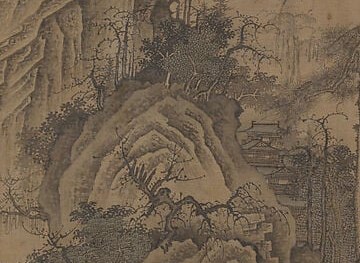
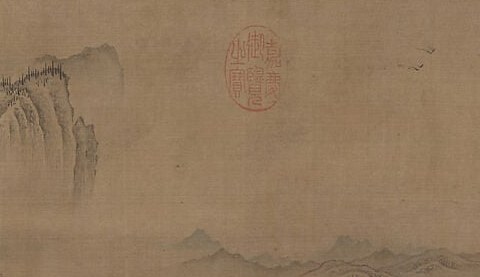
Let your eye enter at the rocky shoreline on the lower left, then travel upward through bare autumn trees toward the mist. Small temple roofs are nestled at the base of the towering cliff, nearly swallowed by their surroundings. The painter has left the silk ground exposed in the sky and water, using emptiness as a material. The withered branches, the still lake, and the faint peaks dissolving into fog all work together to slow the eye and quiet the mind.
Landscape painting in this tradition was never only about scenery. It was an act of witness and withdrawal, a record of what the painter chose to turn toward when the political world demanded allegiance he could not give. The mist that separates the near shore from the far mountains is not weather. It is a boundary.
The painting lives in the collection of the National Palace Museum, Taipei. What do you notice when you stop looking for a subject and let the mist hold your attention?
Details
Transcript
Yuan Dynasty, 14th century. China is under Mongol rule. A painter retreats from the world of administration into the mountains. Look at the bare branches. It is late autumn. Now find the temples. They are barely there. The painter uses the silk itself to swallow the distant peaks. This is not a painting about a place. It is a painting about withdrawal. The artist left no name. The mist was the point.