Fur Traders Descending the Missouri by George Caleb Bingham
View the artwork: Fur Traders Descending the Missouri →
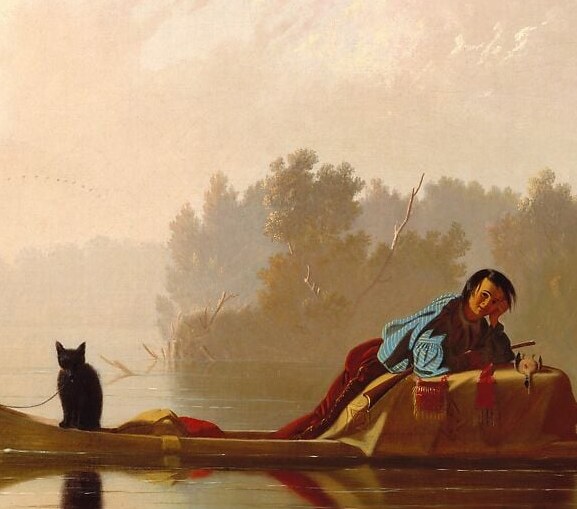
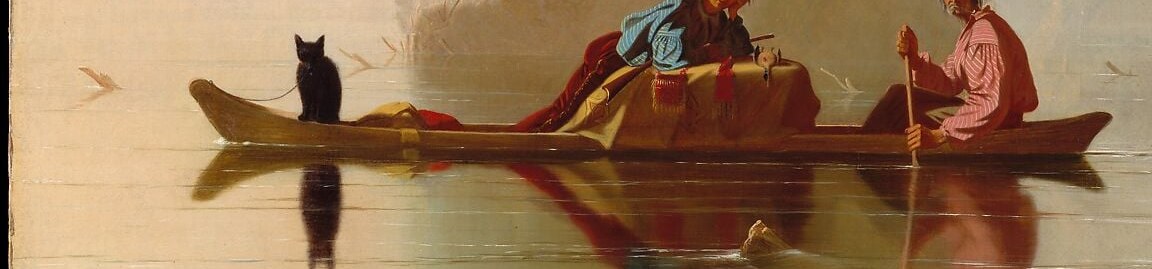
George Caleb Bingham's Fur Traders Descending the Missouri (1845) hides an unresolved debate in plain sight, chained to the prow of a dugout canoe. The Metropolitan Museum of Art owns the painting, but even their curators cannot say with certainty whether the small black animal at the bow is a black cat or a bear cub. Either reading changes the story: one suggests a pet brought along for company, the other a commodity being transported for trade.
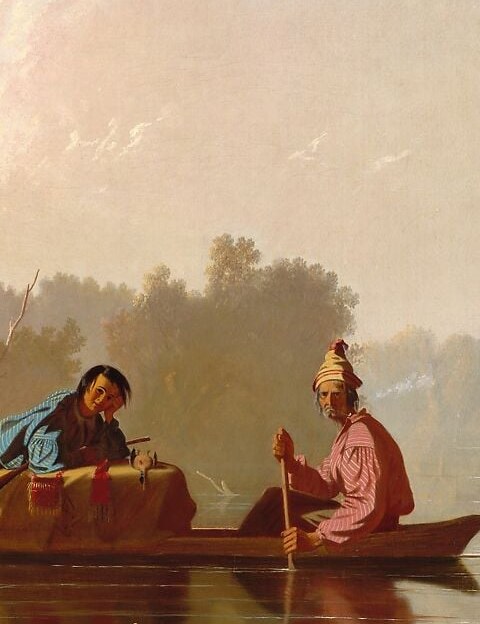
Look past the luminous, still water for a moment and find that creature. Then notice how the painting's original title, 'French Trader & Half breed Son,' was erased by the American Art-Union before the canvas ever reached New York. The more commercial, sanitized name we know today deliberately obscured the son's mixed heritage. His face, painted looking outward toward the viewer's world, carries a future his father's generation could not quite name.
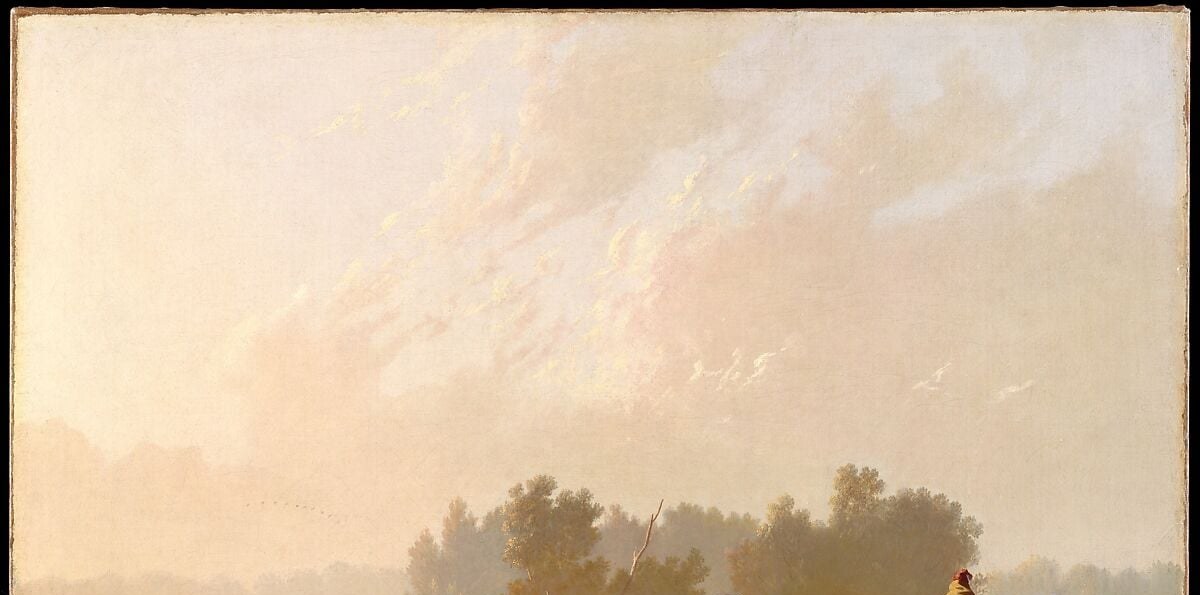
Bingham completed this work after a winter in central Missouri and brought it to St. Louis in the summer of 1845. He knew these rivers and the men who worked them. The painting is romanticized, the water is impossibly glassy, the golden atmospheric haze borrowed from the Hudson River School, but it is also a document of a specific frontier economy and the blended identities it produced.
What do you see on the bow? A cat, or a bear cub? The painting has refused to answer for nearly 180 years.
#arthistory #georgecalebbingham #americanart
Details

Transcript
The river is so still it mirrors the sky. A fur trader and his son glide through the haze. The father, half in shadow, steers from the stern. His son watches the far bank, already looking beyond this life. Between them sit their pelts, a dead duck, and the day's haul. Now look at the prow. Historians still debate: is this chained creature a black cat, or a bear cub? The title was changed before the first exhibition to hide the son's mixed heritage.