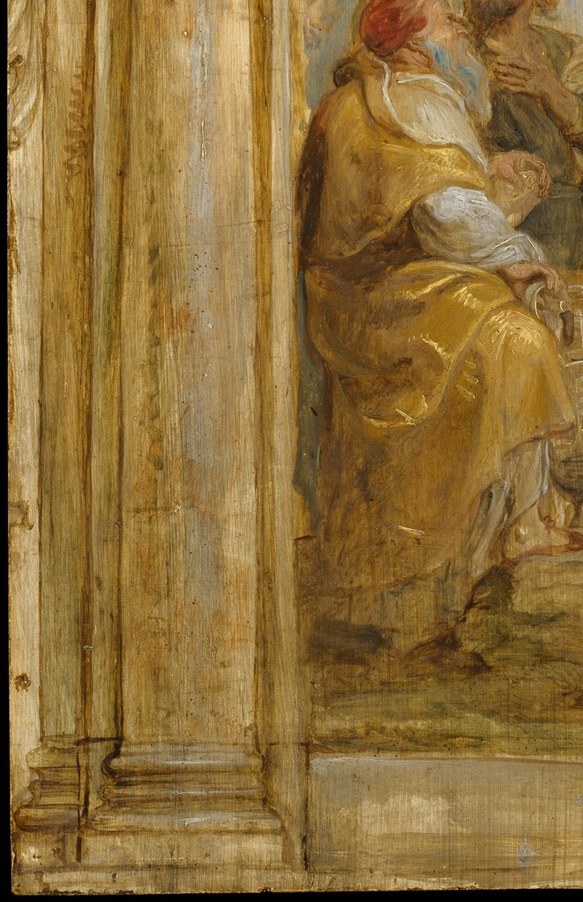
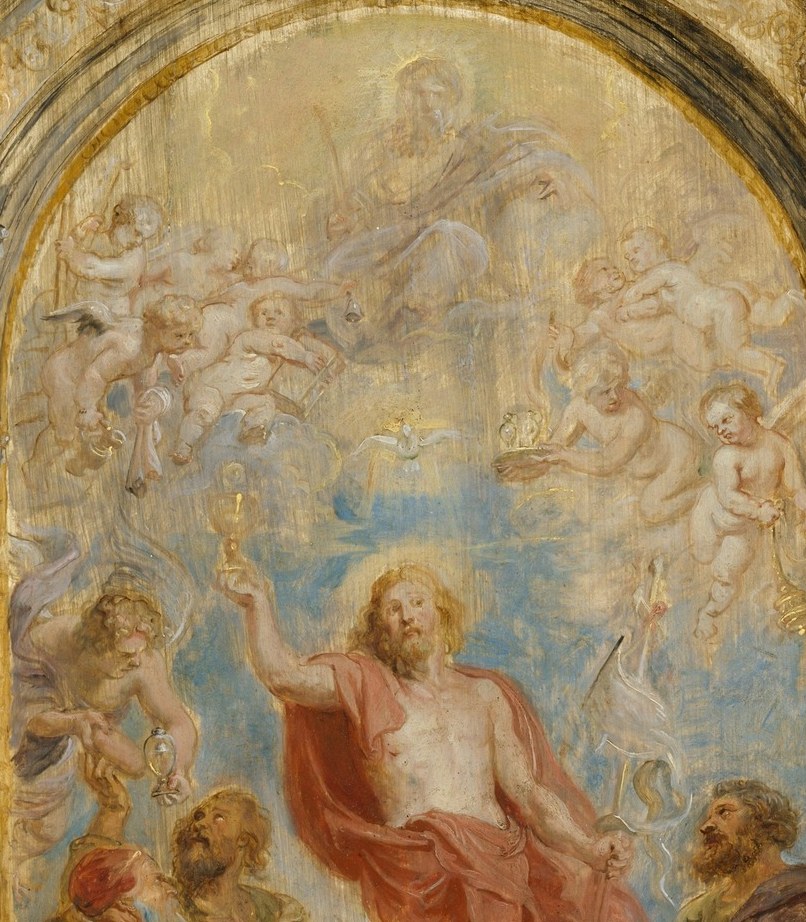
Glorification of the Eucharist by Peter Paul Rubens

This is a modello by Peter Paul Rubens, painted around 1632 to secure the commission for a towering altarpiece in Antwerp. Unlike a finished canvas, an oil sketch like this was a sales pitch made of paint. The Calced Carmelites would have gathered around this very panel to approve the design before hiring a team of artists to execute it at monumental scale.

Notice the two columns on either side. Rubens varied their capitals deliberately. He wasn't being indecisive; he was presenting the patrons with architectural alternatives, letting them choose which motif would frame their altar. The golden radiance around Christ is raw umber and lead-tin yellow, applied so the dark ground shows through. That exposed ground is a signature of Rubens's oil sketches and something a copyist can never fake.

The finished altarpiece was carved and painted in 1638 by Gerard Seghers and Hans van Mildert. This panel, barely two feet tall, survived as the definitive record of Rubens's vision. It came to The Metropolitan Museum of Art in 1929 through the Ogden Mills bequest.

What else do you think Rubens tweaked at the priests' request?

#arthistory #peterpaulrubens #baroque

Details
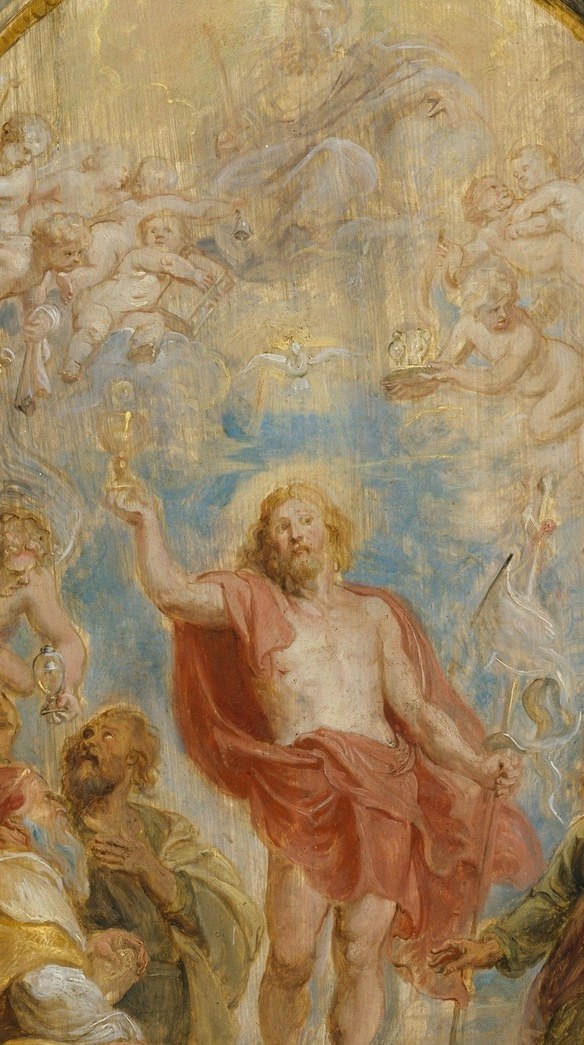
Central axis of the entire composition , the triumphant gesture and radiating golden light make this the unmistakable devotional climax; even in sketch form his pose commands the space
The columns carry alternative architectural motifs Rubens offered the patron , comparing left and right capitals reveals small but deliberate variations, turning the modello into a design conversation
Rubens deliberately varied right vs left decorative detail as patron options; this makes the modello a rare surviving record of a 17th-century commission negotiation in painted form
The largest subsidiary figure; his upward gaze anchors the viewer's eye-path from earth to heaven, and his identity as a Eucharistic type (bread/wine offering) encodes the altarpiece's theological program
Rubens renders sacred light as warm amber-gold strokes that dissolve architectural edges , the technique of letting the ground show through is a hallmark of his oil sketches and impossible to fake
Transcript

This is not a finished painting. It's a negotiation. Rubens painted this to win a commission for a huge altarpiece. Look at the two columns. Left and right. Now compare them. Their capitals don't match. He gave the priests two options in one frame, and waited for a yes. Beneath Christ: a skeleton. Death defeated, painted in five quick strokes.