Artwork
Glorification of the Eucharist
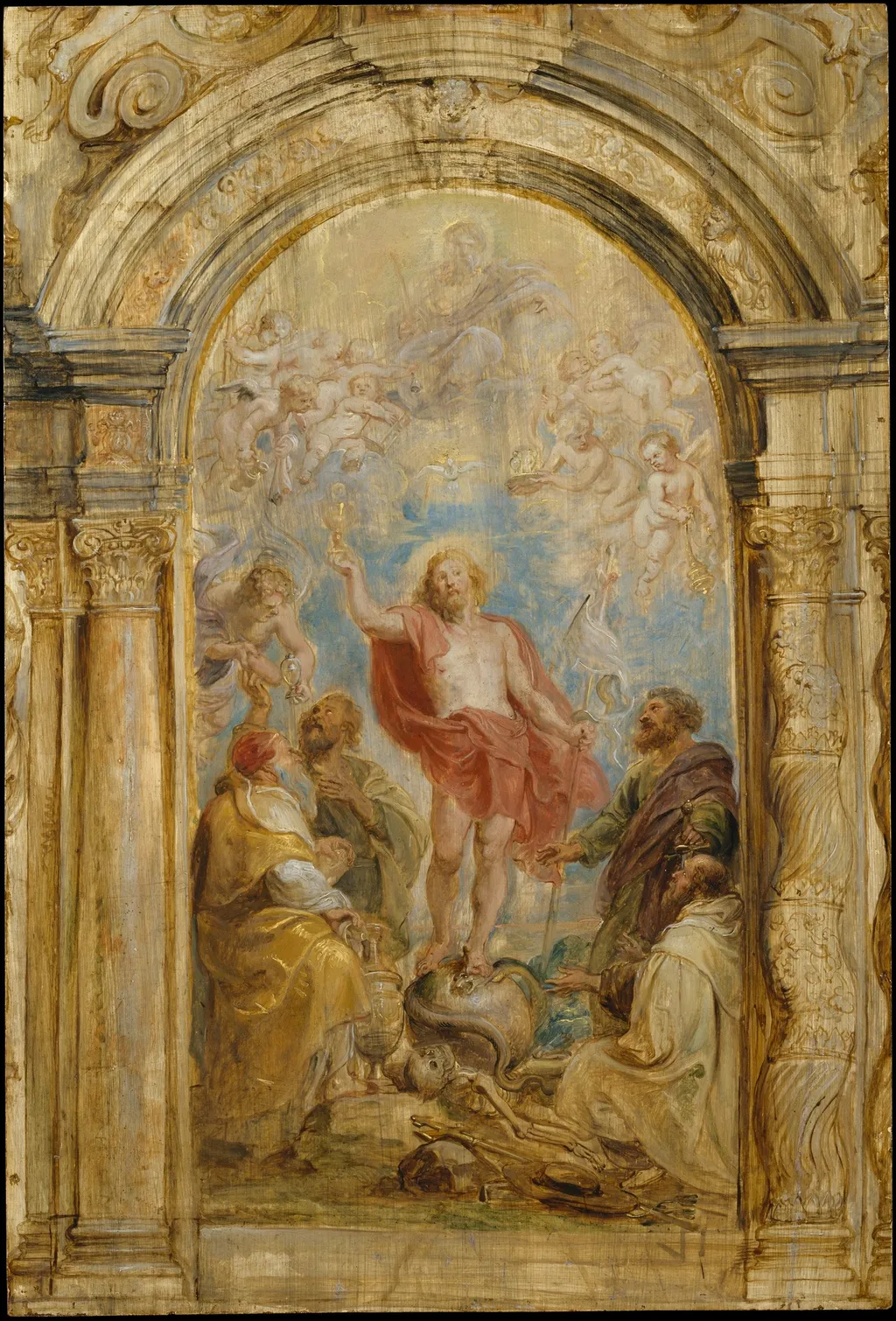
Glorification of the Eucharist is an oil painting by the Flemish Baroque painting artist Peter Paul Rubens. It dates from 1630 and is held in the collection of the Metropolitan Museum of Art.
About this work
Peter Paul Rubens painted the oil sketch around 1630-32, staging the risen Christ atop a snake and skeleton, emblems of sin and death, flanked by four saints who defended the Eucharist. It served as a design for the high altar of the Calced Carmelites in Antwerp, later realized in marble and paint by Gerard Seghers and Hans van Mildert.
Subject & Meaning
Its iconography features Christ, angels, Paul the Apostle, Melchizedek, Elijah, Cyril of Alexandria, a skeleton, and a snake.
The painting's subject is the glorification of the Eucharist, as given by its title. Its iconography features Christ, angels, Paul the Apostle, Melchizedek, Elijah, Cyril of Alexandria, a skeleton, and a snake. These figures collectively symbolize the Eucharist's foundational role in Christianity: Melchizedek and Elijah are Old Testament prefigurations of the sacrament, while Cyril of Alexandria was a Church Father who defended Eucharistic theology.
The skeleton and snake likely represent death and sin, which the Eucharist overcomes. Thus, the work conveys the triumph and central significance of the Eucharist.
Technique & Style
Executed in oil paint on a panel support, the painting measures 71.1 cm in height and 48.3 cm in width. The medium allows for rich, opaque layering typical of Baroque religious works. Stylistically, the composition brings together a dense array of figures, including angels, Christ, and various saints such as Paul and Cyril of Alexandria, within a dramatic, hierarchical arrangement that emphasizes the theological theme. The physical support and material are consistent with Rubens’s smaller devotional panels of the period.
History & Provenance
Created in 1630 by Peter Paul Rubens, this oil painting on panel was owned by August de Ridder and Johanna Elisabethe Louise May before entering the collection of the Metropolitan Museum of Art, which also records its location as Kronberg im Taunus. Commission details are not documented in the available sources.
Overview
Peter Paul Rubens created this oil sketch, known as a modello, between 1630 and 1632. It served as his preliminary design for a significant altarpiece ensemble intended for the church of the Calced Carmelites in Antwerp. Although the final sculptural and painted work was completed by other artists, Rubens's preparatory panel remains the primary document of his original artistic concept, showcasing the vibrant energy characteristic of his mature Baroque period.
Own this work as a print
Artist & collection
Artist
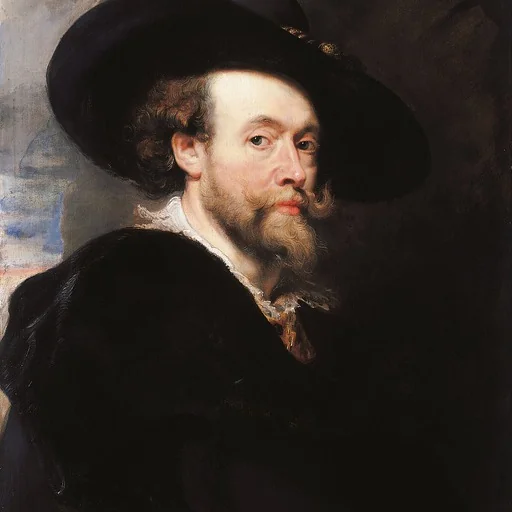
Sir Peter Paul Rubens ( ROO-bənz; Dutch:; 28 June 1577 – 30 May 1640) was a Flemish artist and diplomat.

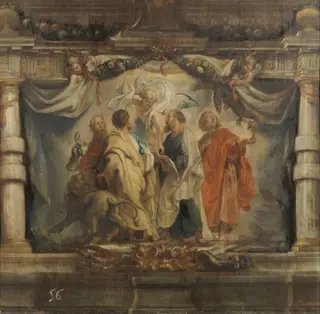
- Los cuatro evangelistas
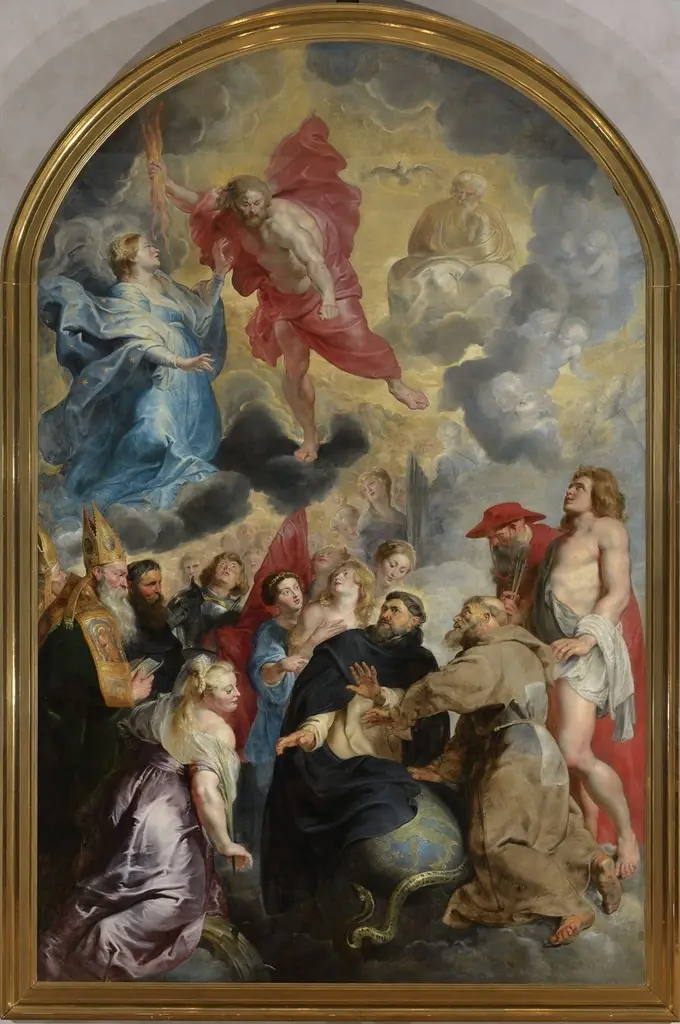 Saint Dominic and Saint Francis Protecting the World from the Wrath of Christ
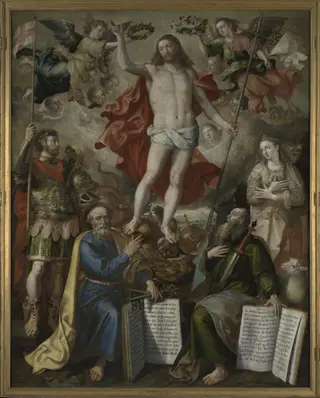 Christ Triumphant
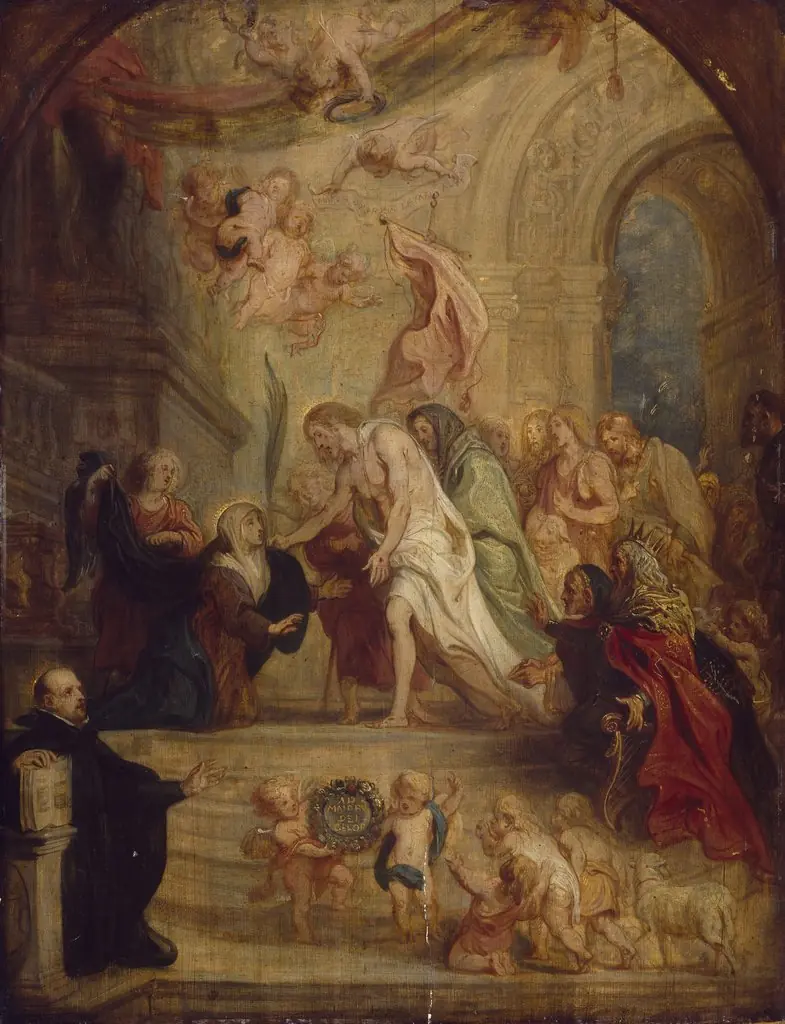 The Resurrected Christ Appearing to his Mother
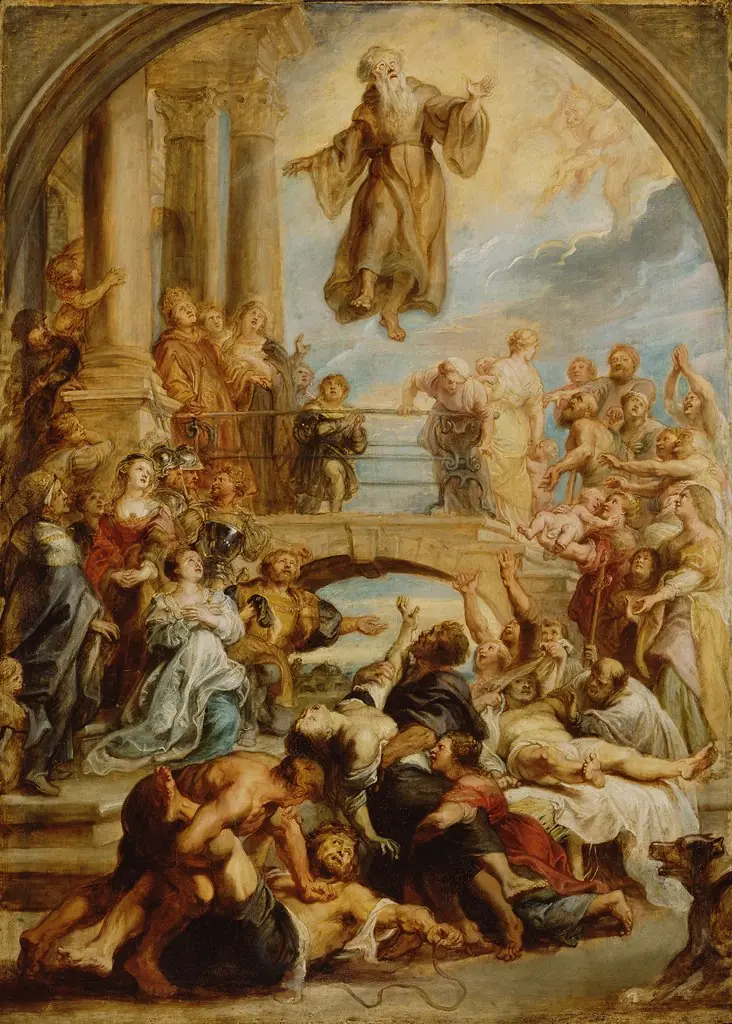 The Miracles of Saint Francis of Paola
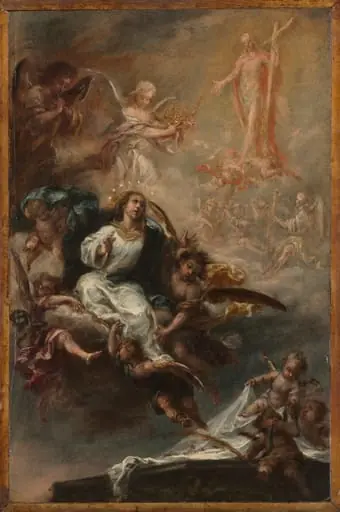 Study for "The Assumption of the Virgin" for San Augustín, Seville
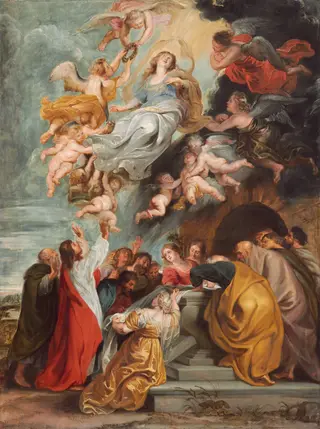 The Assumption of the Virgin
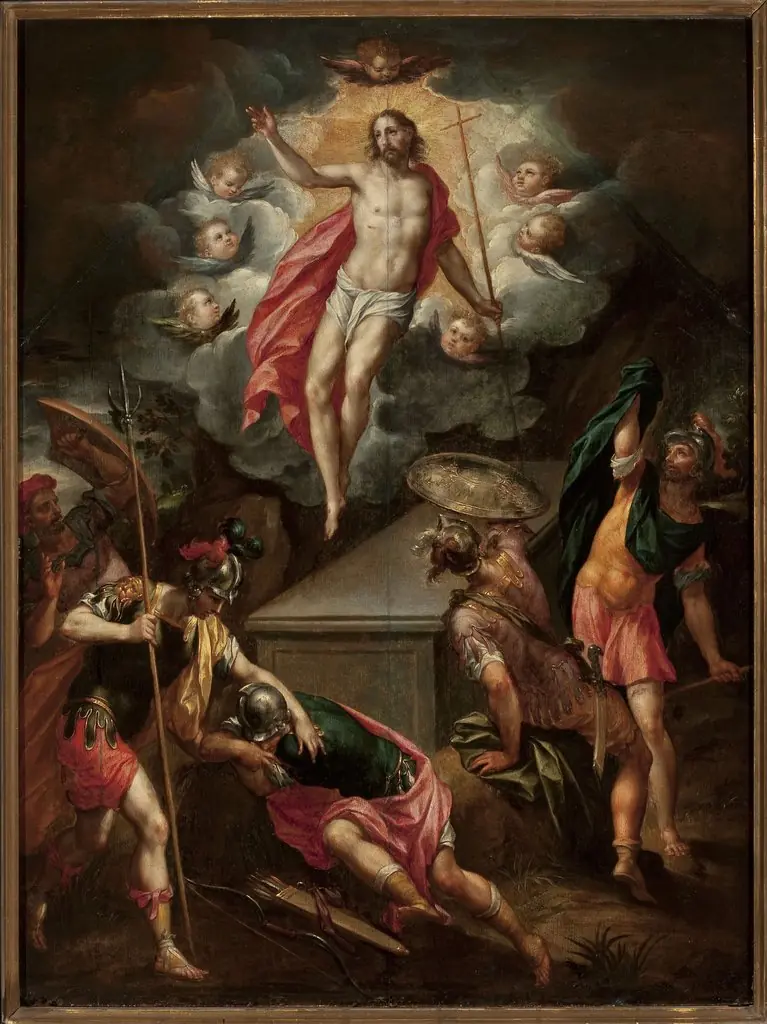 Resurrection of Christ
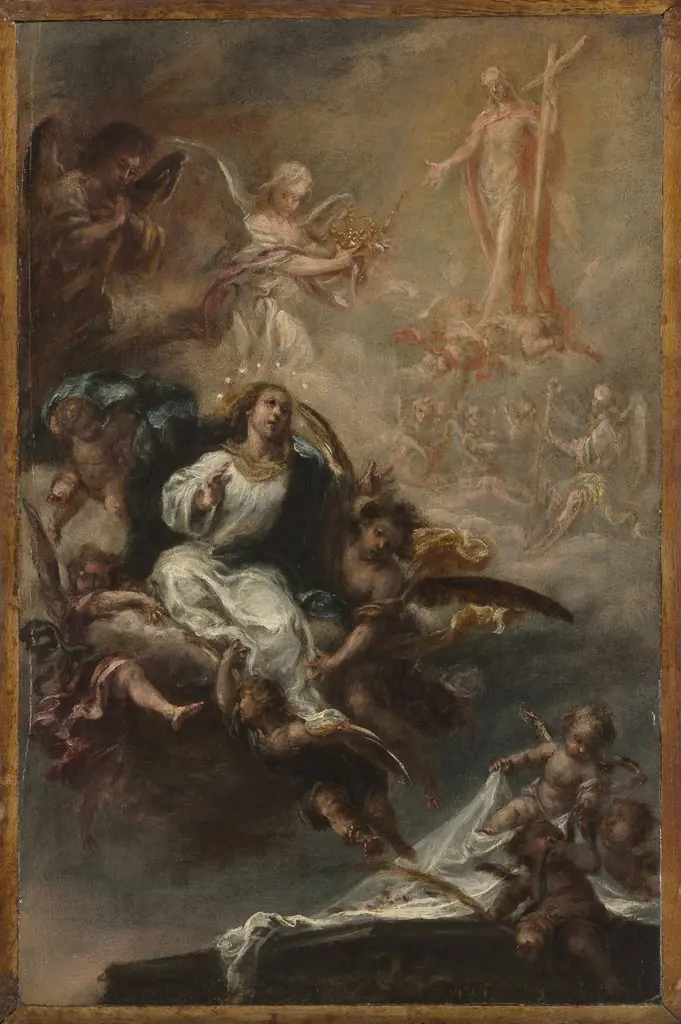 Study for "The Assumption of the Virgin" for San Augustín, Seville
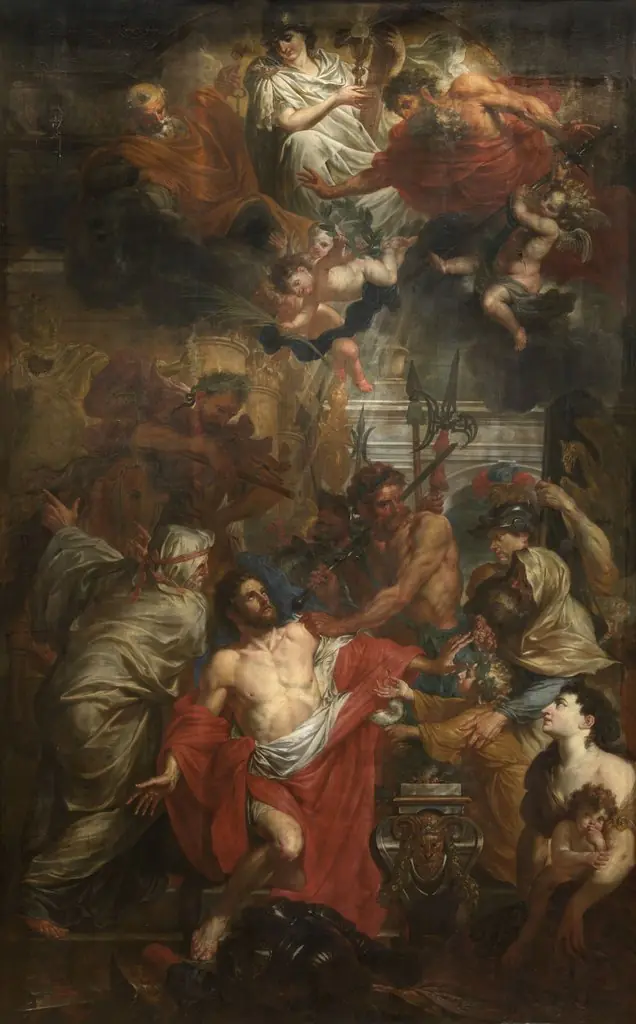 The Martyrdom of Saint George
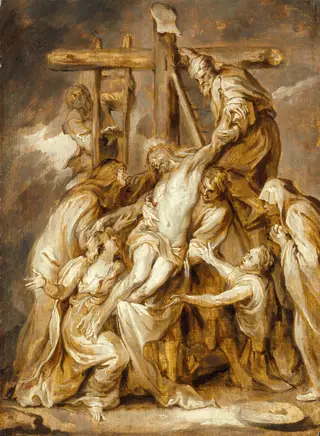 The Deposition
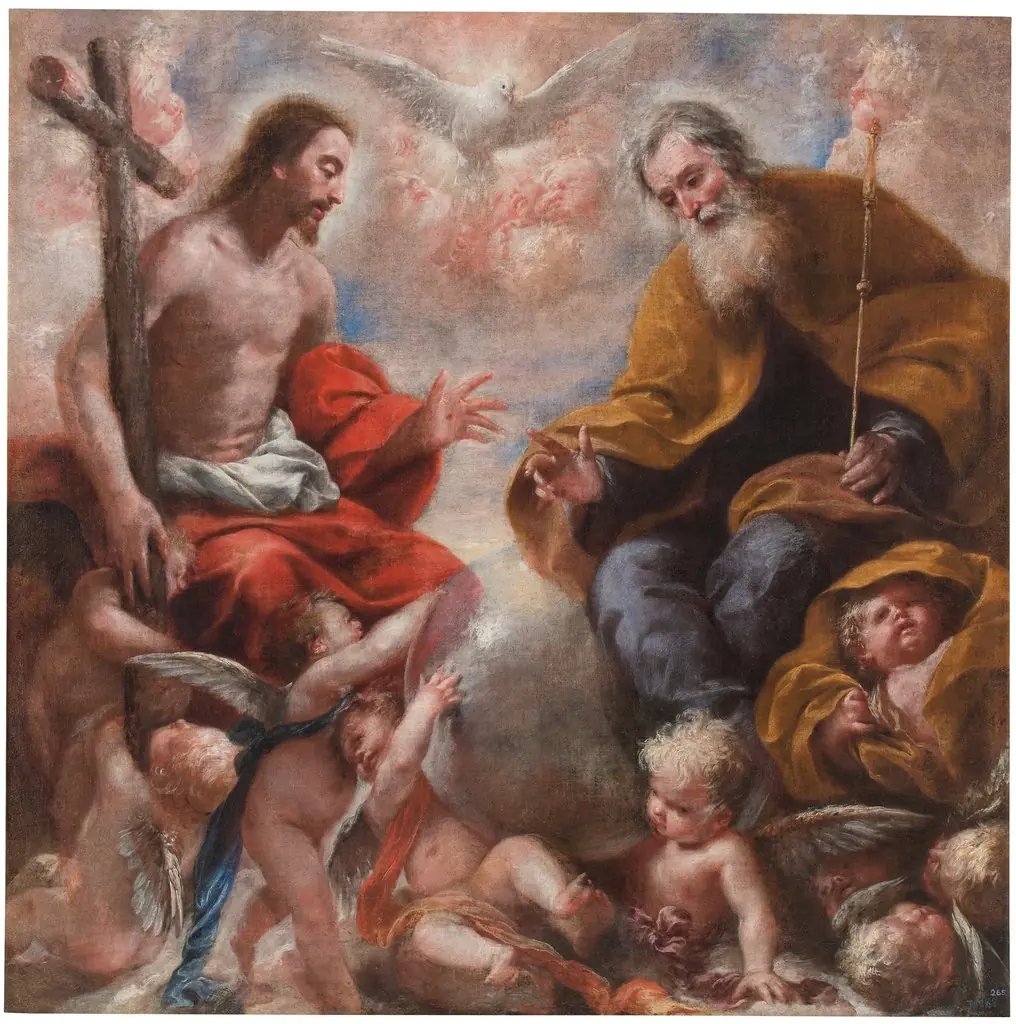 The Holy Trinity