Panel with the Angel Appearing to Zacharias (from a Retable depicting Saint John the Baptist and scenes from his life) by Domingo Ram
This is Panel with the Angel Appearing to Zacharias by Domingo Ram, painted around 1500 and now at The Metropolitan Museum of Art. It was once part of a larger altarpiece dedicated to the life of Saint John the Baptist, a single panel inside a much bigger story.
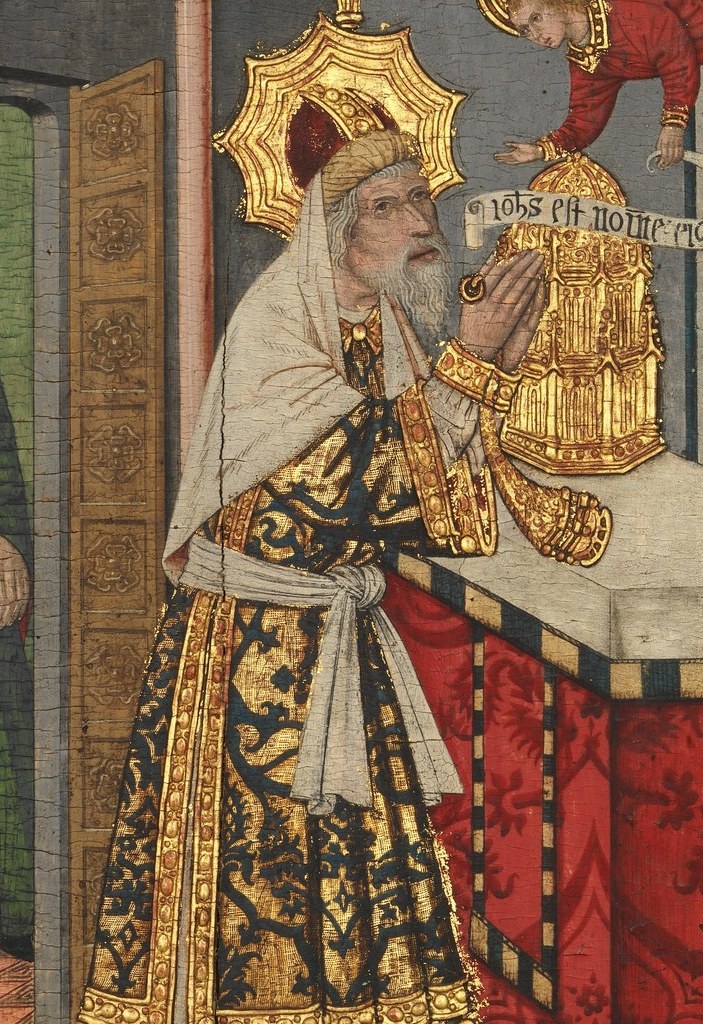
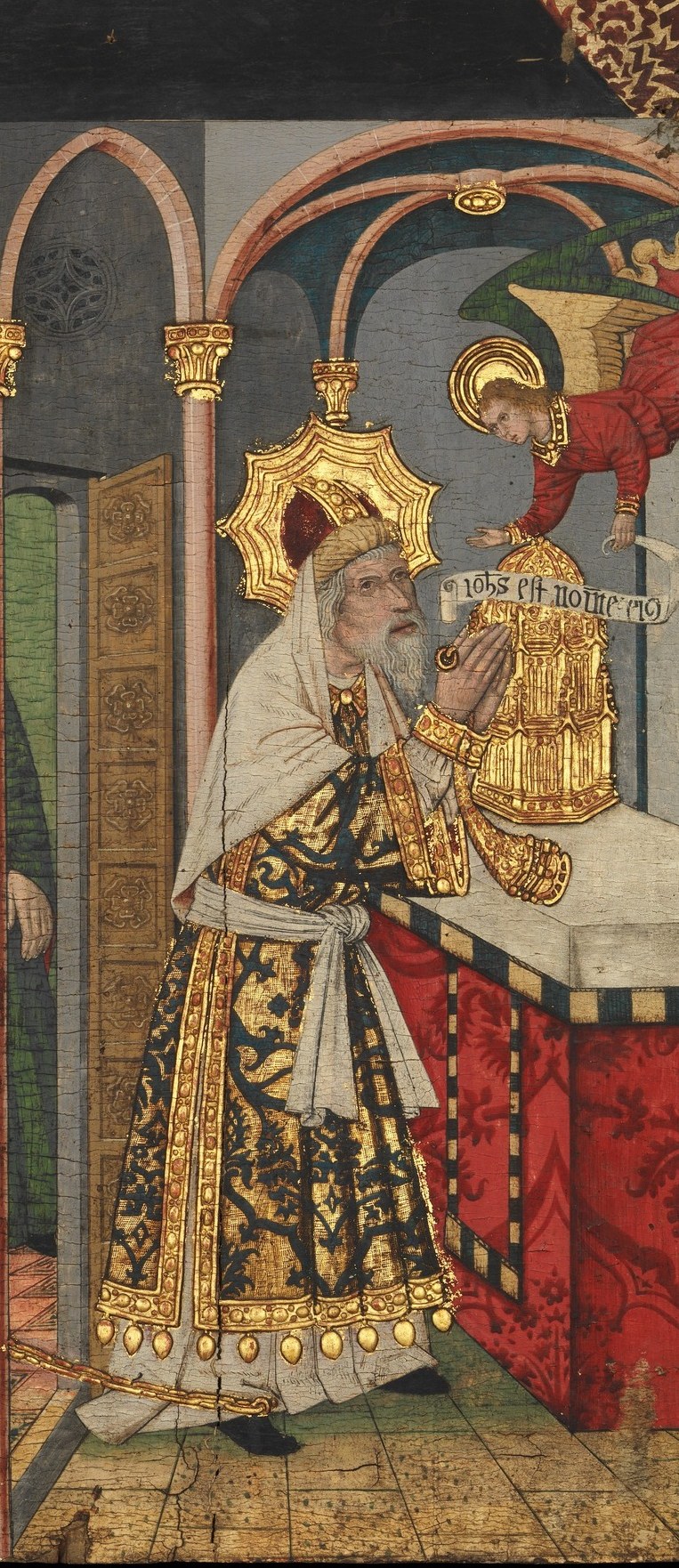
Look at Zacharias’s gold-and-black vestment. From a distance it reads as heavy brocade, the kind a high priest would wear in the Temple. Move closer and the illusion dissolves into thousands of tiny stippled dots. No metallic thread, no embossed surface, just egg tempera and a fine brush, dot by dot, on a flat wood panel.
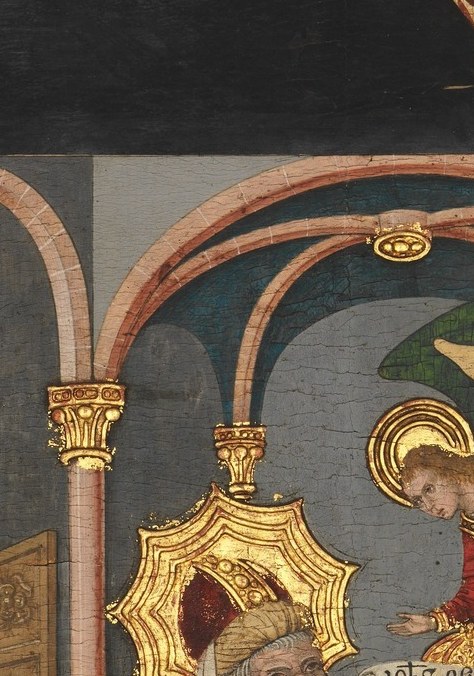
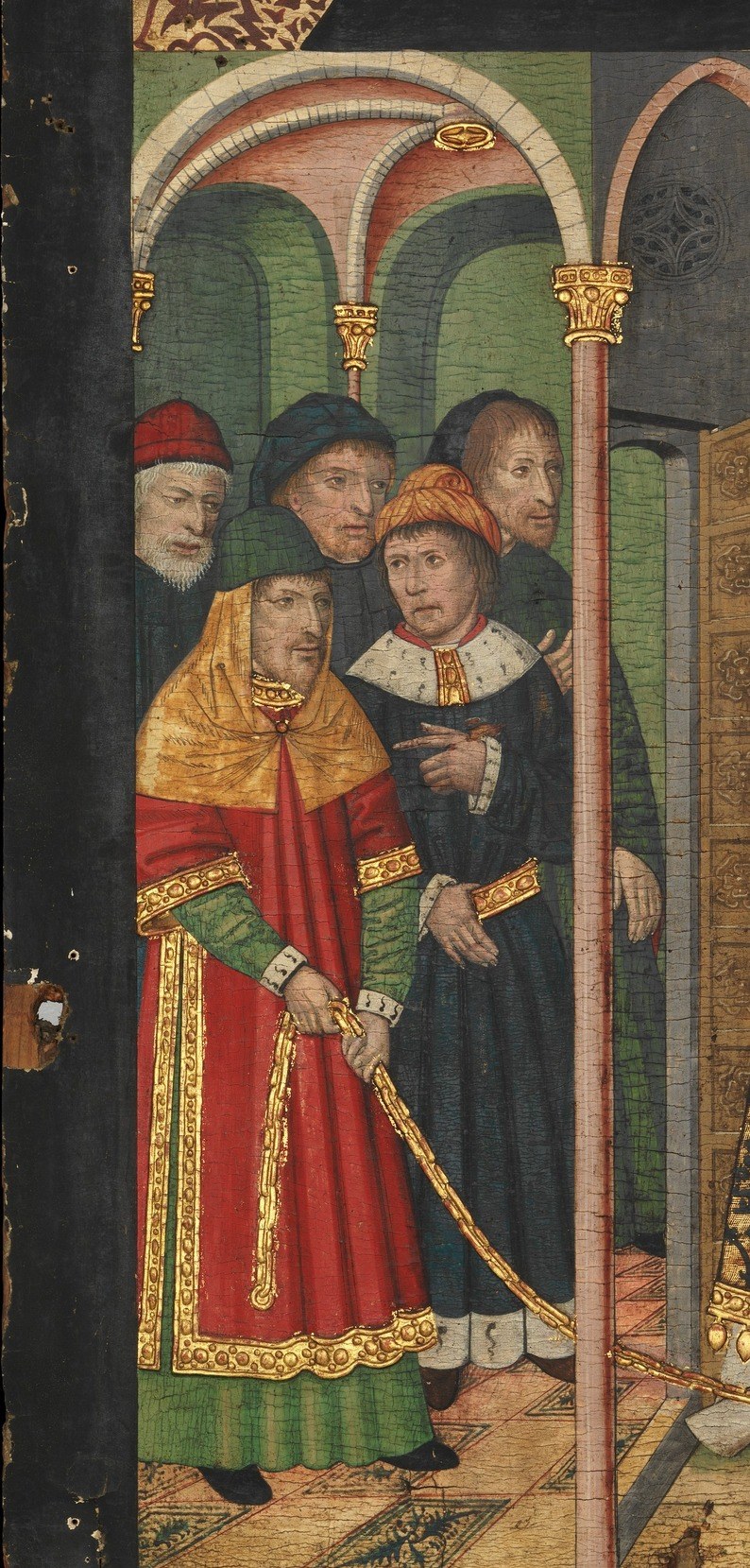
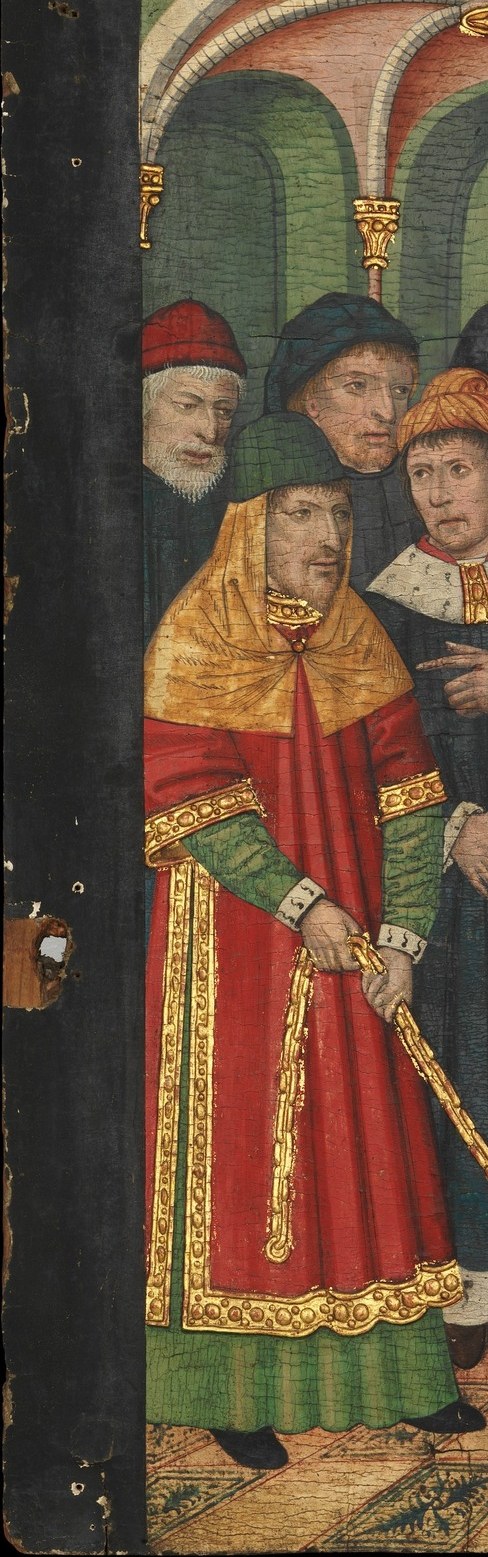
Ram worked in Aragon in the late 1400s, at a moment when Gothic decorative tradition still held sway. The goal was not realism in our sense but a convincing richness, a visual parallel to the sacred drama unfolding. The angel appearing at the upper right, the witnesses watching from the left, and Zacharias at the altar all share a stage where paint itself performs the miracle.
Every dot of gold on that chasuble is a small act of patience. When you find your eye drifting back to it, you are looking at the thing Ram spent the most time on, and the thing he knew you would remember.
Details
Transcript
It reads like heavy, woven gold. The mitre alone could pass for gilded metalwork. But this is tempera paint on a wood panel, around 1500. No woven threads. Just egg, pigment, and a very small brush. Domingo Ram built the brocade by stippling dots of black and gold. Each dot tricks the eye into reading a continuous textile pattern. A miracle of paint, made for a story about a miracle.