Lady Mary Templetown and Her Eldest Son by Lawrence, Thomas, Sir
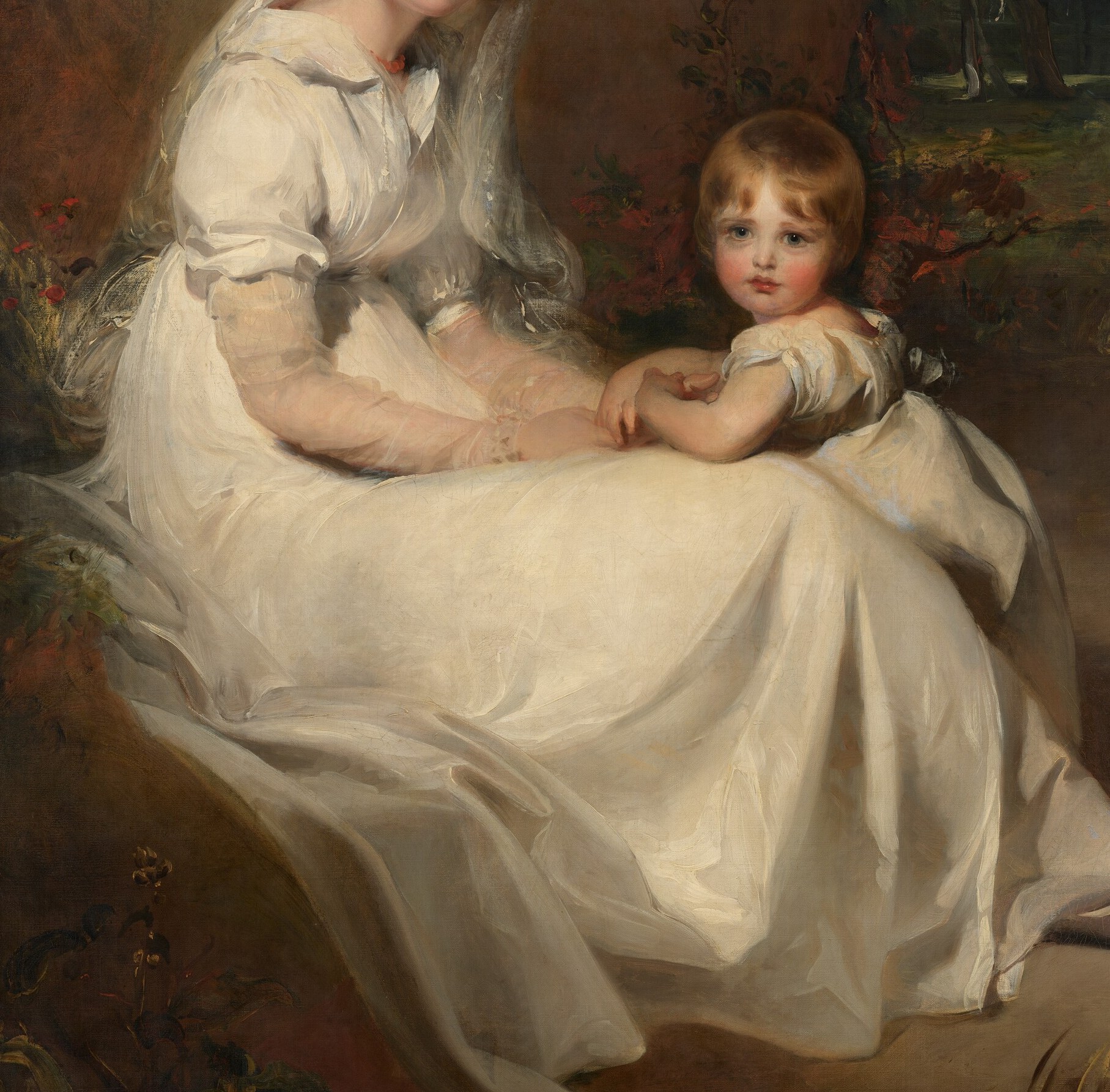
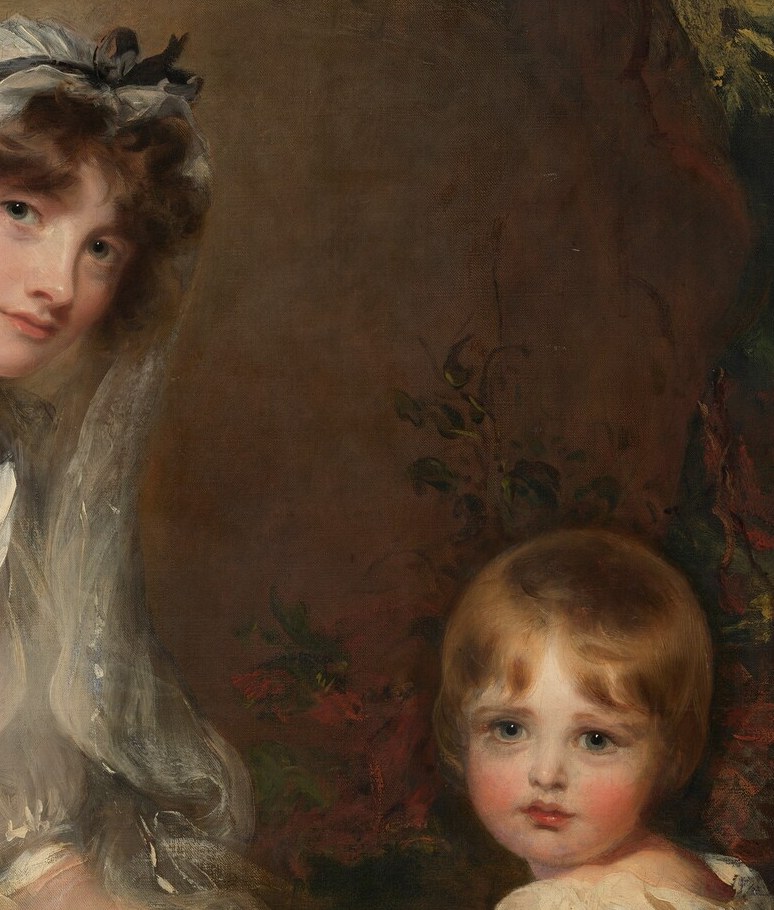
Thomas Lawrence painted Lady Mary Templetown and Her Eldest Son in 1802, and the canvas now hangs in the National Gallery of Ireland. The single most arresting thing about it is the white muslin dress. It fills the lower half of the portrait, yet it feels almost weightless.
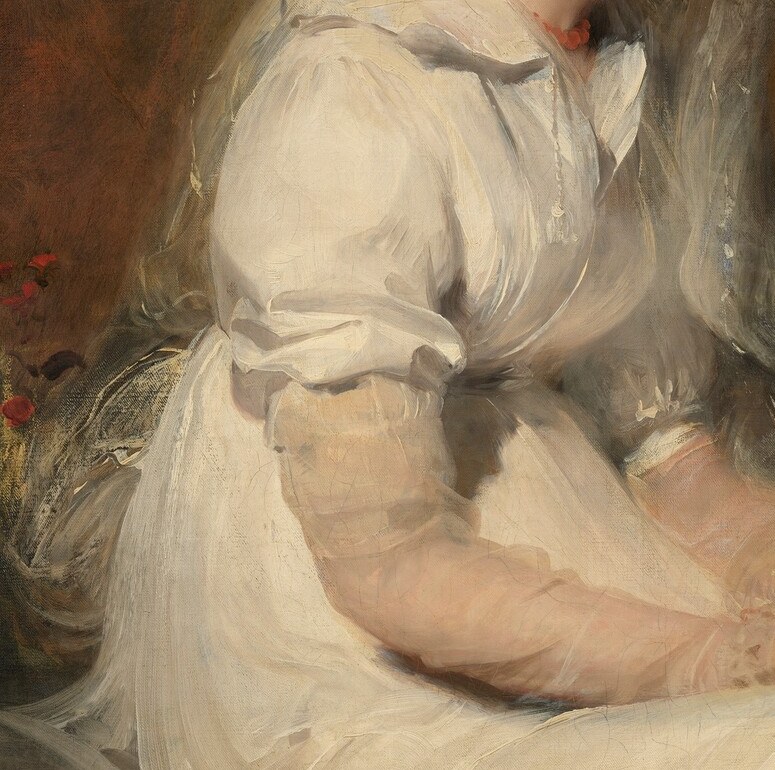
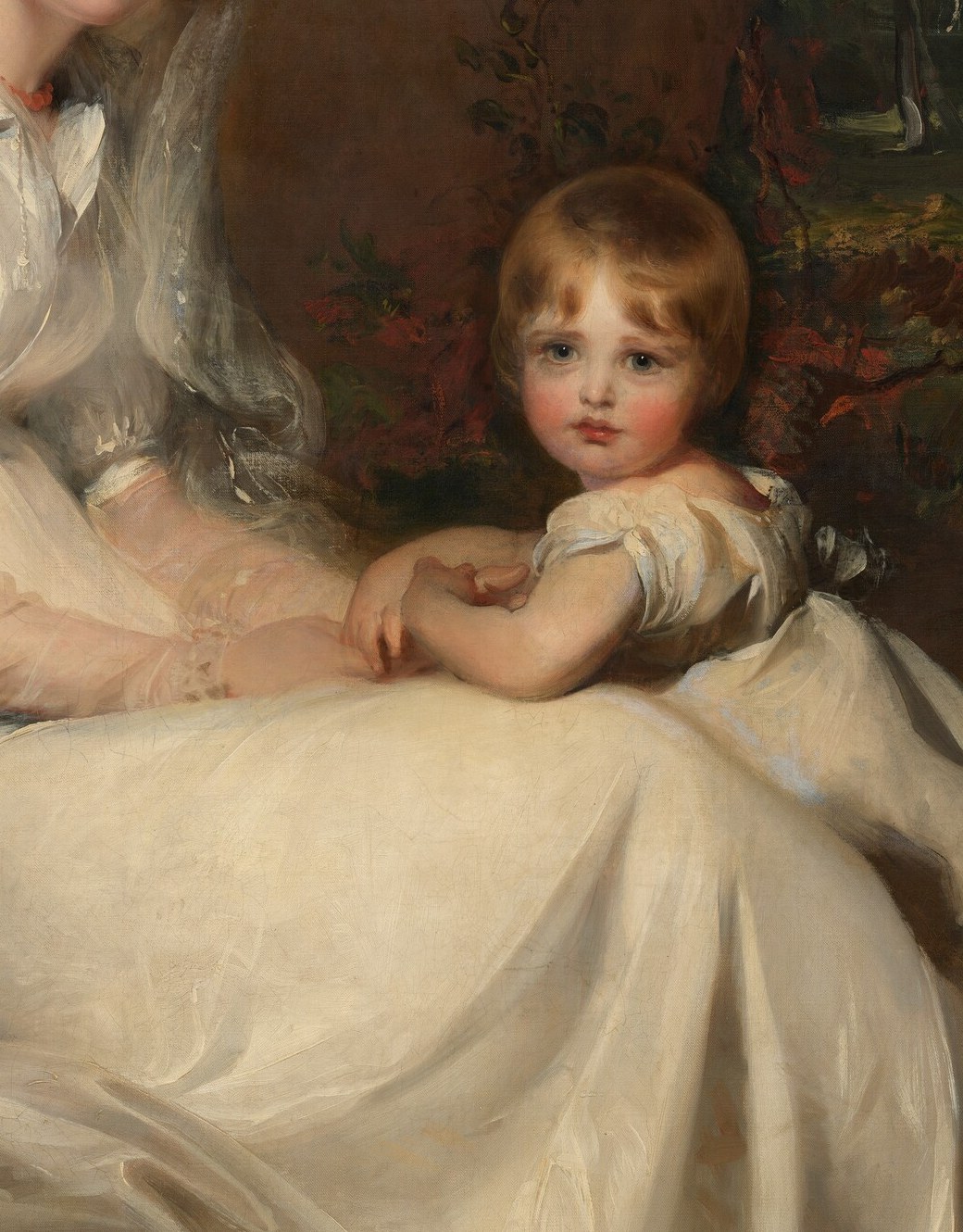
Look at the skirt. Lawrence used thin, dragged brushwork so the ground layer glows through, creating the illusion of translucent fabric. The shadows are not gray, they are warm, milky veils of pigment. Then shift your eye to her bare forearm. The paint body changes completely: more loaded, more opaque, solid flesh resting on airy cloth. Two textures, one white palette, and the transition is invisible. The boy’s tunic does the same thing with even fewer strokes.
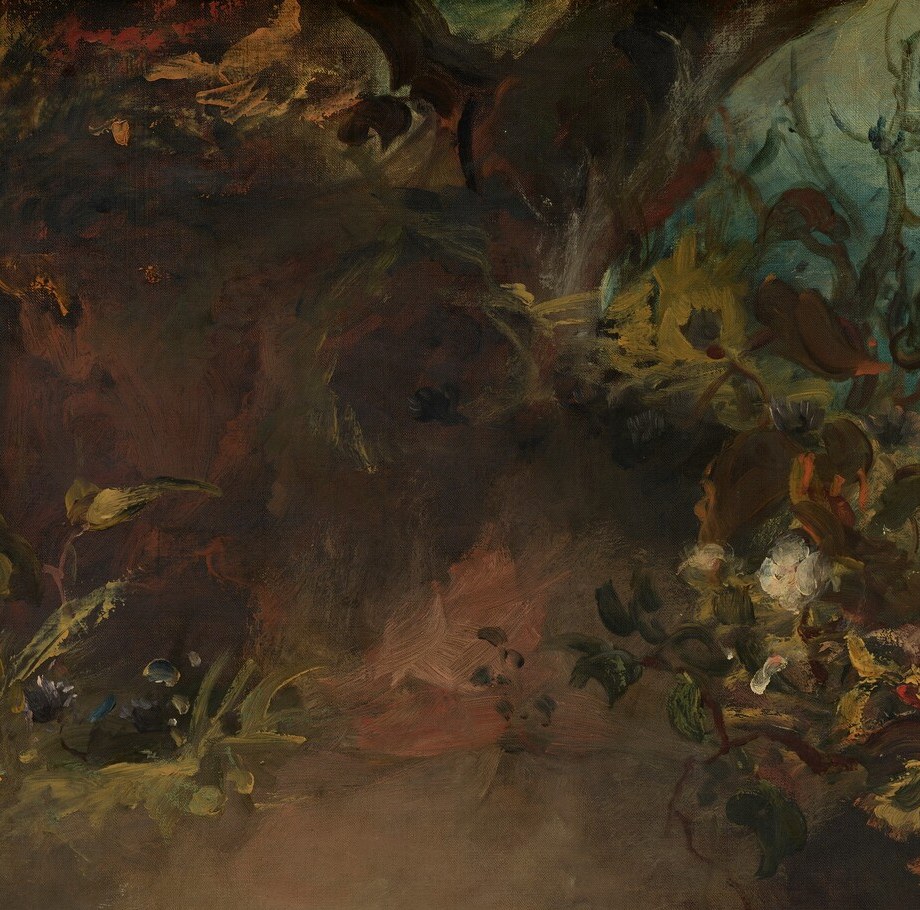
Lawrence was only 33 when he painted this. He was already the king’s portraitist-in-waiting, famous for making aristocratic women look luminous and unreachable, yet here he chose to show a mother and child in a park, with a dog, in a moment of unguarded warmth. The dark mass of trees on the left pushes the figures forward, but the real engine of the picture is the light itself, and the restraint to let bare canvas do half the work.
Once you see the economy of the brushwork, the dress never looks the same again.
Details
Transcript
She seems to wear a cloud. White on white, but every fold holds light. The paint is thin. The canvas breathes through it. Now look at her bare arm. Solid flesh, thicker paint. He knew when to stop. Her son's tunic is the same trick, faster. A wrist. A sleeve. Five strokes, and fabric holds a body.