Lucretia by Paolo Veronese
Paolo Veronese's Lucretia, painted around 1580 and now in Vienna's Kunsthistorisches Museum, is a manual of Venetian painting technique disguised as a tragedy.
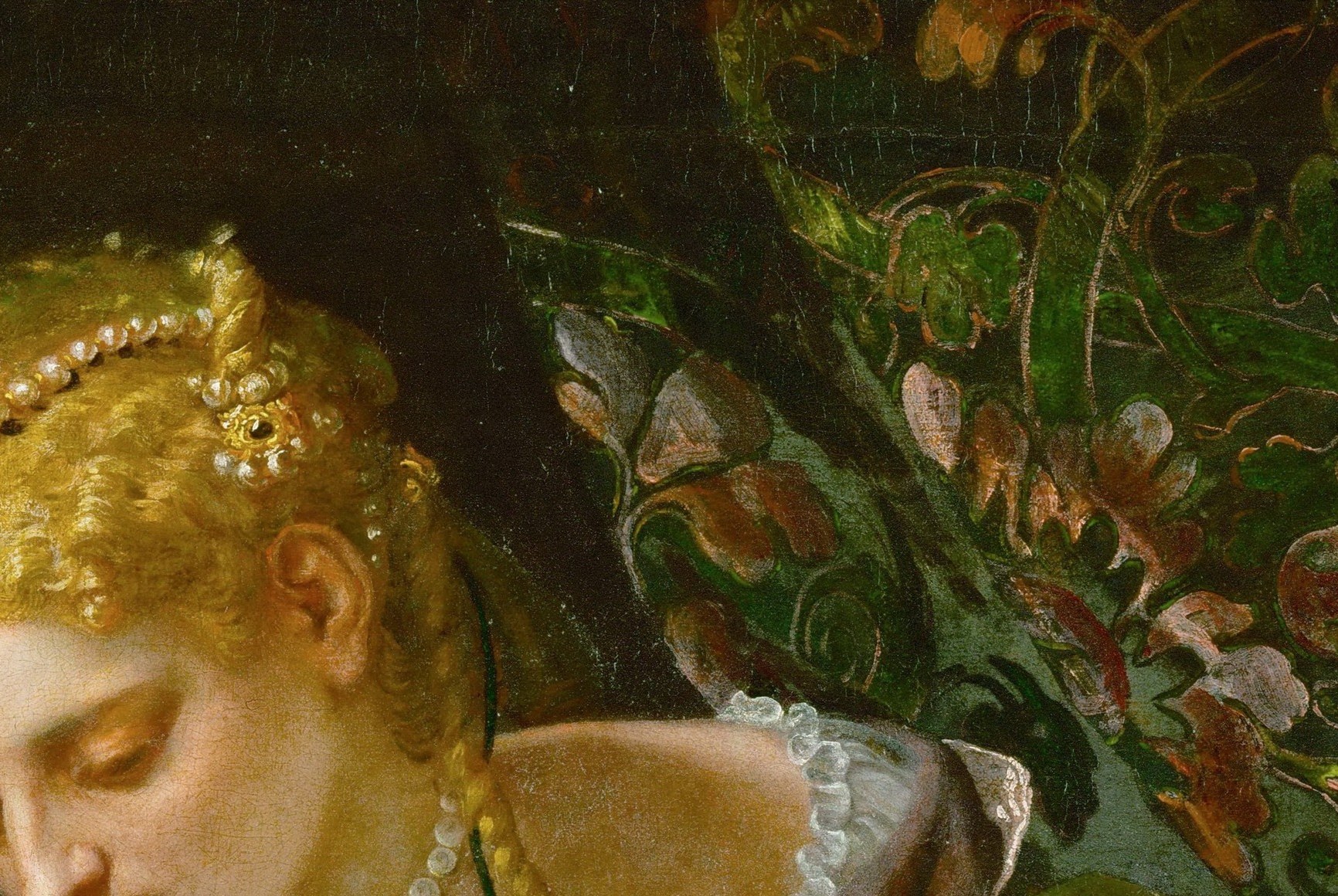
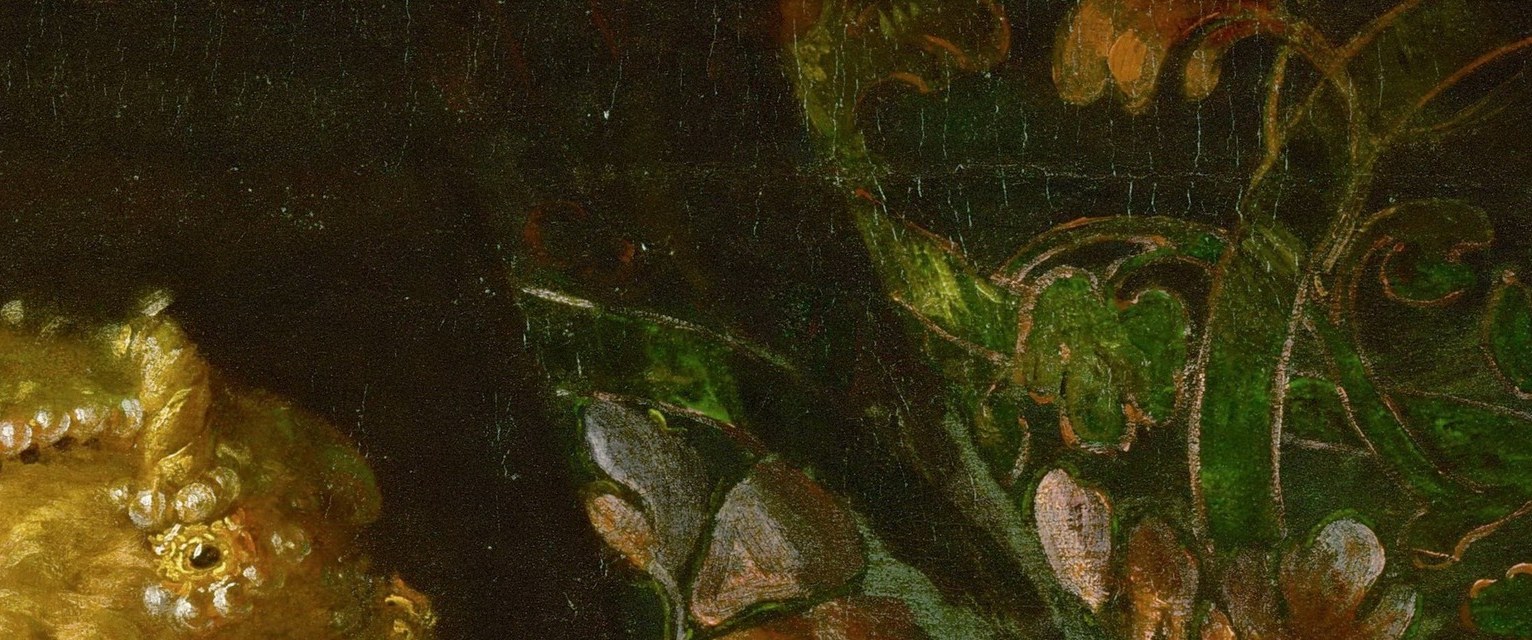
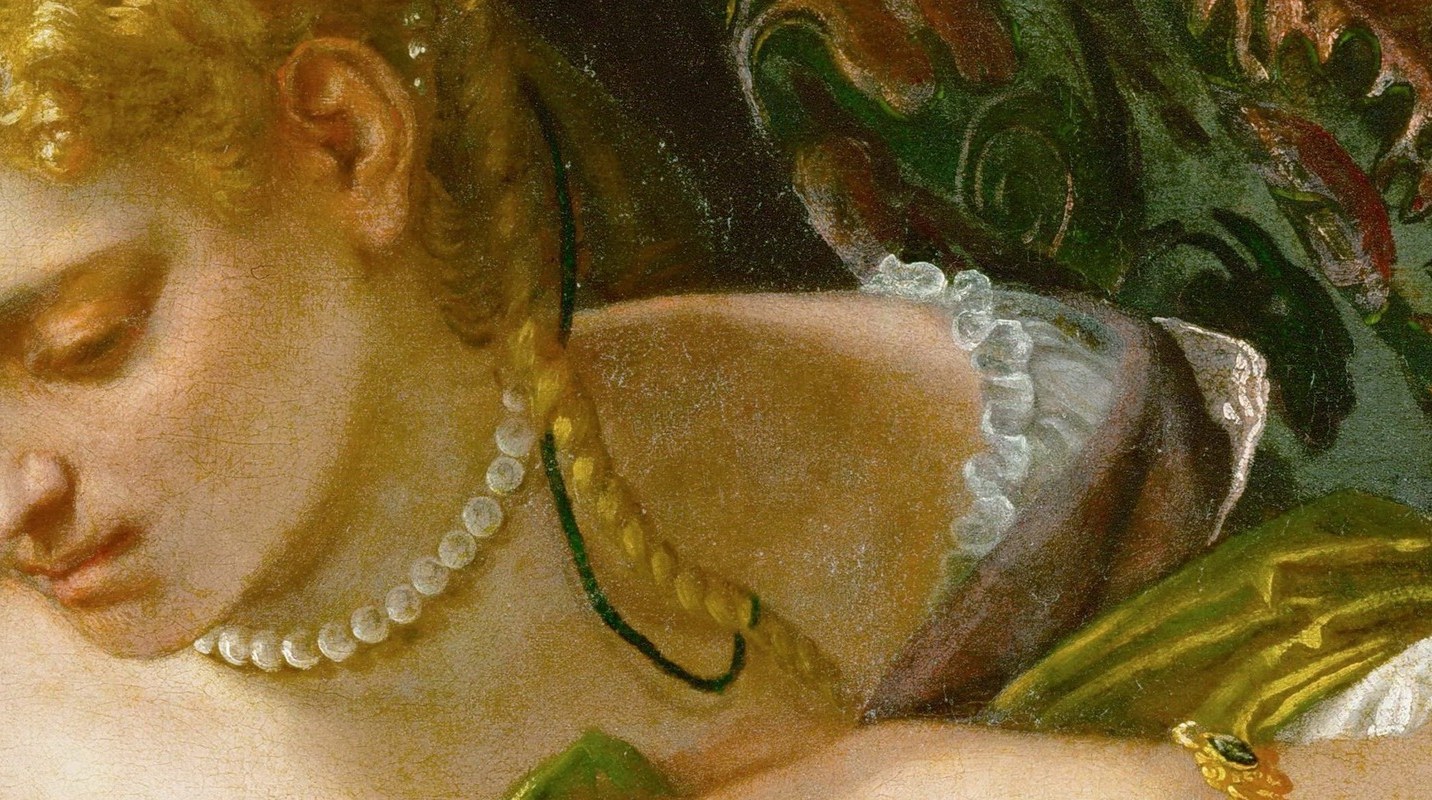
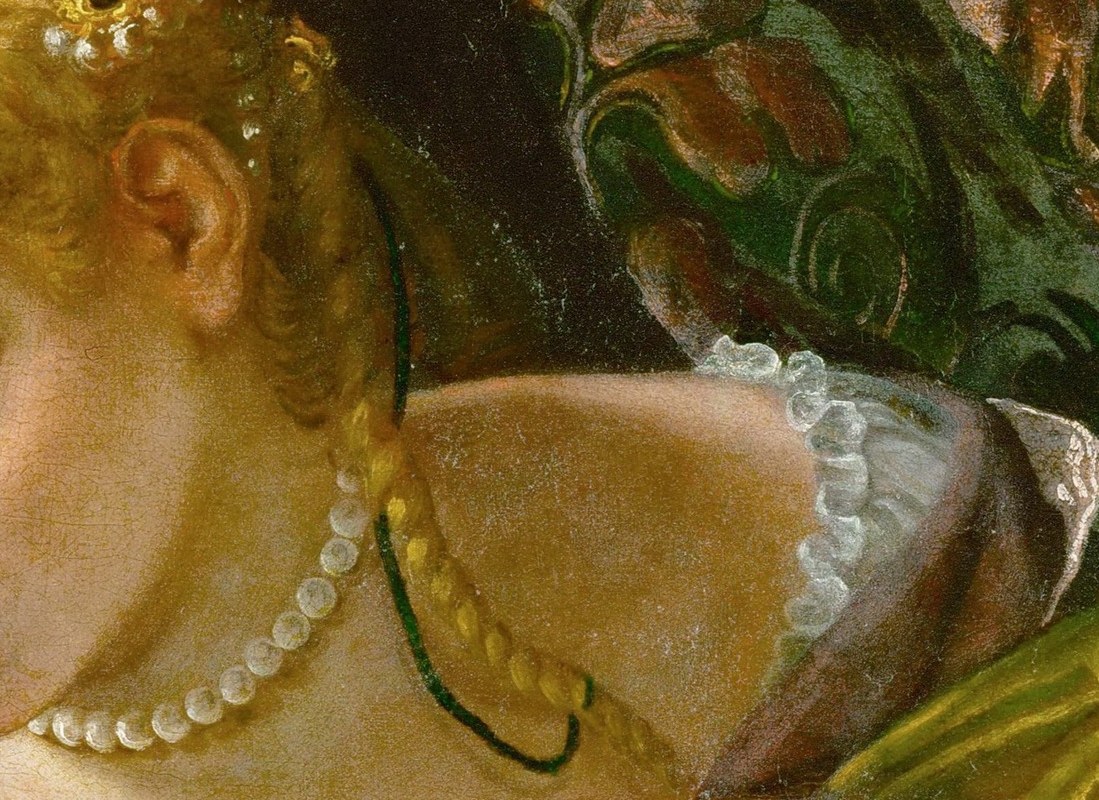
What looks like solid gold in her headdress is a calculated optical trick: lead-tin yellow laid beside pure lead white, with a scratch of raw umber in the deepest fold. The pearls are single flicks of white, each one placed so a hard highlight reads as a polished sphere. Veronese never painted gold and never painted pearls. He painted only the light that hits them.
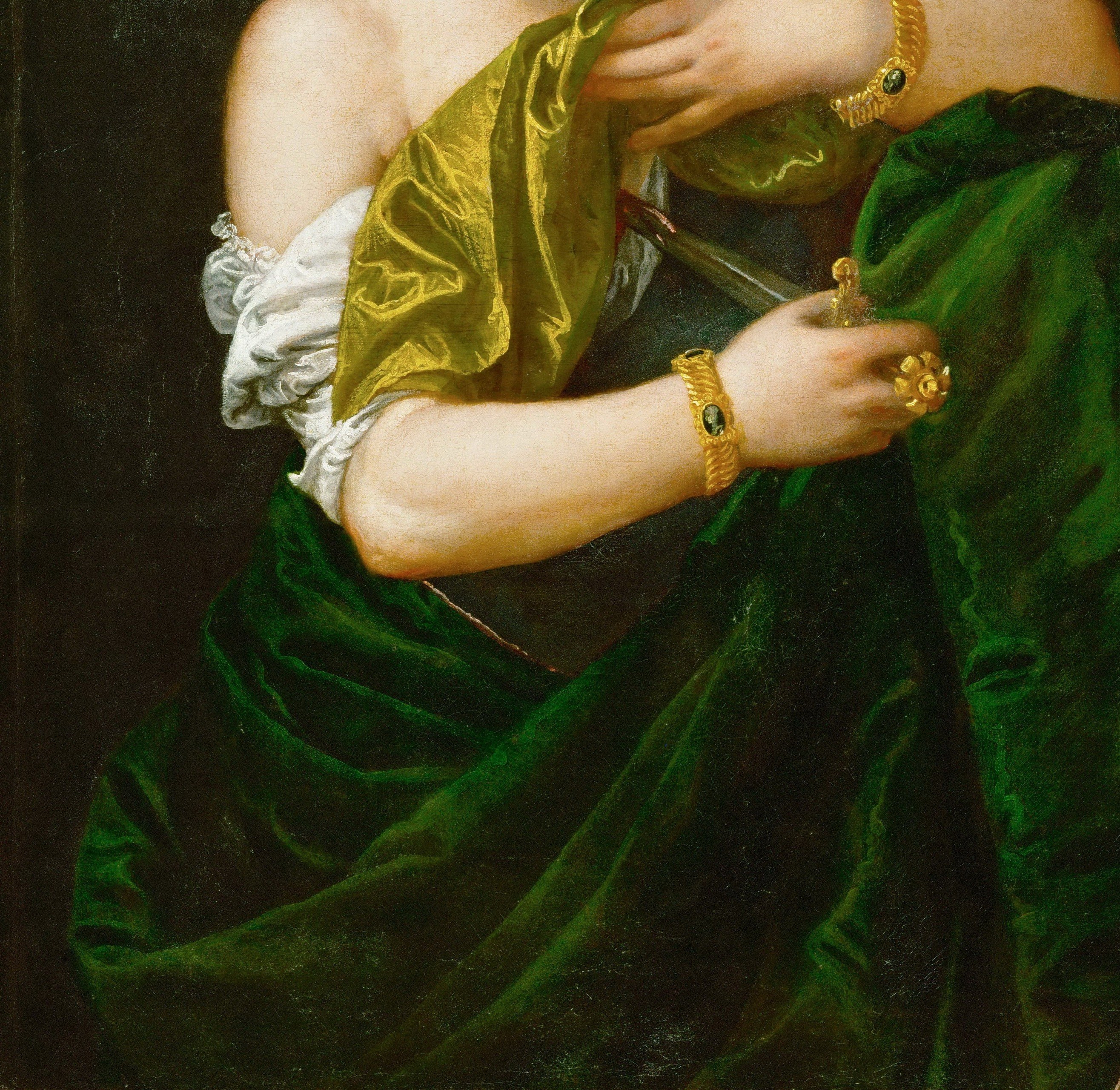
The emerald drapery across her lap is the film's payoff. Venetian painters worked wet into wet, and that green, a copper-based pigment, was laid in one confident session. The folds are not drawn with lines but modeled entirely by the weight of the brush, darker pigment pushed into the shadows while the loaded bristles lifted to leave a ridge of pure colour for the highlight.
Veronese was one third of the great Venetian triumvirate with Titian and Tintoretto. This is not one of his enormous feasts but a cabinet picture, and it shows his hand at its most precise. The shadow pooled beneath her chin is not black: it is a thin glaze of umber and ground lapis lazuli, dark but breathing, the skin tone still glowing through.
The means are simple. The effect is total. That is the Venetian secret.
Details
Transcript
She is about to die. But look at what she is wearing. That gold does not exist. It is lead-tin yellow and white. A single dab of white on each pearl makes a hard sphere reflect light. Now pull back and watch the silk fold. Emerald green, painted in one pass, wet into wet. The shadow under her chin is not black. It is umber and lapis, glazed thin.