Denise Maréchal by Rysselberghe, Théo van
Théo van Rysselberghe's "Denise Maréchal," painted around 1894 and now housed in a private collection, is a striking example of the pointillist technique, where the entire image is constructed from small, distinct dots of color.
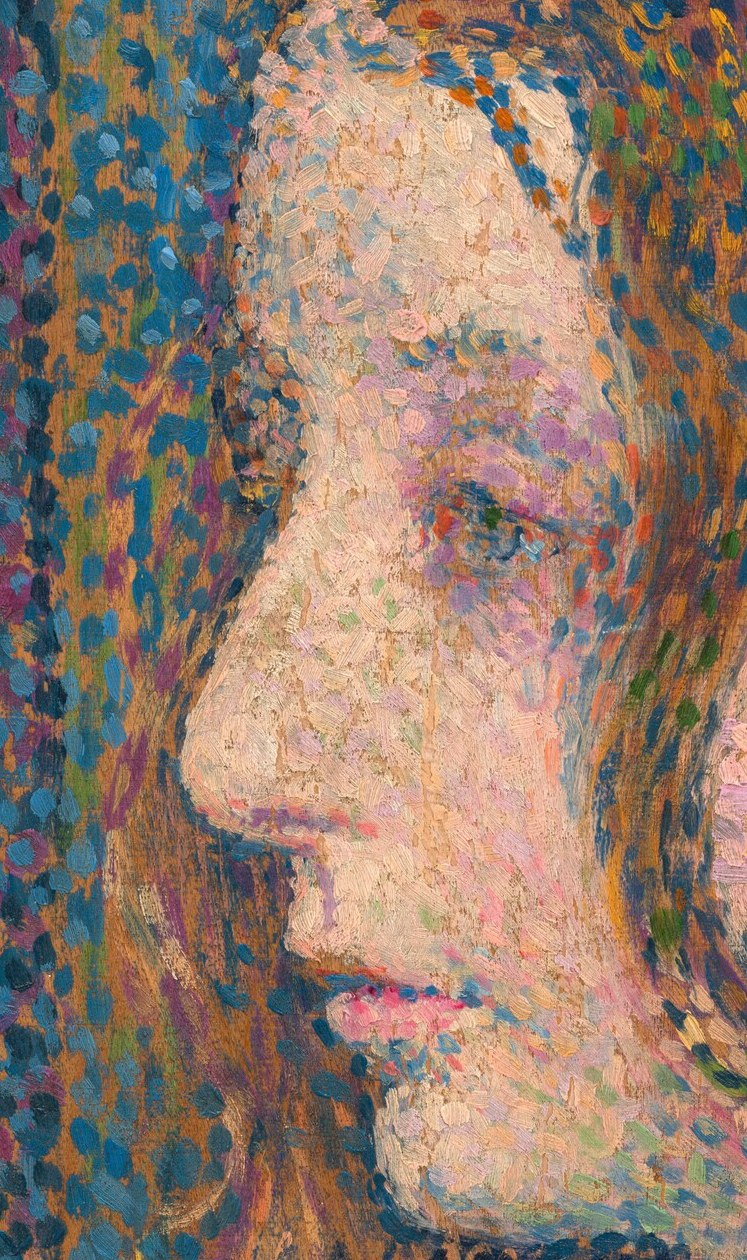
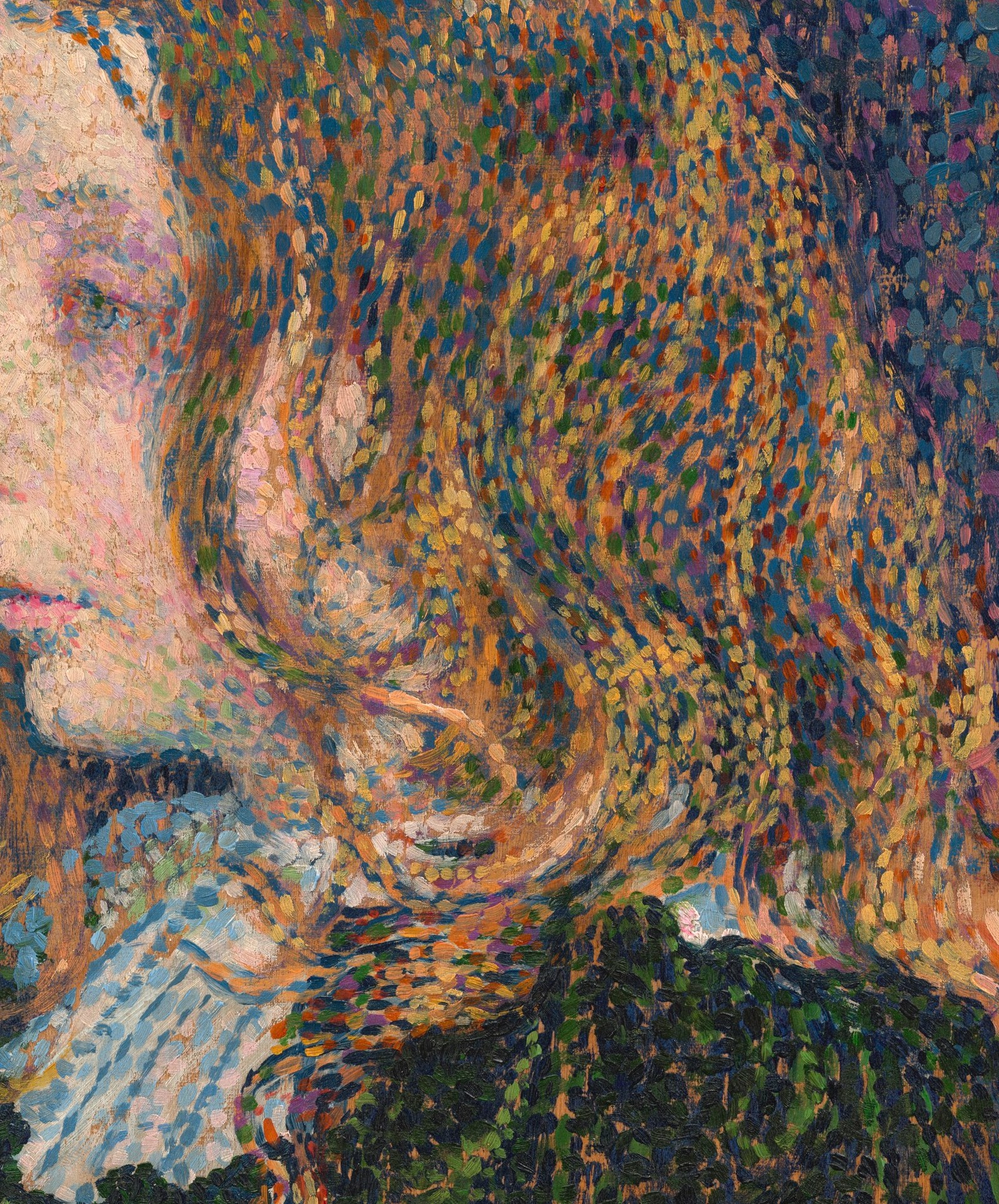
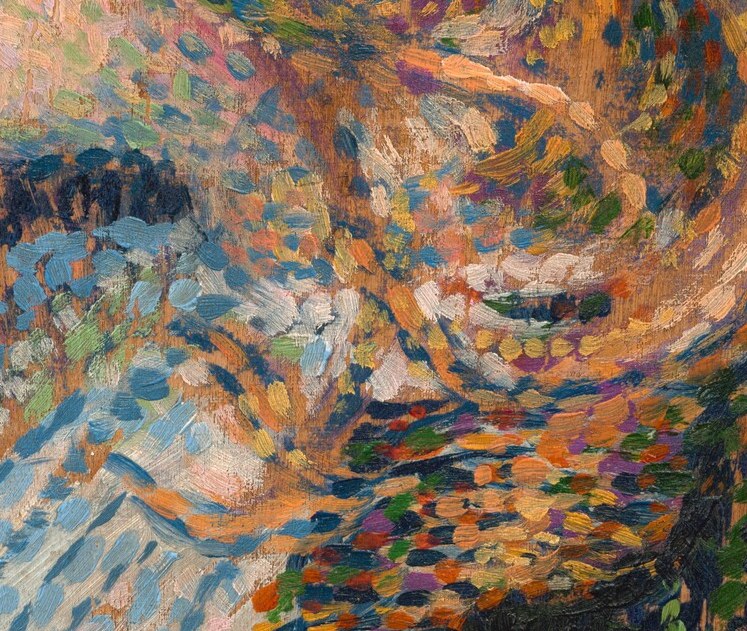
Look closely at Denise Maréchal's face, hair, and dress, and you'll see how thousands of individual paint marks create the illusion of smooth tones and textures. This meticulous method, a hallmark of Neo-Impressionism, allows the colors to optically blend in the viewer's eye, resulting in a vibrant, luminous quality that traditional brushstrokes often couldn't achieve.
Van Rysselberghe was a prominent Belgian artist and a key figure in the Neo-Impressionist movement. He adopted Pointillism after being influenced by Georges Seurat, becoming one of its most skilled practitioners. His portraits, like this one, often capture a sense of quiet introspection while showcasing the revolutionary scientific approach to color.
This painting invites us to appreciate both the sitter's serene presence and the incredible precision of its making. What details do you notice first when you zoom in?
Details
Transcript
This portrait looks like a photograph, but it is made of dots. The artist used small, distinct points of color, not blended strokes. Look closely at her cheek, you can see the individual marks. He built up light and shadow with these tiny spots of paint. The technique is called Pointillism, developed in the late 1800s. This painter was a leader of the Neo-Impressionist movement. His name was Théo van Rysselberghe.