Portrait of a Woman by French 18th Century
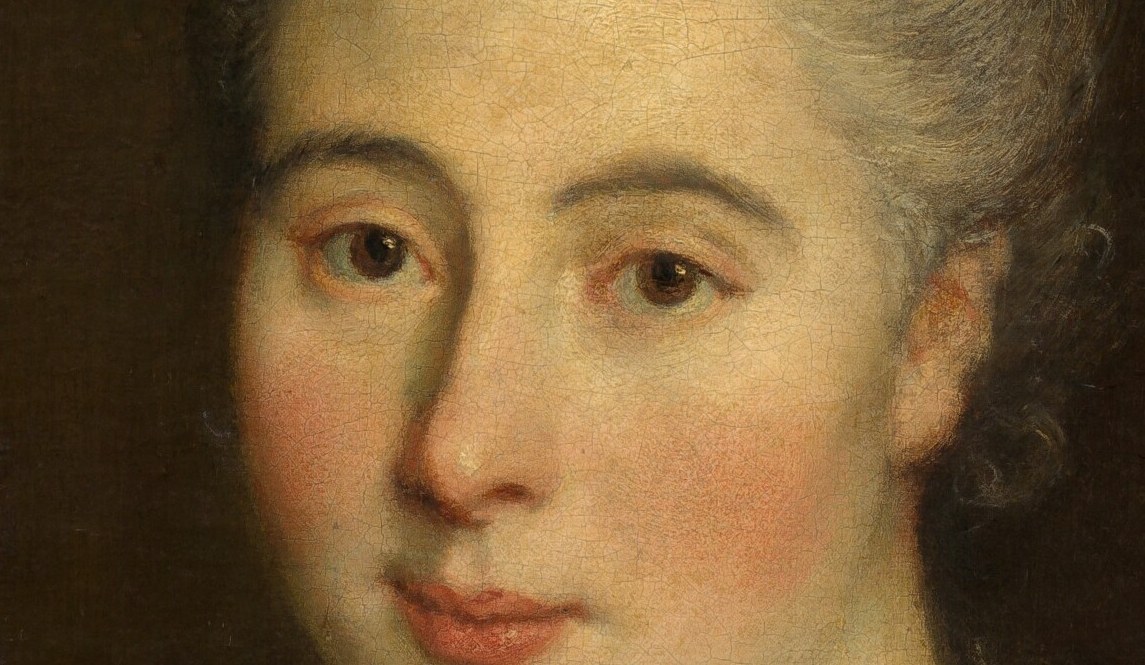
This painting was a tool more than a portrait. Titled simply "Portrait of a Woman" and attributed to an unknown French painter around 1711, the work was likely commissioned by a suitor or a matchmaking family who had never laid eyes on the sitter. In an era before photography, a painted likeness was the legal face of a marriage contract sent across the French provinces. The sitter's identity is now lost, but her function in the canvas remains perfectly legible: she is there to be appraised.
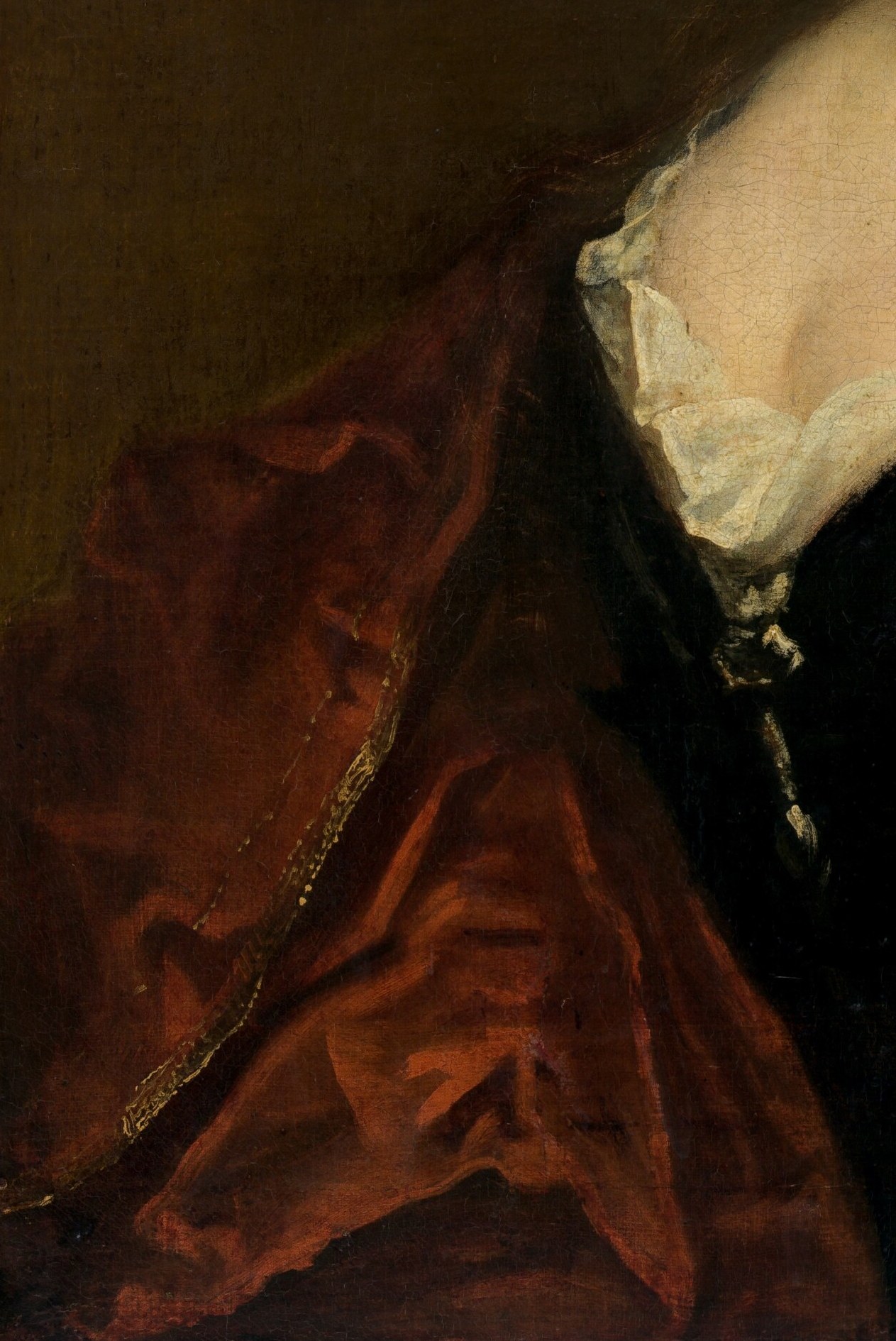
Follow the artist's strategy. The background is deliberately empty, no books, no windows, no narrative, so the entire visual weight rests on the woman and her dress. Start with the powdered hair, which anchors her exactly in the early 18th century and signals allegiance to the king's fashion. Then move down to the white lace fichu at her throat: fine lace was astronomically expensive and the clearest signifier of family wealth. The real skill passage is the crimson cloak on the left, where the heaviest brushwork captures the weight and sheen of silk.
The painting exemplifies a precise genre of French portraiture, where the sitter's serene, slightly removed expression was a deliberate social code for patrician reserve. The nearly direct gaze creates an uncanny intimacy, it was meant to hold a prospective husband's attention across a room. The work now hangs as a historical document, recording not just a face but the aspirations and anxieties of a class that negotiated its future through images.
What do you read in her expression, confidence, or the strain of being examined?
Details



Transcript
This face was a contract. Painted around 1711 for a man in the French provinces. He had never seen her. He was looking for a wife. Everything here is documented proof. The powdered hair: she follows the king's fashion. The lace: her family spends lavishly. The crimson silk: read the brushwork. The painter did not waste paint on her surroundings. She was the asset.