明 魏之克(魏克) 四時倣古山水圖 卷|Landscape of the four seasons in the styles of old masters by Wei Zhike
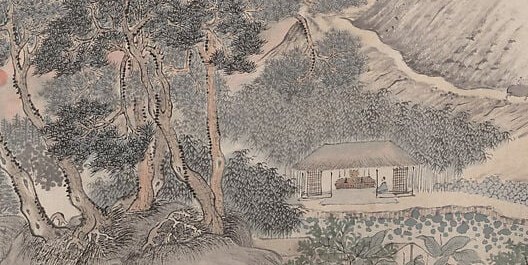
Wei Zhike's "Landscape of the Four Seasons in the Styles of Old Masters," painted in 1635, is a handscroll that invites viewers on a journey through both time and art history. Currently held in a private collection, this work is a testament to the artist's deep knowledge of classical Chinese painting traditions.
As you unroll the scroll, you're guided through a continuous mountain landscape, transitioning from spring's fresh greens to autumn's vibrant reds and winter's stark whites. Notice the carefully placed human figures and bridges, which serve to draw your eye deeper into the evolving scenes.
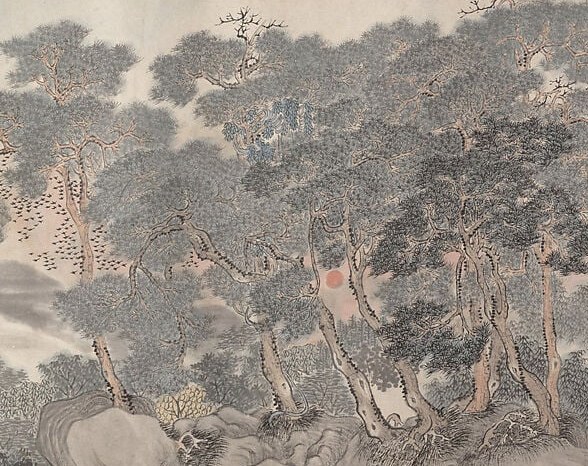
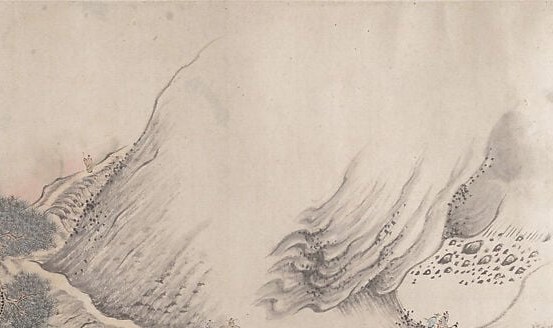
The title itself hints at the artist's ambition: to create a visual anthology of historical painting styles. The gnarled trees, the "axe-cut" mountain peaks, and the use of unpainted paper for mist or water are all techniques referencing earlier masters. Wei Zhike, active around 1600-1636 during the Ming Dynasty, integrated these historical elements while maintaining his own distinctive touch.
This format encourages an intimate, contemplative experience, where the act of unrolling the scroll mirrors the journey through the landscape itself. What details do you discover as you imagine moving through this painted world?
Details
Transcript
This scroll unrolls as a journey through the four seasons. But it also shows a journey through painting styles. The artist created a visual encyclopedia of older masters. These pale peaks echo the 'axe-cut' strokes of the Northern Song. And this vibrant color is the only warm hue in this passage. This painter was active in the early 17th century, the Ming Dynasty. The landscape's subtle transitions ask us to slow down and look.