Ojibbeway Indians by Catlin, George
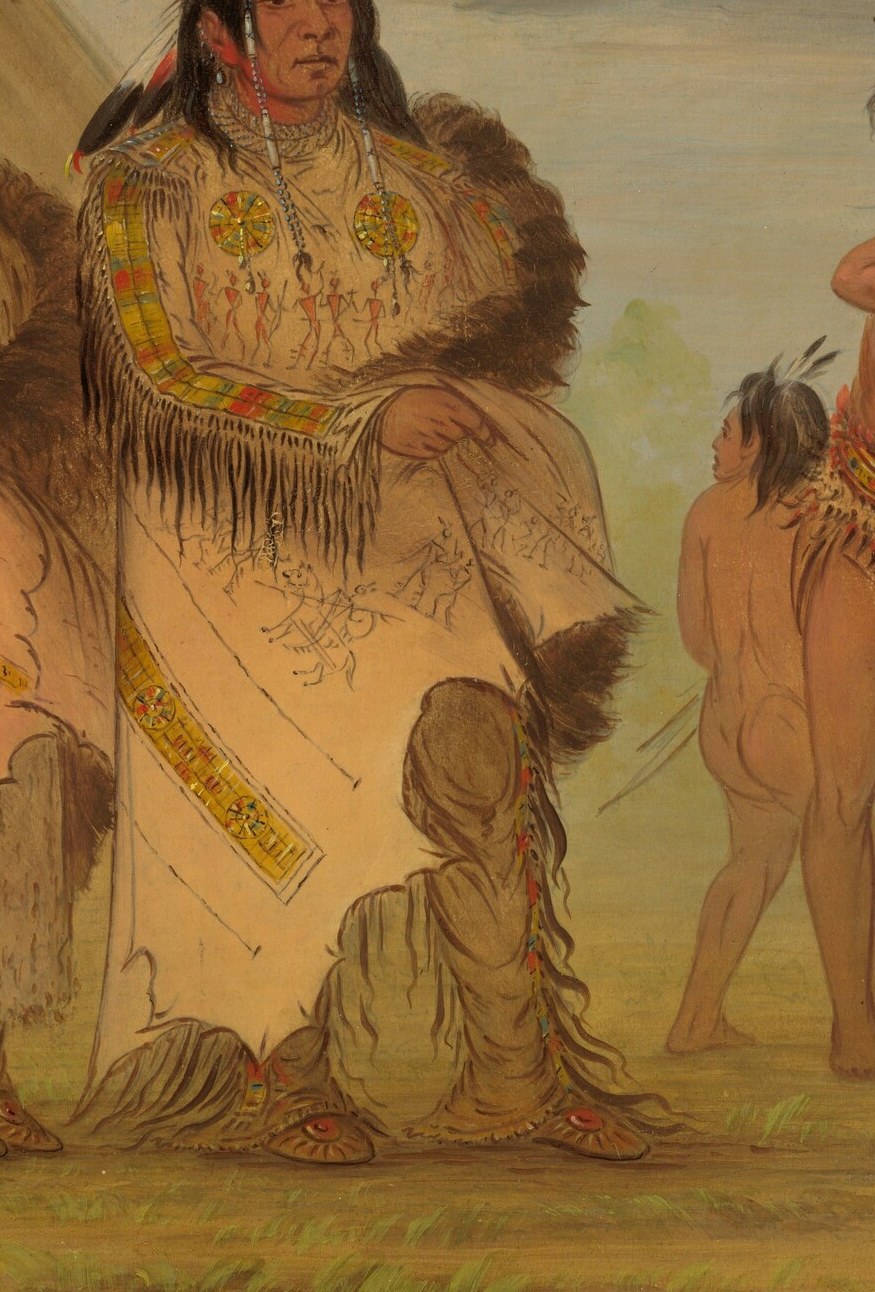
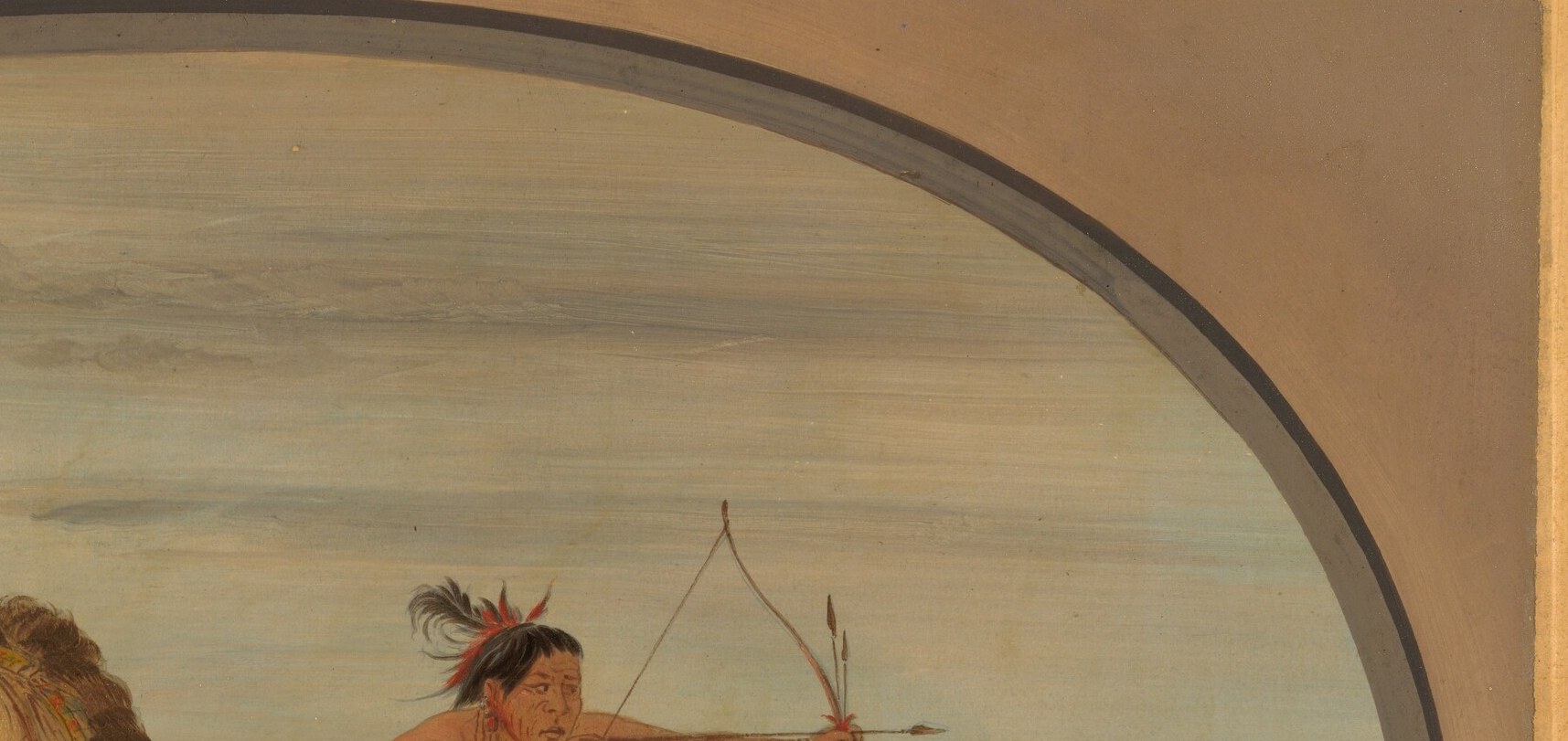
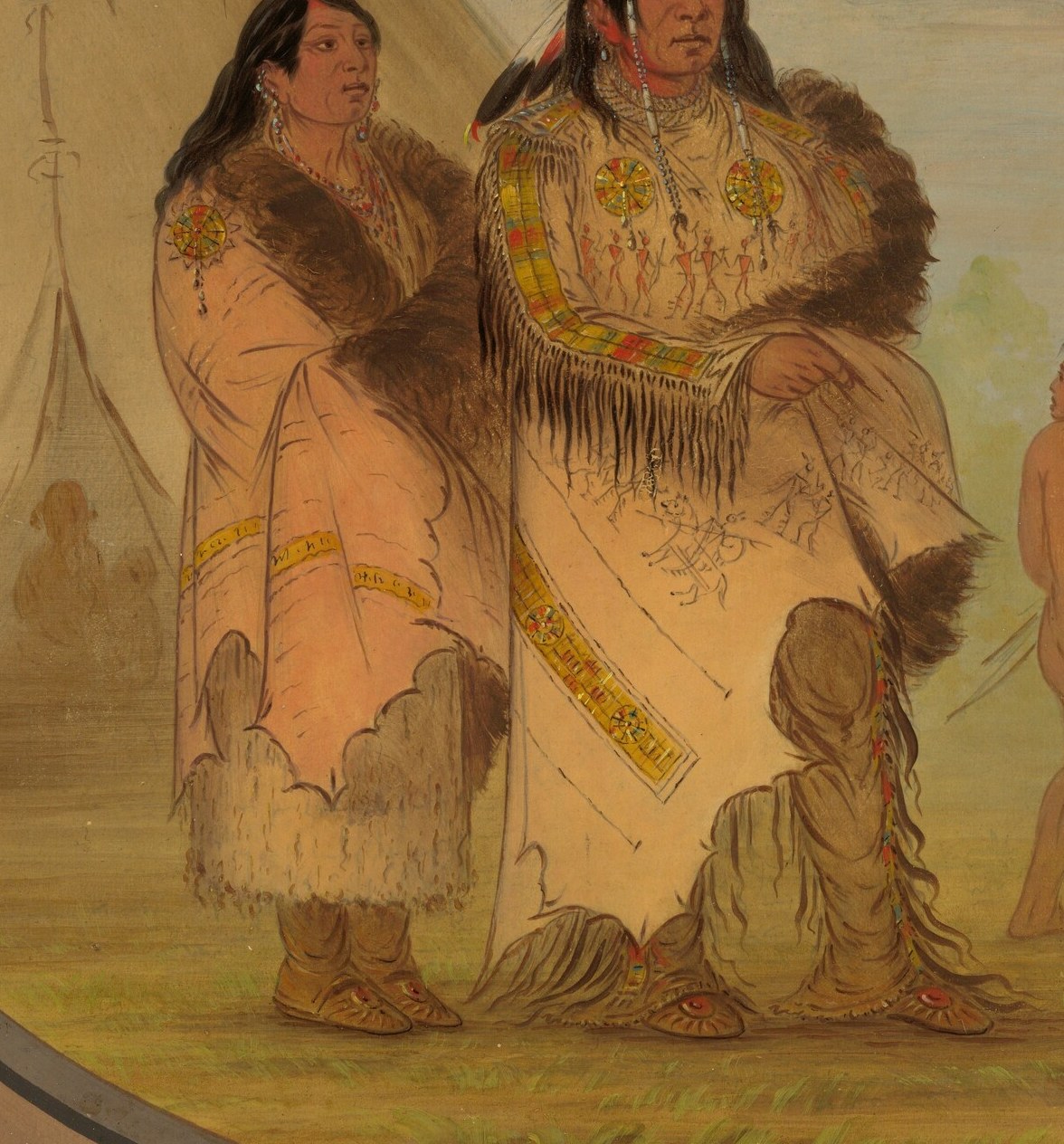
George Catlin painted "Ojibbeway Indians" in 1865 using oil on card mounted on paperboard. It now lives quietly at the Smithsonian American Art Museum, one piece of a vast, obsessive archive. The subject is an Ojibwe family grouped beside a tipi, their clothing meticulously detailed by a man who was not a trained artist but a lawyer from Pennsylvania.
Look at the robe on the standing central figure. Catlin poured his attention into the fur trim, the beadwork, and the painted geometric motifs. That specificity was his whole argument: these are distinct, fully realized people, not types. The feather headdress, the child's small bow, the soft landscape behind them are all rendered with the same earnest care.
The history behind it is startling. In the 1830s, Catlin gave up his law practice and made five journeys into the American West. He painted hundreds of portraits and scenes, convinced that Native American cultures were being systematically erased by westward expansion. This later work, from 1865, shows he never stopped. His entire collection, nearly 500 paintings, was eventually acquired by the Smithsonian.
He was not perfect. His paintings flatten and romanticize. But he was one of the first to insist, brushstroke by brushstroke, that these faces and garments and families belonged in the historical record. Do you trust the record when it is built by someone from the outside looking in?
Details
Transcript
A lawyer from Pennsylvania spent the 1830s traveling the American frontier. His mission: to paint every Native American nation he could reach. By 1865 he was still at it. This is an Ojibwe family. Look at the robe. The fur trim, the quillwork, the painted geometric designs. He recorded what he believed was about to be erased. The Smithsonian later acquired nearly his entire life's work. A self-taught folk artist, building the record that he feared would be lost.