The Standard Bearer by Rembrandt
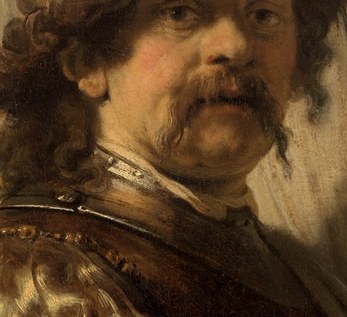
This is Rembrandt's "The Standard Bearer," painted in 1636 and now housed at the Rijksmuseum. It's a powerful self-portrait signaling Rembrandt's artistic ambitions upon his move to Amsterdam. He presents himself in the costume of a standard bearer, a role associated with the highly esteemed civic guard companies. This strategic self-portrayal was aimed at securing commissions for large-scale group portraits, a coveted opportunity for artists in the Dutch Republic.
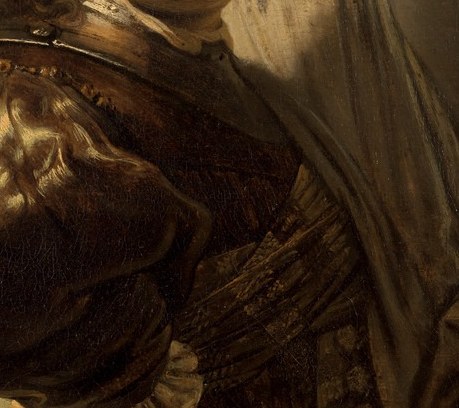
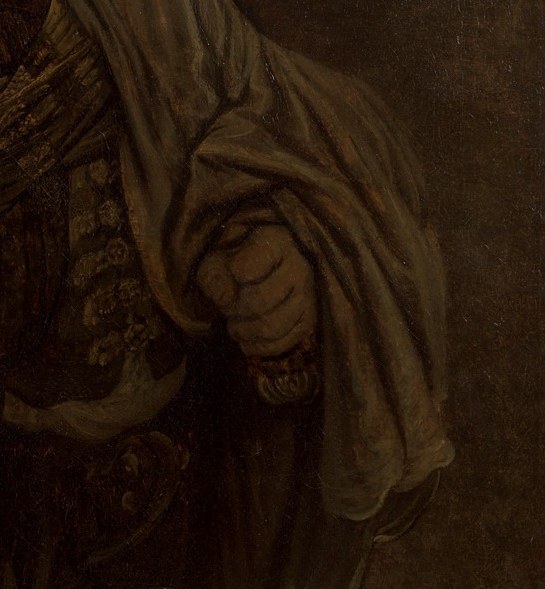
Observe the elaborate details: the ornate armor, the feathered hat, and the luxurious fur-trimmed cloak, all rendered with Rembrandt's signature skill. His confident pose, with a hand on his hip, projects self-assurance and readiness. The dramatic lighting accentuates his features and the richness of the fabrics.
For years, this painting was part of the Rothschild collection before being acquired by the Rijksmuseum in 2021 for a record sum, thanks to state and private funding. It marks a pivotal moment in Rembrandt's career, his ambitious step into the Amsterdam art scene.
Look closely at the very bottom edge. Can you spot the faint inscription? It is believed to be Rembrandt's signature and the year 1636, a small but significant mark of his presence and the work's creation.
Details
Transcript
This is Rembrandt's self-portrait as a standard bearer. He moved to Amsterdam seeking prestigious commissions. Look at the ornate armor and plumed hat. His left hand rests on his hip, assured and bold. The texture of his cloak shows his mastery. A faint inscription hides at the bottom edge. It may be his signature and the date, 1636.