Young Woman in an Interior by Vrel, Jacobus
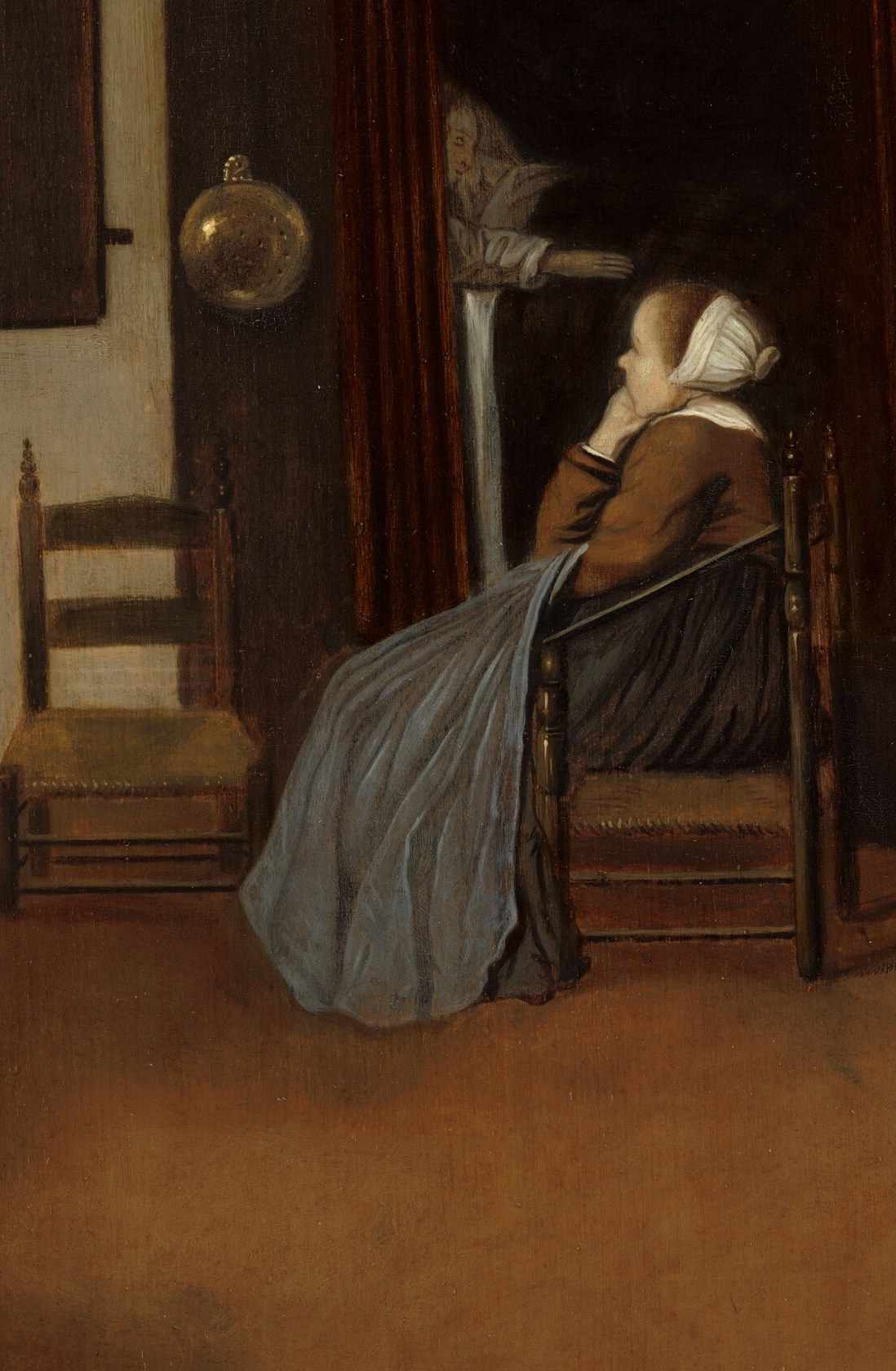
Young Woman in an Interior, painted by Jacobus Vrel around 1660, is one of the quietest genre scenes of the Dutch Golden Age. It now hangs in the Museo Thyssen-Bornemisza in Madrid. Vrel is a painter we know almost nothing about, no training records, no guild membership, yet he left behind a small, strange body of work that scholars now see as deeply original. This panel belongs to his characteristic type: a solitary woman absorbed in domestic labour inside a box-bed, the room constructed like a theatre set that invites you to look closely yet bars you from entering.
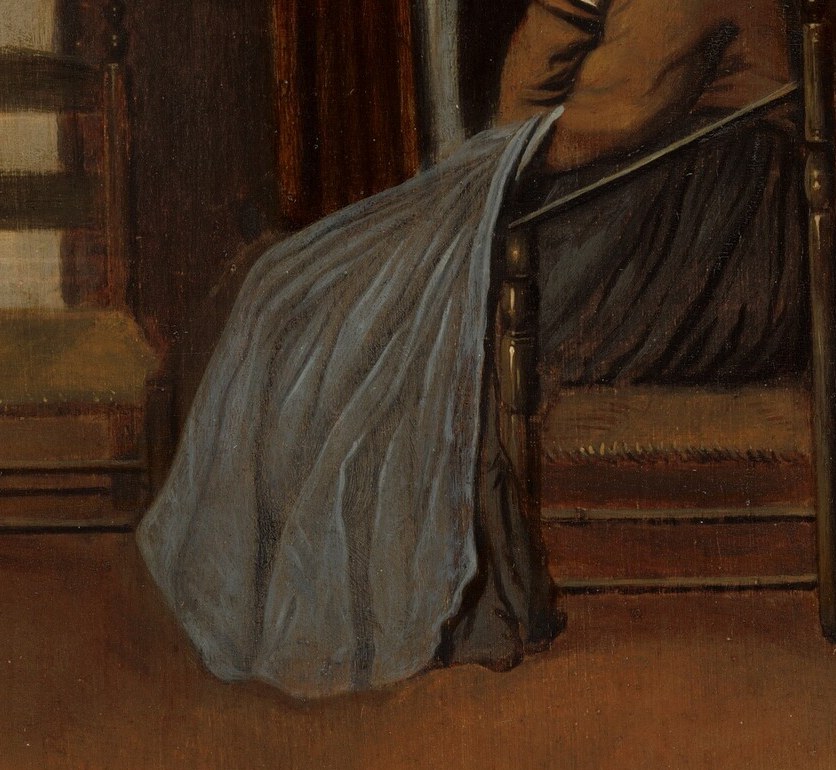
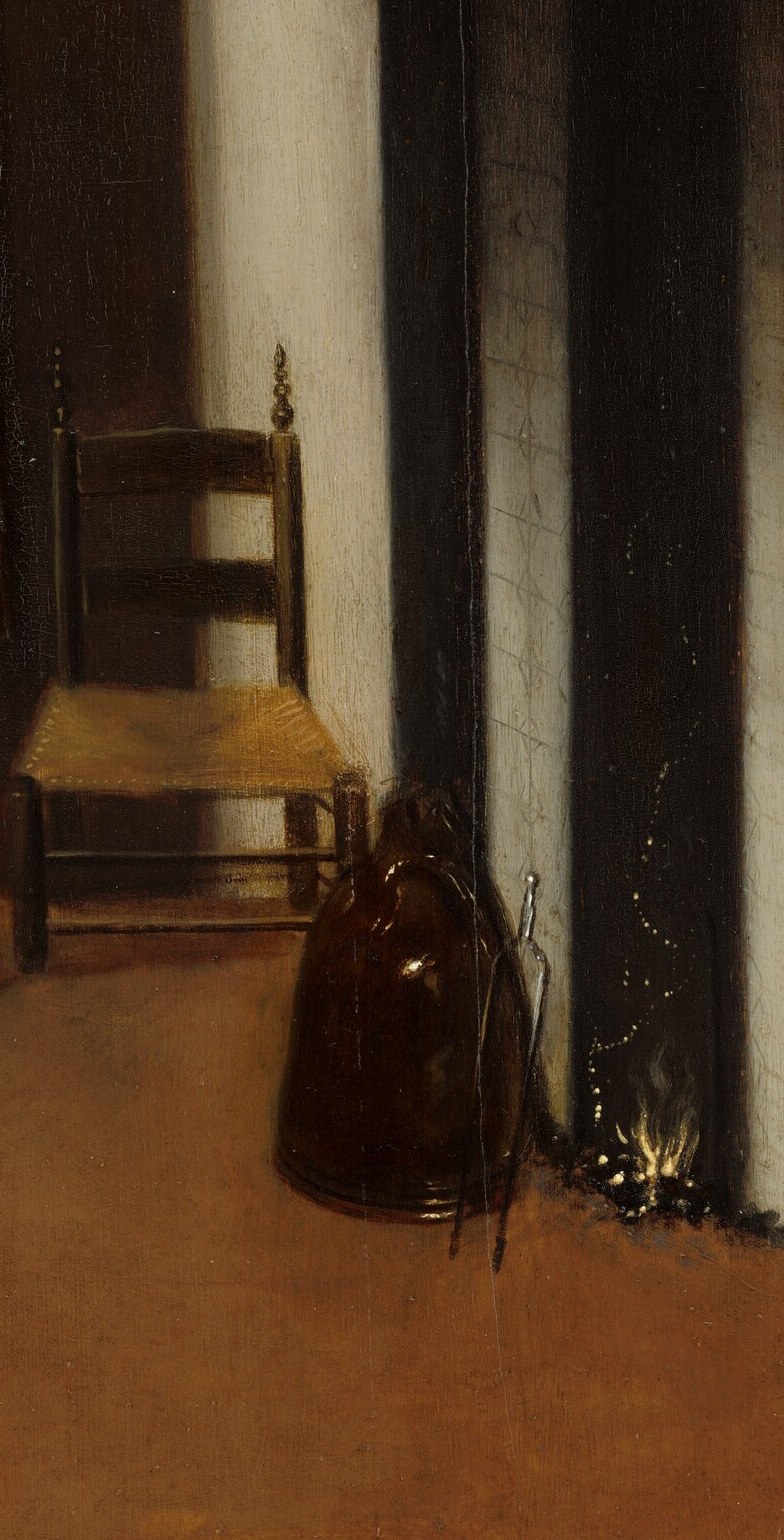
Look first at the hands and the hearth. The woman's fingers are busy with needlework, in 17th-century Dutch moral culture, the idle hand was the devil's workshop, so a woman sewing was a walking sign of virtue. Below the mantelpiece, the fireplace is unlit. A cold hearth in a daytime interior wasn't poverty; it signalled a household that practised economy, burning fuel only when necessary. Beside her, the empty ladder-back chair was legible to a contemporary viewer as the absent husband, out working, his role in the moral order implied by his structured absence.
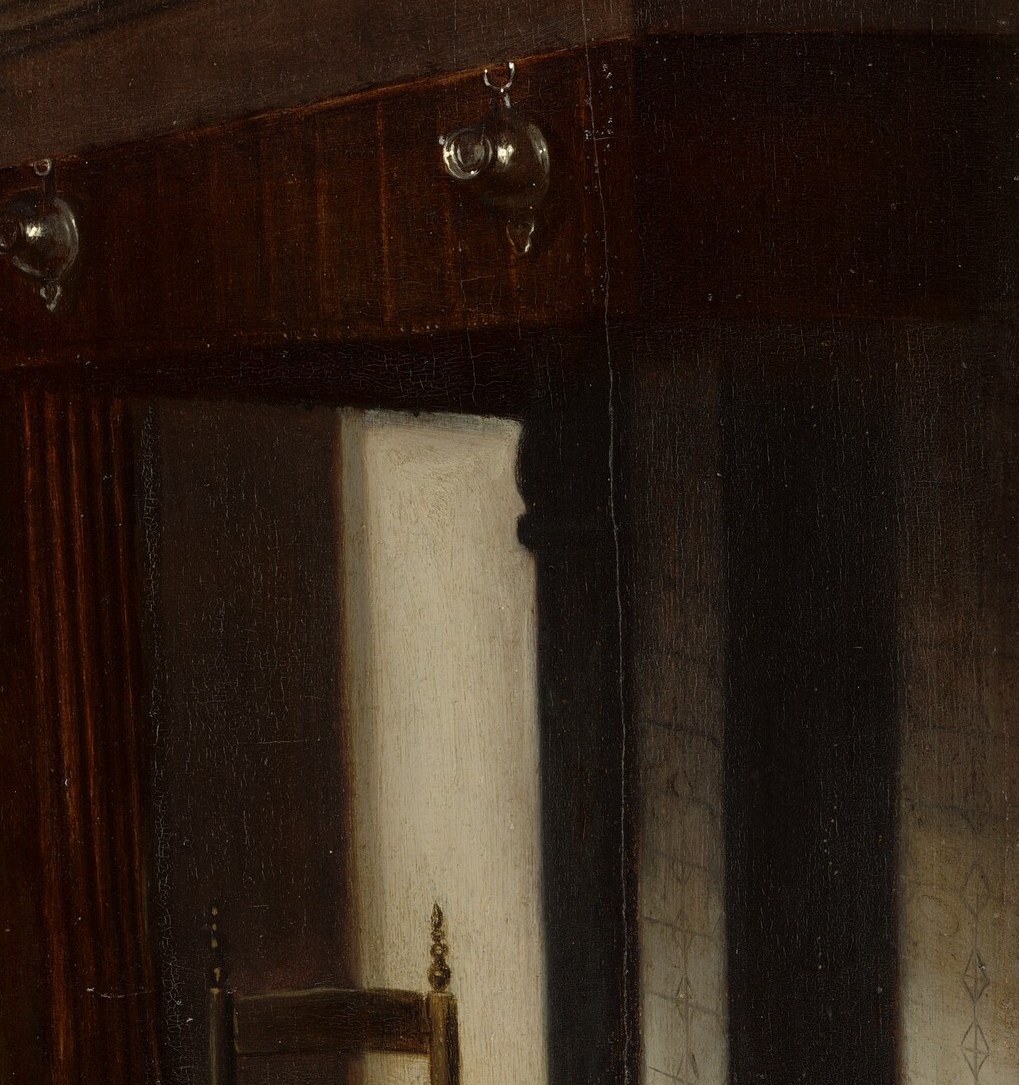
Then scan the margins. On the shelf, the orderly row of ceramic vessels, modest but intact, reinforces the theme of careful management. The box-bed itself, a common piece of furniture in Dutch homes, encloses the sleeping area and doubles as the painting's framing device: Vrel uses it like a proscenium arch, separating the woman's private world from ours. The soft light falling on her white linen cap is the painting's anchor, pulling the eye across the dark wood and pale plaster of the room Vrel built.
We still don't know who Jacobus Vrel really was. Only about fifty paintings are attributed to him, many once misassigned to Vermeer or Pieter de Hooch. But his quiet, almost awkward perspective, the way he makes a room feel sealed and watchable at the same time, has earned him a small, devoted following. What do you make of an artist who vanishes from the historical record but left rooms this still behind?
Details
Transcript
She looks like a woman alone with her sewing. Those busy hands were a 17th-century sign of virtue. Behind her: an unlit hearth. The house is quiet. A cold fireplace meant economy and a well-run home. That empty chair pulls the room into a story. A Dutch viewer would see a husband away at work. The code adds up: diligence, thrift, duty. Order. Every object in the room reinforces her stillness.