Judith by Giorgione
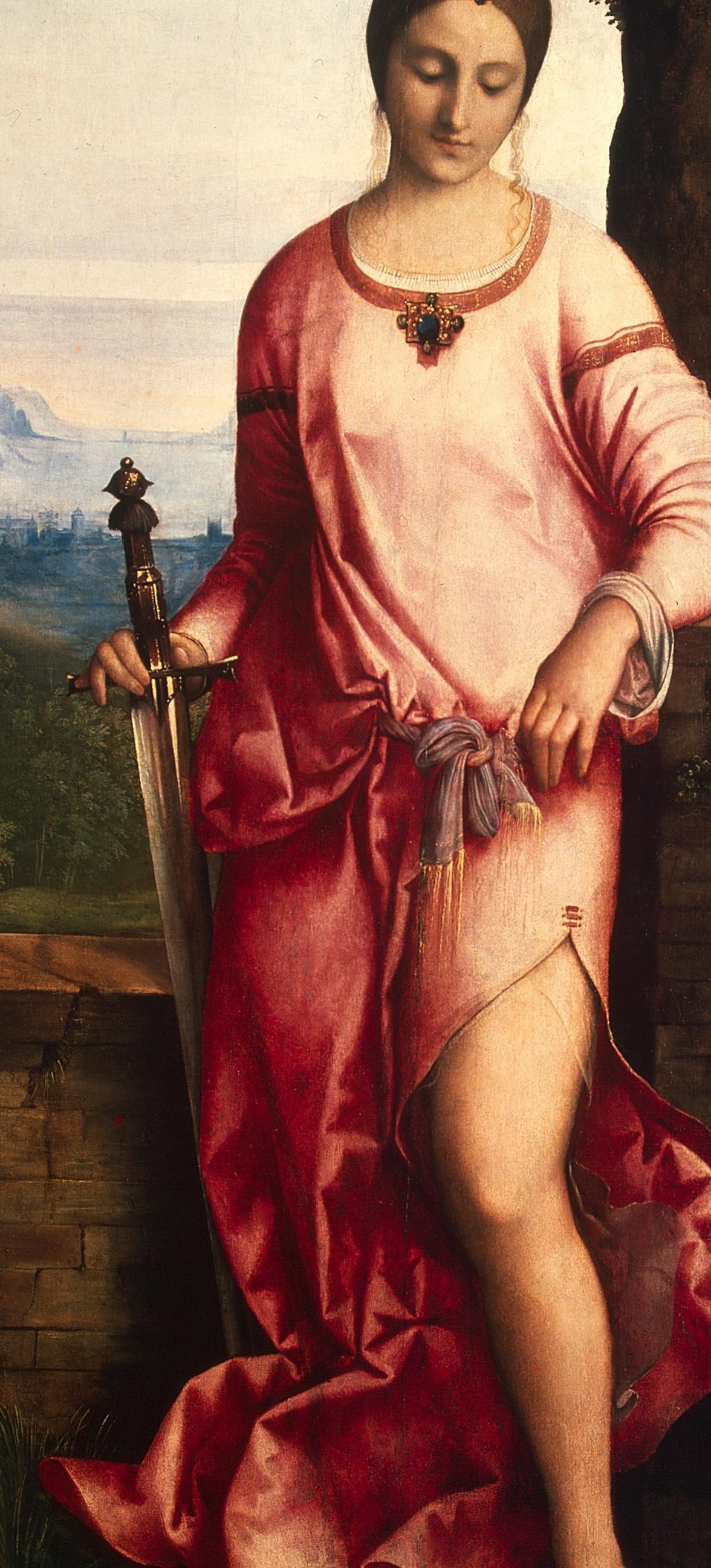
Giorgione's "Judith," painted around 1504, lives quietly in the Hermitage Museum. It was bought from Paris in 1772 and, for an embarrassing stretch, was filed under Raphael. The mistake makes a flattering kind of sense: the painting is so good, so Venetian, that it took centuries to sort out the true, quieter name behind it.
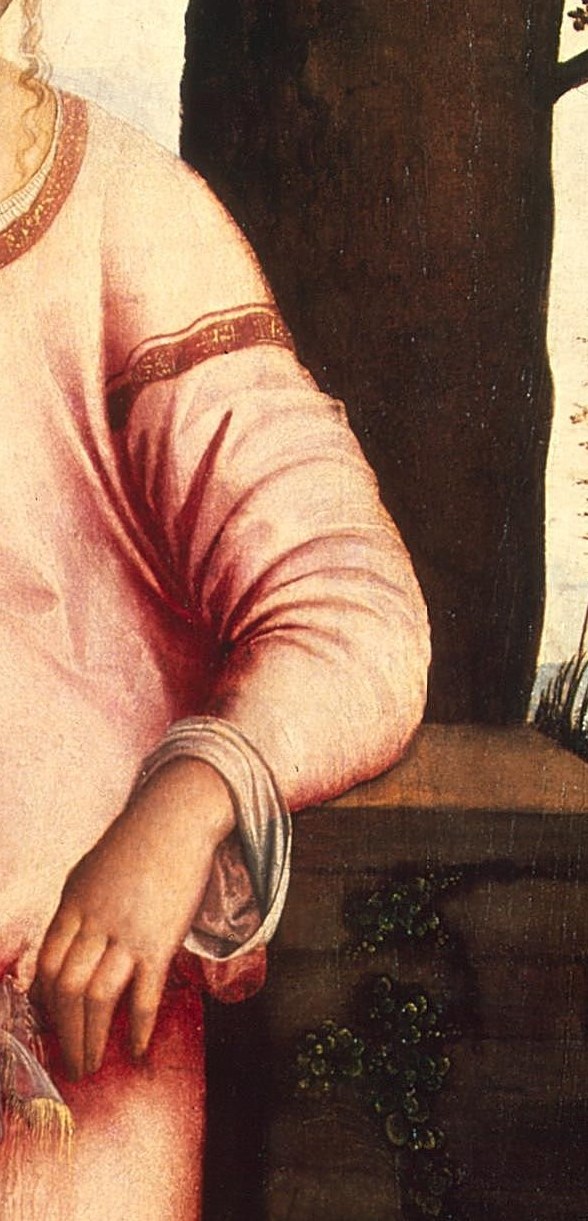
Look first at her face. Her gaze is down, but her expression is weirdly serene. She holds a sword loosely, and a gathered cloth in the other hand. Her thumb presses into the fabric like she might just be tidying up. This domestic calm is the whole trick of the painting: the horror is already over.
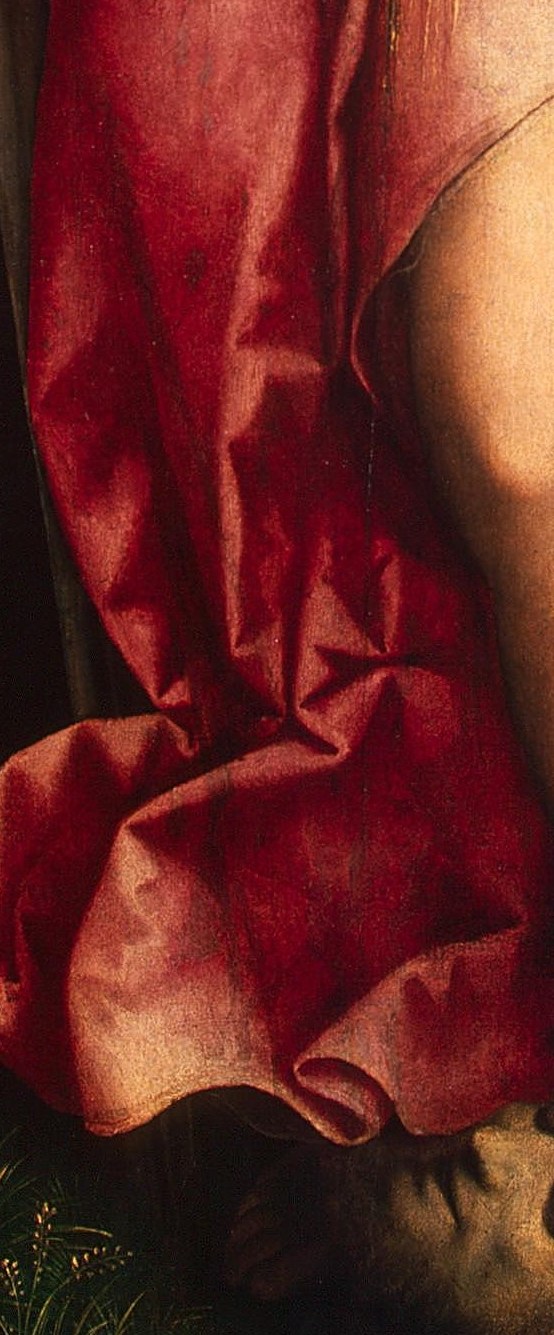
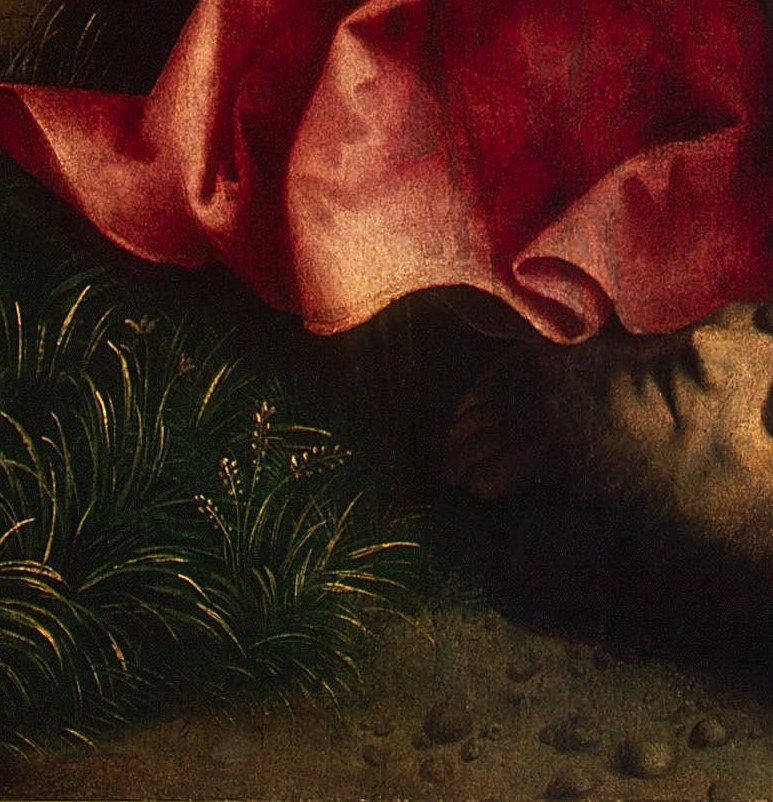
The real punch is at the bottom edge. Her bare foot presses against something pale, gray-green, and unmistakeable: the severed head of Holofernes. No gore, no grimace. Just a dead weight. And behind her, beyond the stone parapet, a soft green Venetian landscape rolls away to a distant grove. The world has already moved on.
Details

Transcript
She does not look like a killer. The silk of her dress catches the light. A Venetian technique. Giorgione died young, leaving fewer than a dozen certain works. Now look down. Her bare foot rests on something. The severed head of Holofernes. And past the stone wall, the landscape continues. Indifferent. A small grove of trees there. Life in the distance, going on as before.