The Goat Girl by Camille Pissarro
The Goat Girl by Camille Pissarro, painted in 1891, now hangs in the Metropolitan Museum of Art. At first glance it seems a quiet, unremarkable moment: a peasant girl feeding a goat beneath bare winter trees. But to its contemporaries, this painting was a provocation.
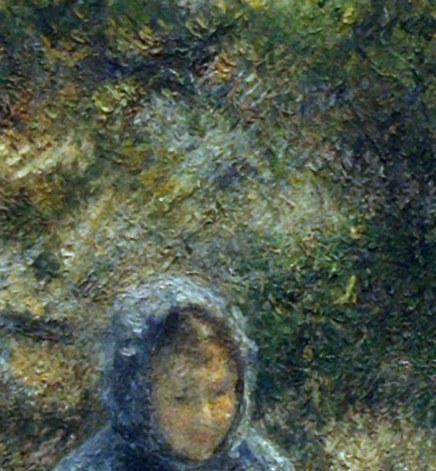
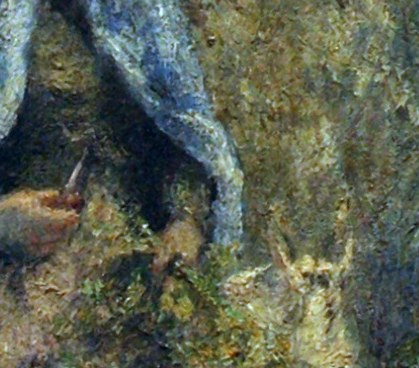
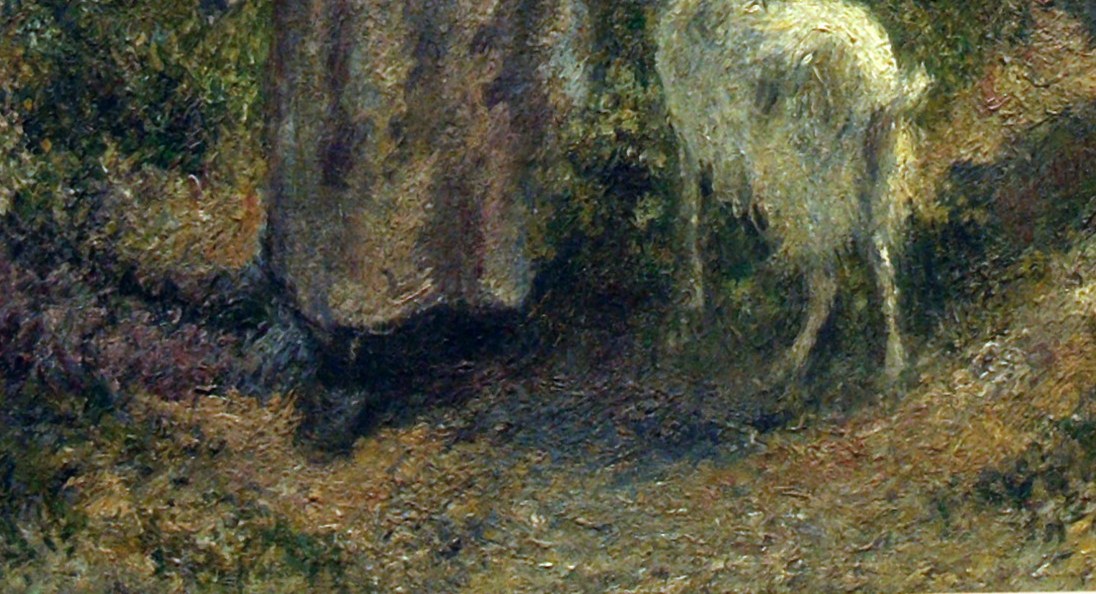
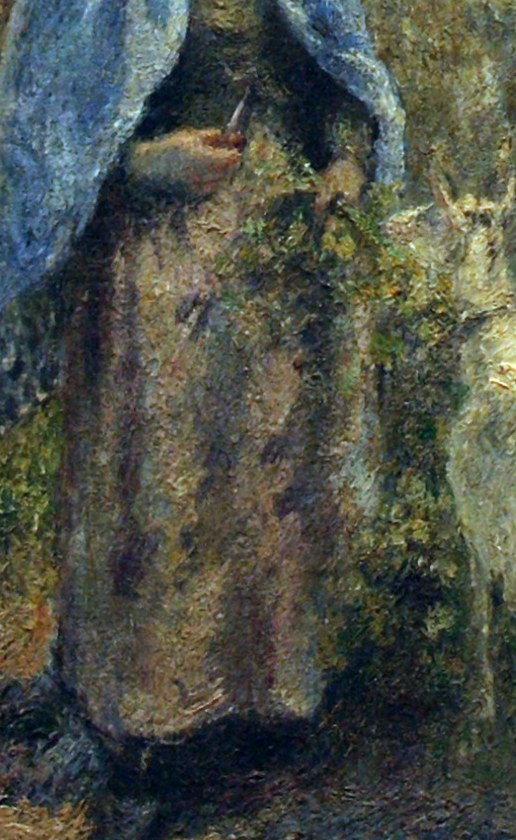
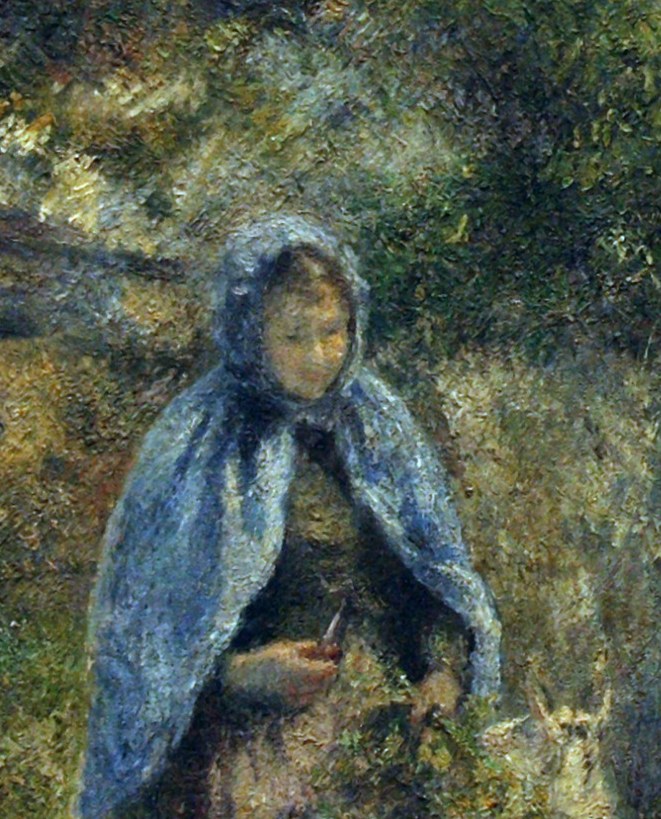
Look at her face. She is not performing for you. Her gaze is averted, absorbed in the simple act of feeding. Pissarro gives her no sentimental charm, no picturesque costume. The dirt on the path, the heavy drape of her working skirt, the skeletal branches of a cold season, these are things he saw, not things he invented to please a Salon jury.
Renoir called Pissarro's work 'revolutionary' for exactly this reason. While academic painting dressed rural life in classical robes, Pissarro painted real peasants doing real work. The thick, visible brushstrokes of her blue cape and the goat's shaggy coat insist on the material truth of paint and place alike. It is an ethic, not just an aesthetic.
This insistence on ordinary people and ordinary labor made Pissarro the moral center of the Impressionist group. Cézanne called him 'a father to me.' The Goat Girl is a small, radical thing: a demand that we see working people as worthy of art.
Details
Transcript
1891. Camille Pissarro paints a girl feeding a goat. It looks like a quiet country moment. Renoir called his work 'revolutionary.' Not for the style. For the subject. She is a peasant. This is labor, not a fantasy. The art world preferred idealised peasants, clean, pretty, distant. Pissarro insisted on the real thing.