Gray Weather, Grande Jatte by Georges Seurat
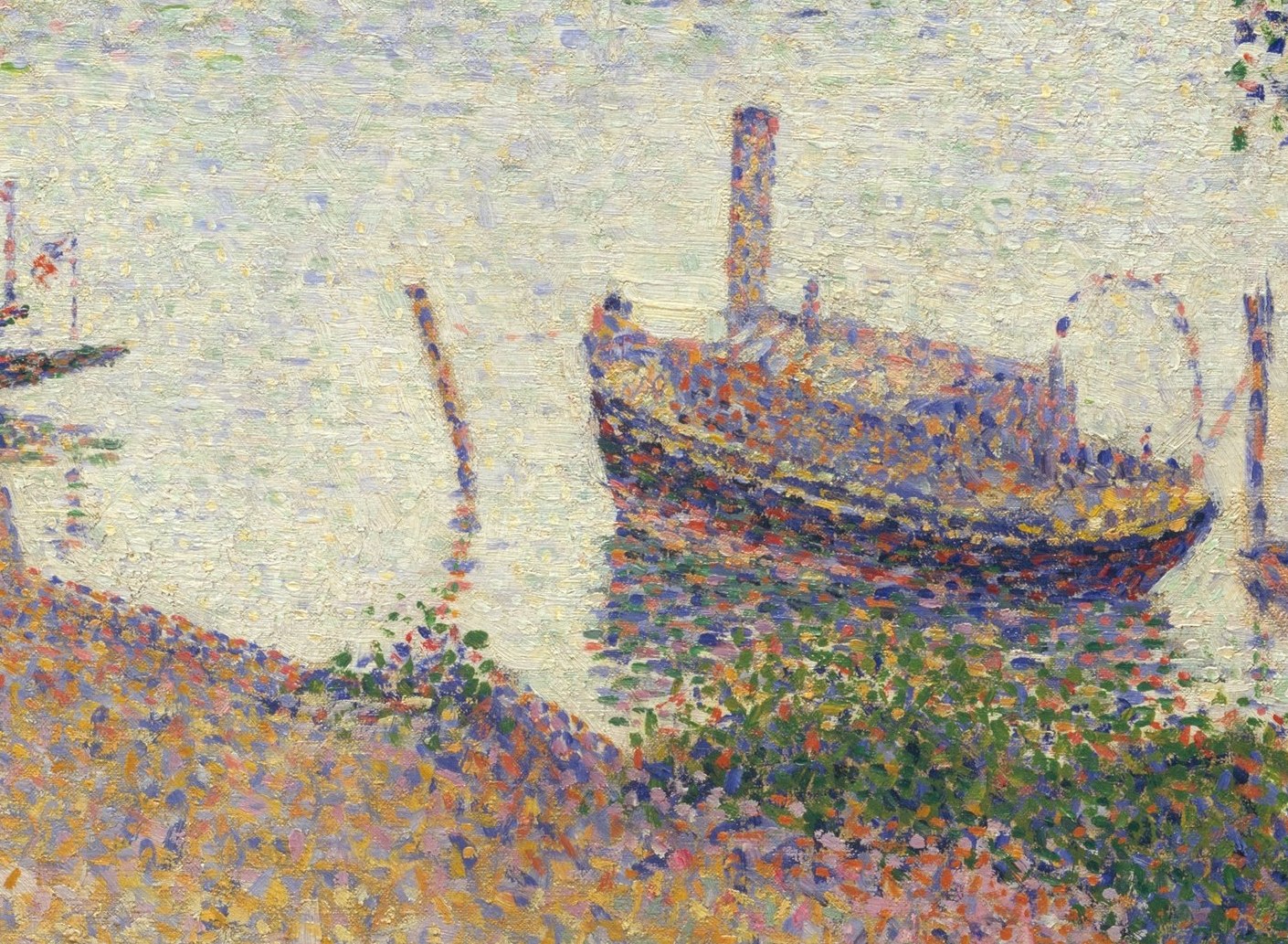
This is 'Gray Weather, Grande Jatte' by Georges Seurat, painted in 1886. It is held in the collection of the Metropolitan Museum of Art. Painted from the exact same island as his enormous, sun-drenched masterpiece, this smaller, cooler work does something the famous painting deliberately undoes: it keeps the industrial suburbs of Paris visible on the skyline.
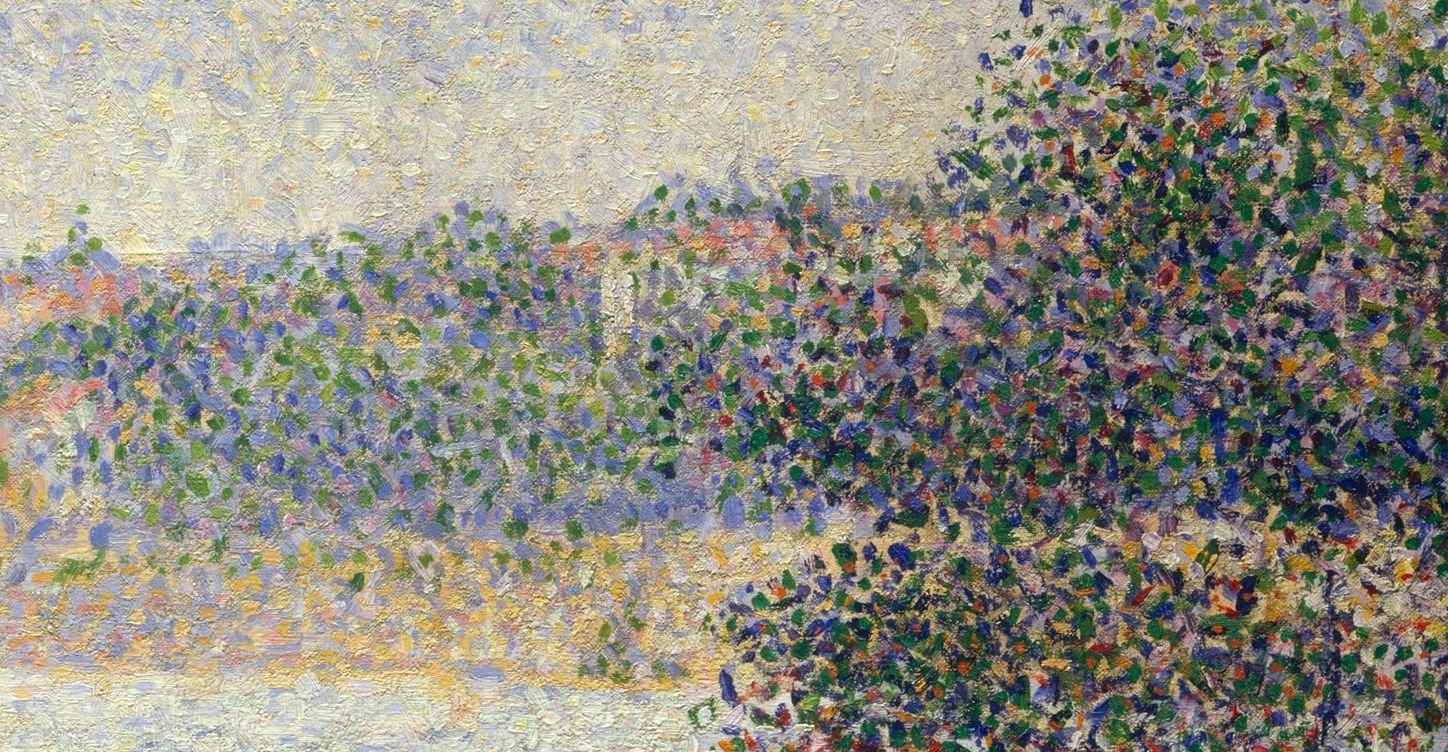
Let your eye drift past the moored barge and across the pale Seine. On the far bank, almost dissolved into the gray sky, is a cluster of warm red-roofed buildings and, just above them, the faint vertical line of a steeple. This is not a rural idyll. It is the working fringe of Asnières or Courbevoie in the mid-1880s, a landscape of factories, boatyards, and new commuter housing.
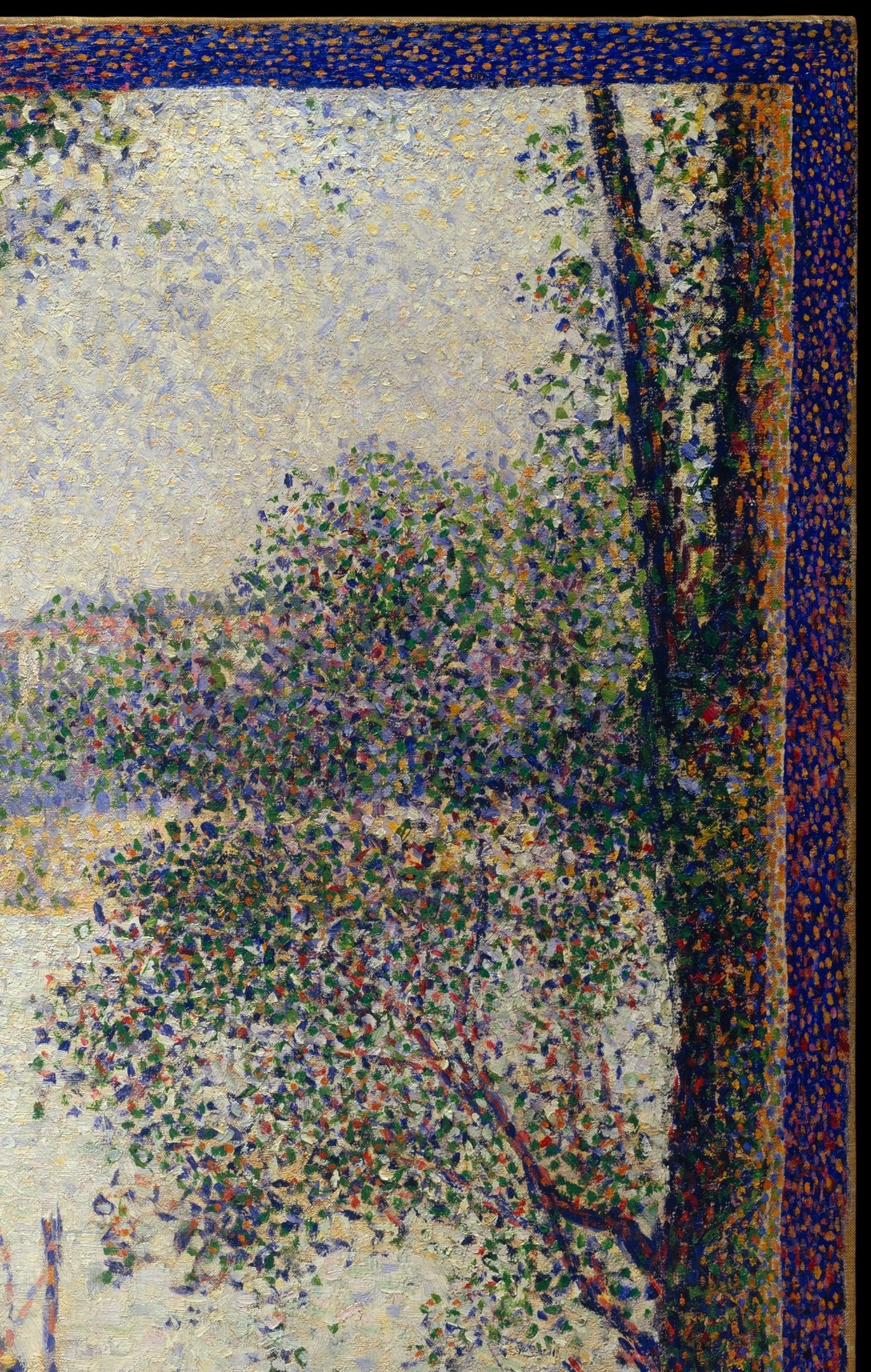
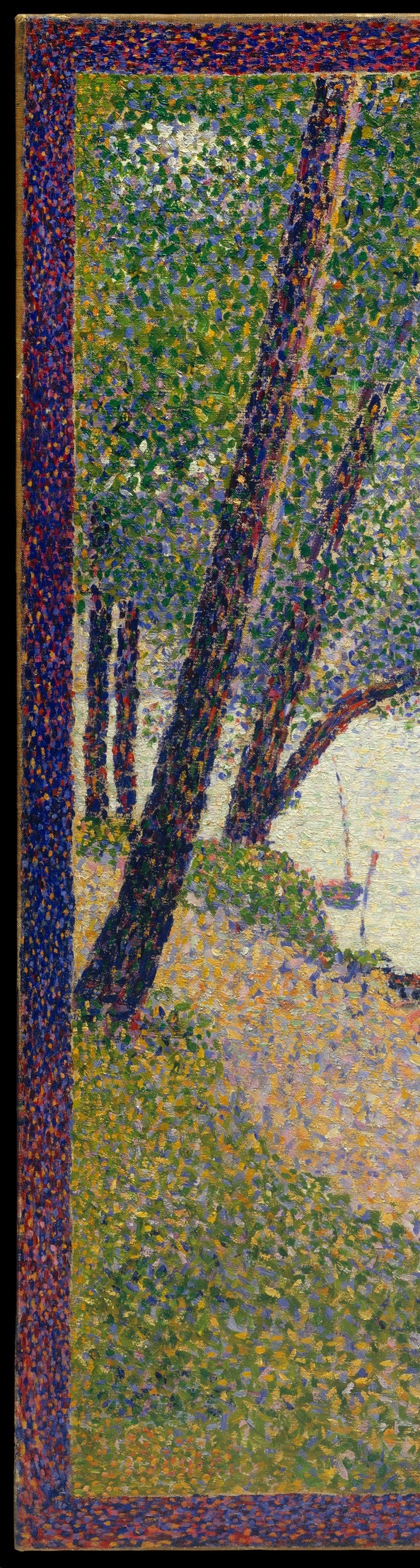
Seurat painted 'A Sunday Afternoon on the Island of La Grande Jatte' across 1884 to 1886, and that picture edits the suburban skyline down to a distant haze. But here, in this quieter observational study made the same year, he left it in. The red rooftops and the steeple identify the view as a specific, verifiable bend of the river during a period of rapid modernization. The painting is built entirely from small, distinct dots of color, a technique he called chromoluminarism. The 'gray' sky dissolves on close inspection into pale violet, white, and cool blue.
When you know to look for it, the steeple is unmistakable. Most people scroll right past it. Now you will see it every time.
Details
Transcript
You know the Sunday afternoon. This is its gray companion. Seurat painted this in 1886, from the same island as his masterpiece. But look past the moored barge and the quiet water. Barely visible on the far bank: a cluster of red-roofed buildings. And just above them, a faint steeple. A whole neighborhood. This is the industrial edge of Paris, encoded in thousands of tiny dots. A place Seurat later edited out of the sunny picture everyone remembers.