Trimming Wood with an Adze, Tomb of Rekhmire by Nina M. Davies
This is "Trimming Wood with an Adze," a watercolor copy by Egyptologist Nina M. Davies, now in the collection of The Metropolitan Museum of Art. She painted it in the early twentieth century, recording a scene from the Tomb of Rekhmire that was first carved into the walls around 1504 BCE.
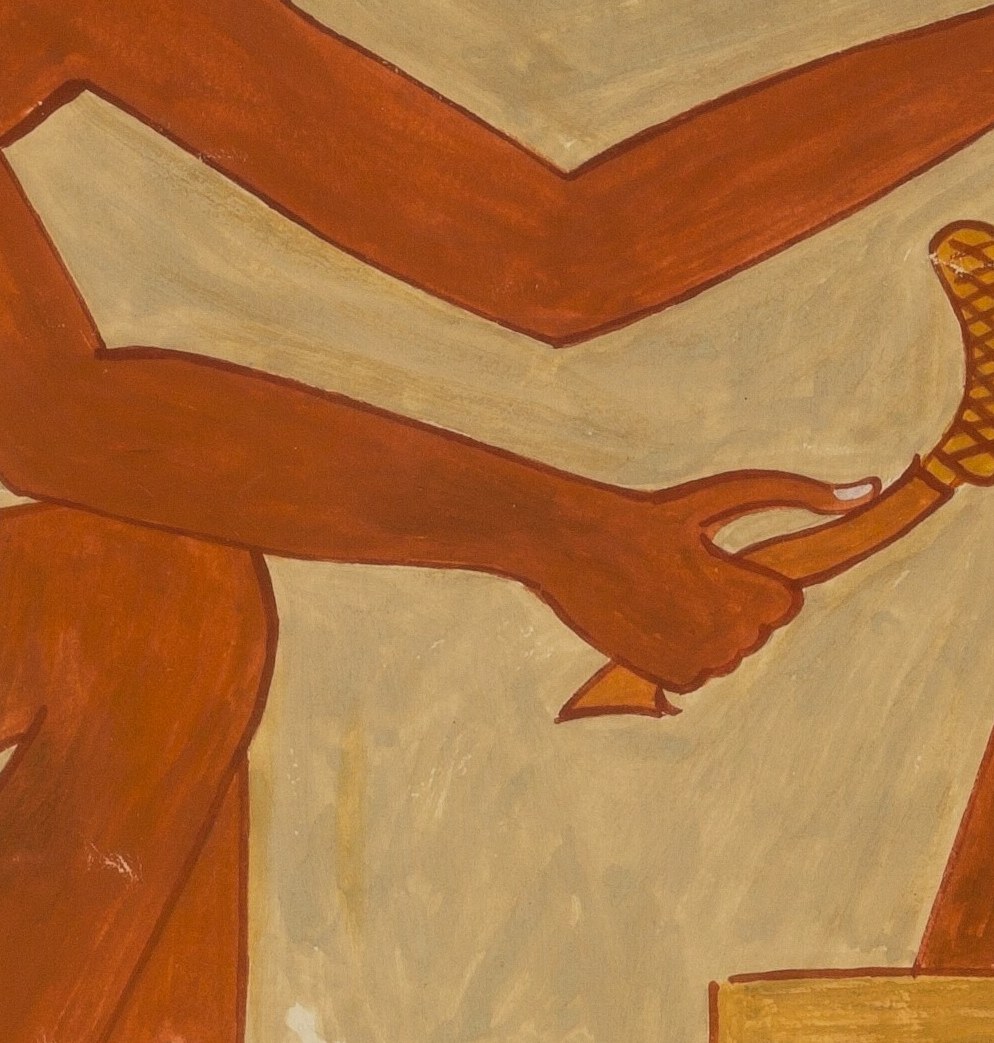
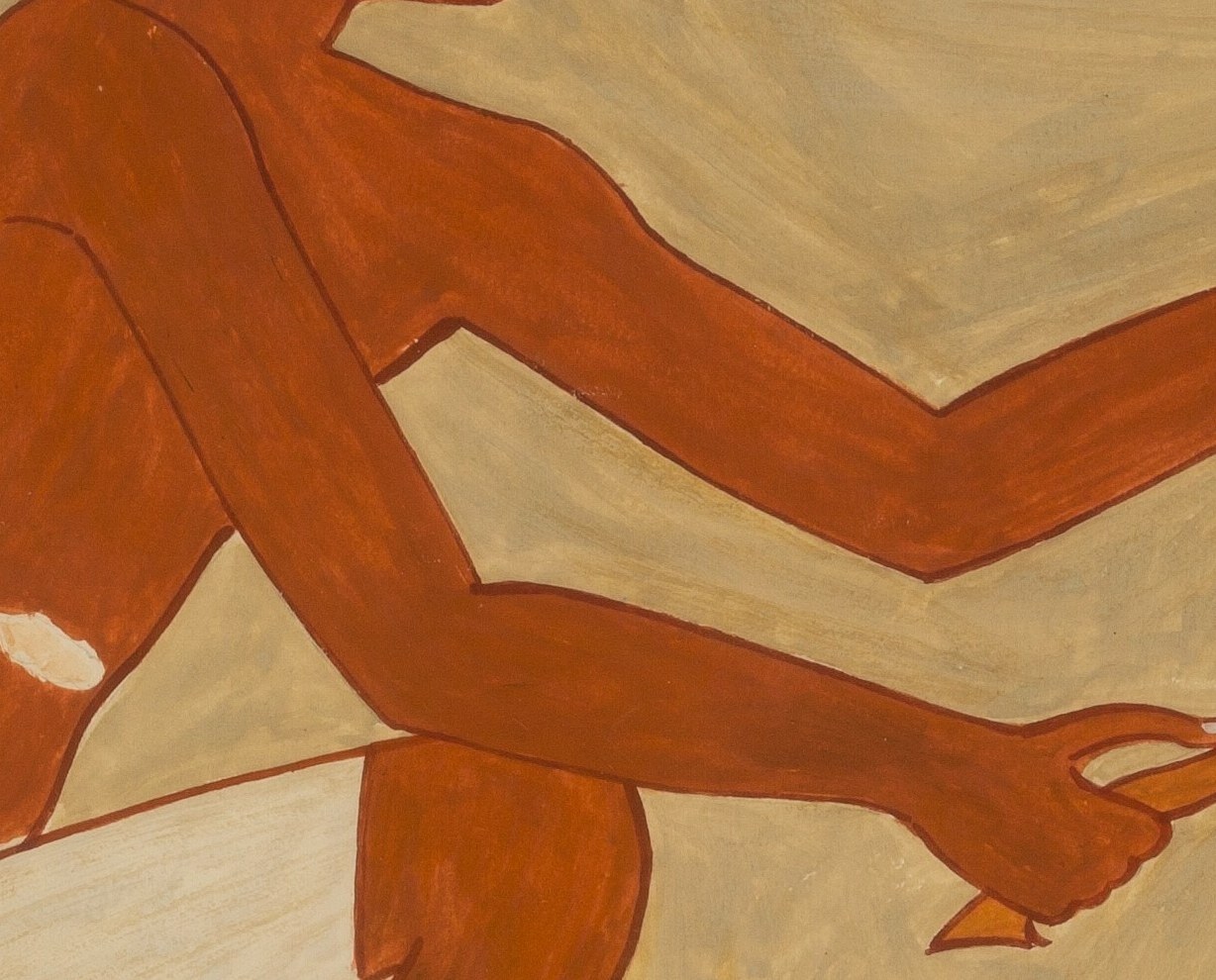
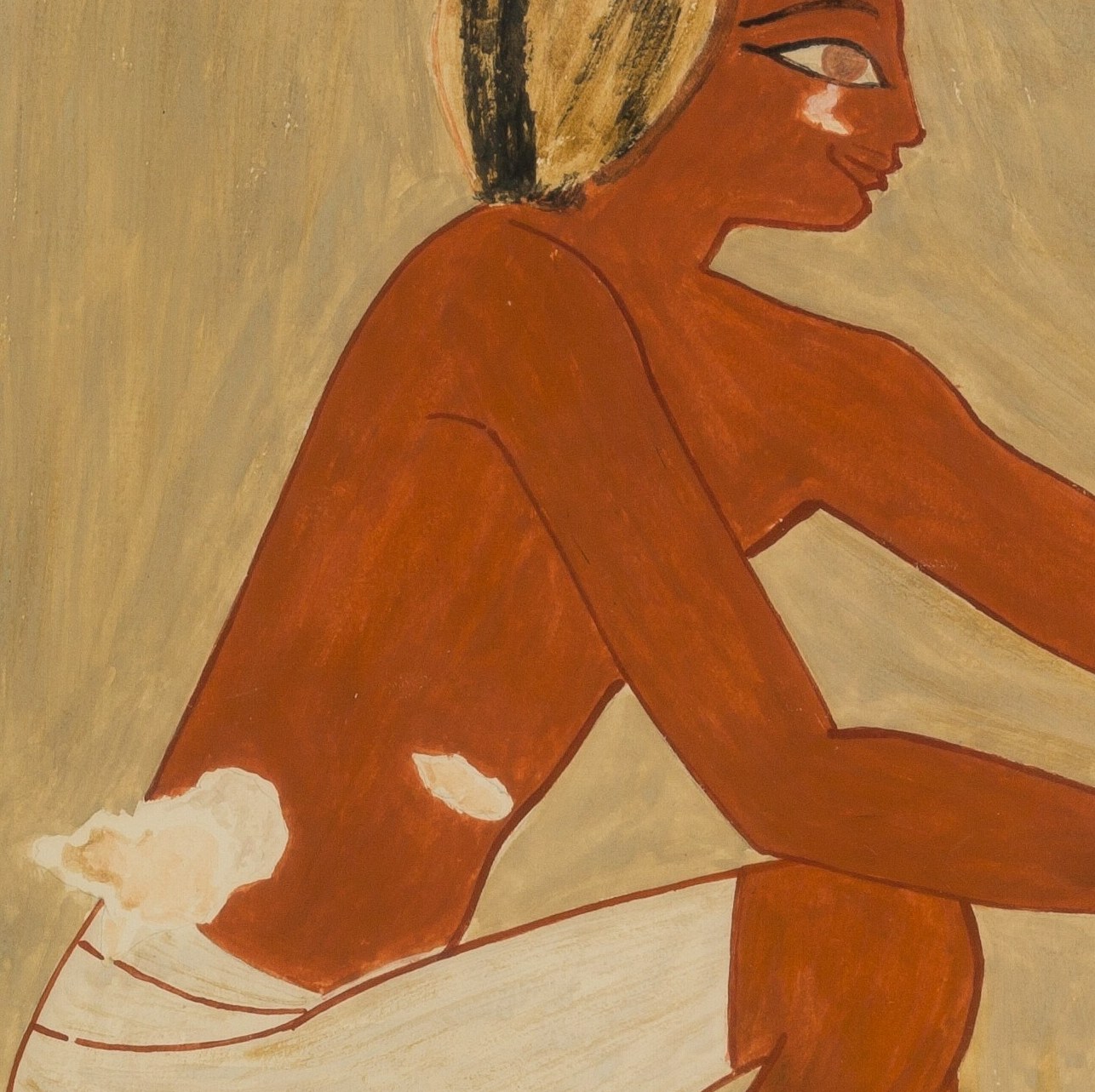
Look first at the craftsman's face. It is pure Egyptian convention, the head in strict profile, the eye placed frontally. Then look at his extended arms and the angle of the adze. The physical strain is concentrated there, in the geometry of the grip. Wood chips scattered at his feet confirm this is a real moment of work, not a passive pose.
Davies and her husband Norman spent decades inside Egyptian tombs, tracing paintings onto paper before the fragile plaster was lost to time and tourism. Many of their copies are now the only complete visual record that remains. Because their work was published under a joint name, it is often impossible to know whose brush made a given line, but the sensitivity in this piece speaks to Nina's hand.
The man in the painting labored for a vizier's afterlife, anonymous in hieroglyphs. Four millennia later, a woman from Salonica knelt in the dust and made sure he was not forgotten. What do we owe the quiet record-keepers who do the same for us?
Details

Transcript
The Tomb of Rekhmire. 1504 BCE. A craftsman trims wood with an adze. His body leans into the stroke. But this is not a 3,500 year old wall. It is a watercolor copy made in the 1920s. Nina M. Davies sat in the dark tomb, painting. She preserved a worker whose name we will never know.