"Paint Me" - Apachee by Catlin, George
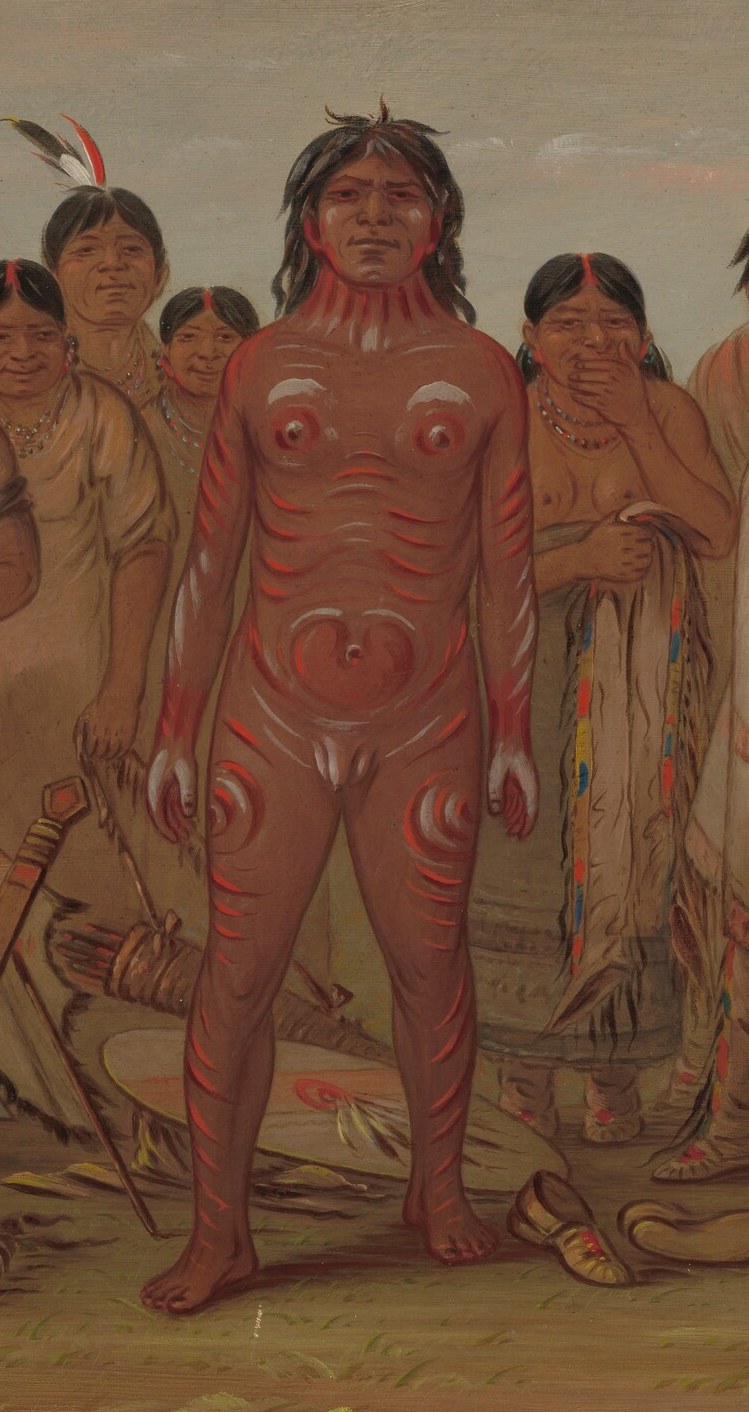
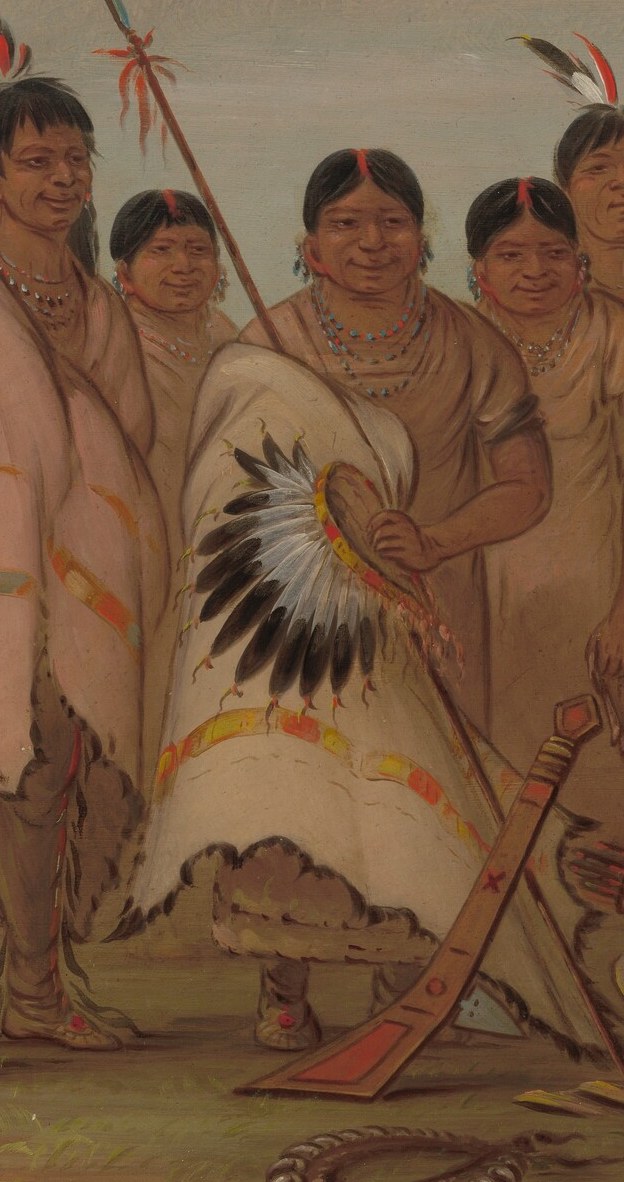
This is George Catlin’s 1862 portrait, often listed as “Paint Me”, Apachee, now held by the National Gallery of Art in Washington, D.C. The title is not a name. It is a command, likely a direct translation of what the Apache man in the painting told the artist.
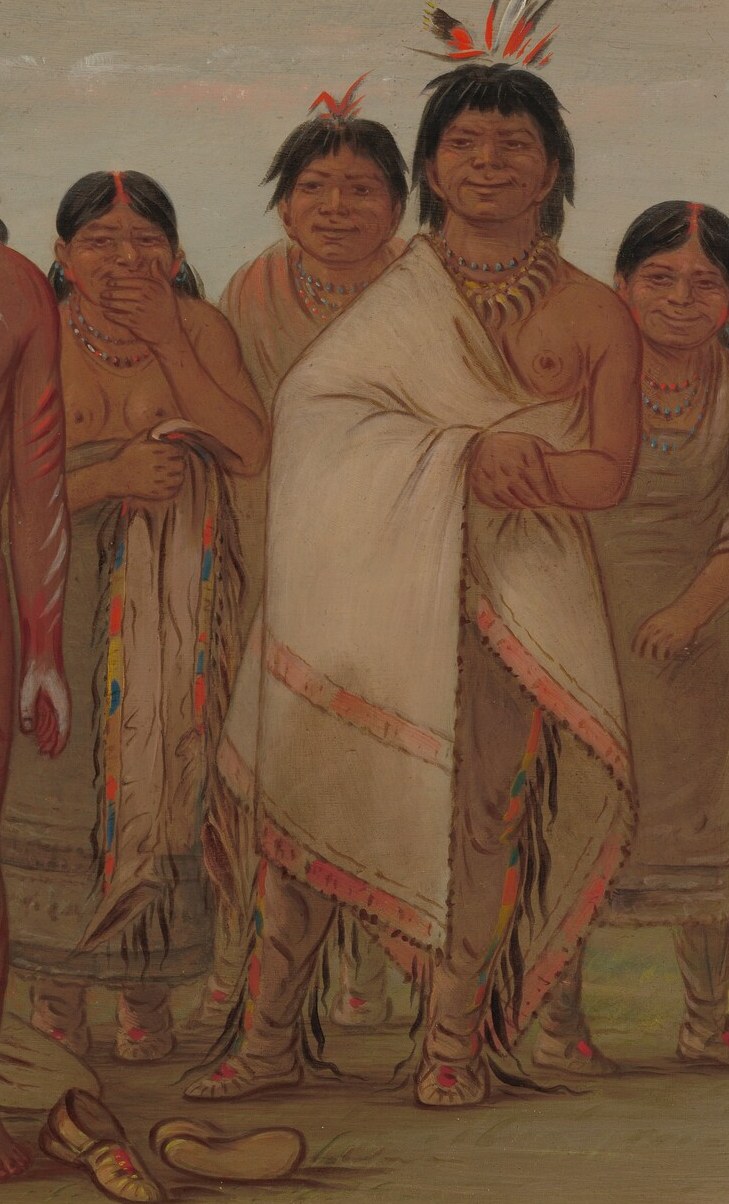
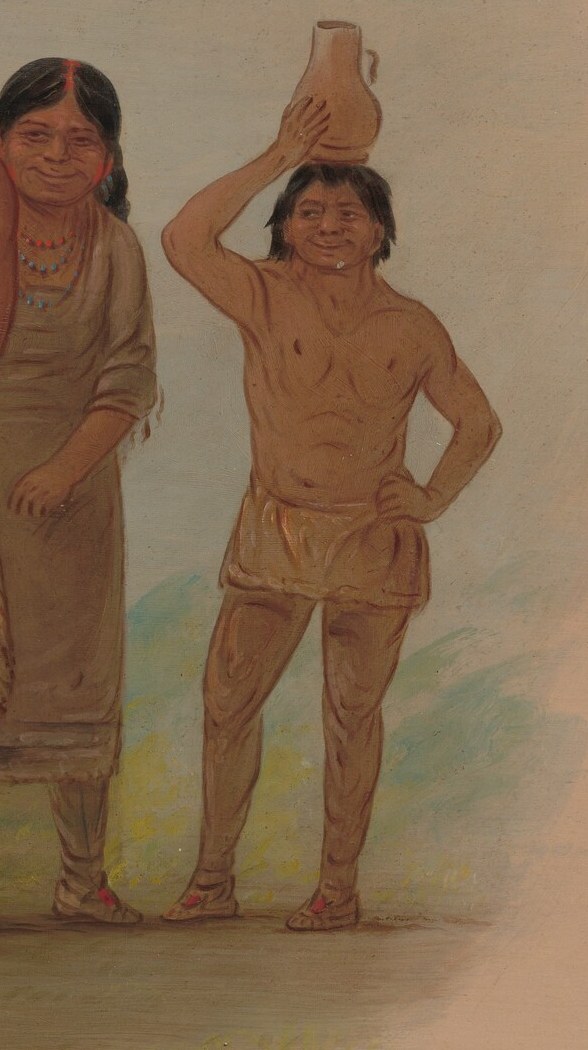
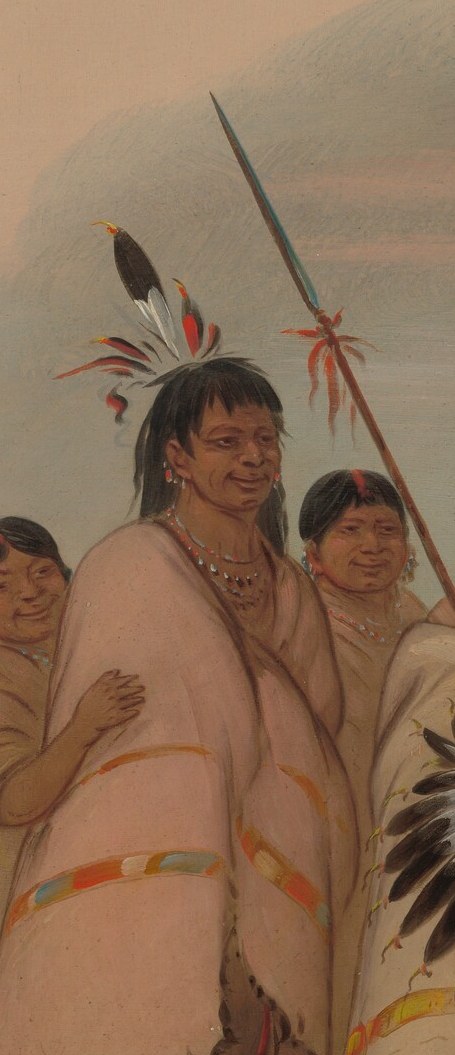
Look at the central figure. His body paint, in red and white, is rendered with careful, specific detail. Catlin’s smooth oil-on-card technique gives the patterns a crisp clarity that suggests they mattered deeply. The surrounding figures carry spears, shields, and a pot, grounding the scene in daily communal life rather than staged performance.
Catlin made five expeditions into the American West during the 1830s, driven by a conviction that Indigenous cultures were on the brink of disappearance. He painted hundreds of portraits, including Plains subjects, but this work reaches further into Apache territory. He was not just a painter; he was a lawyer-turned-ethnographer who wrote extensively to accompany his images.
The title flips the dynamic. This is not a picture taken. It is a picture requested. The man in the frame asserted his own terms. What do you think he wanted Catlin to capture most?
Details
Transcript
The title is odd. Not a name, but a command. Paint me. The man in the center wears red and white body paint. The patterns are intricate, specific. Catlin traveled the American West in the 1830s to document Native life. He feared their cultures would vanish. So he painted compulsively. The subject likely told him what to call it. A direct translation.