Still Life with Melon and Peaches by Manet, Edouard
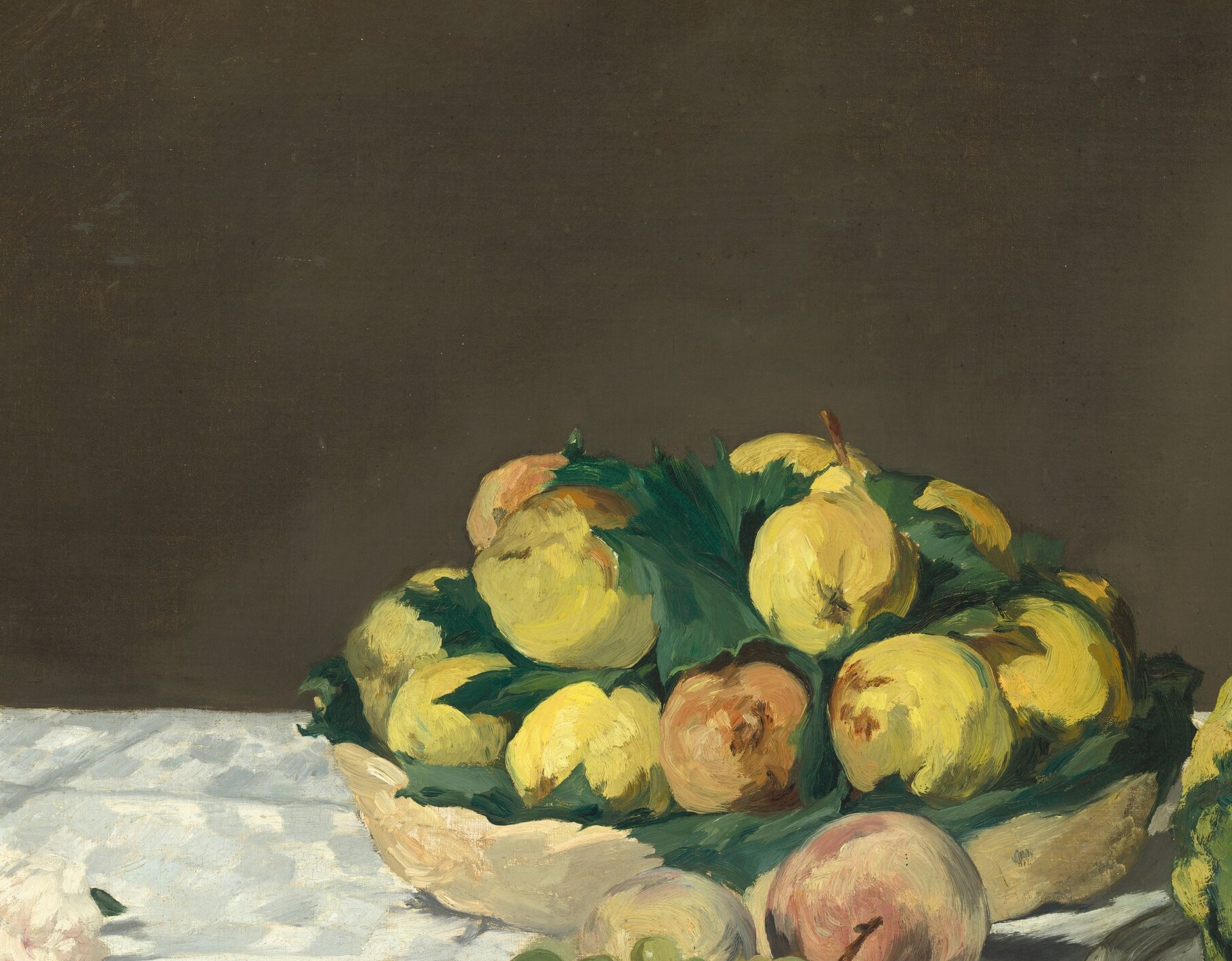
This is Edouard Manet's Still Life with Melon and Peaches, painted around 1866 and now in the National Gallery of Art. The single most interesting true thing about it is that it was stolen at swordpoint from the wrong apartment and vanished for nearly a decade.
Look at the wine glass on the left. Manet renders transparency with a few pale marks, a bravura passage of pure economy. The whole melon on the right is given sculptural weight through impasto, while the white cloth folds make the warm fruit colors vibrate. Every object here is an exercise in getting light right with the fewest possible strokes.
The painting belonged to Manet's friend, the poet Zacharie Astruc. Thieves meant to rob Astruc's neighbor of a silver service; instead they forced their way into Astruc's rooms, wounded him with a sword, and took this canvas among their loot. It resurfaced only in the mid-1870s, wrapped in a newspaper dated 1875, and entered the collection of the great French art critic Théodore Duret before making its way across the Atlantic.
Manet painted still lifes like this one as lab experiments in color and light, never guessing one would become a crime story. What do you think the thieves made of it when they unrolled the canvas?
Details
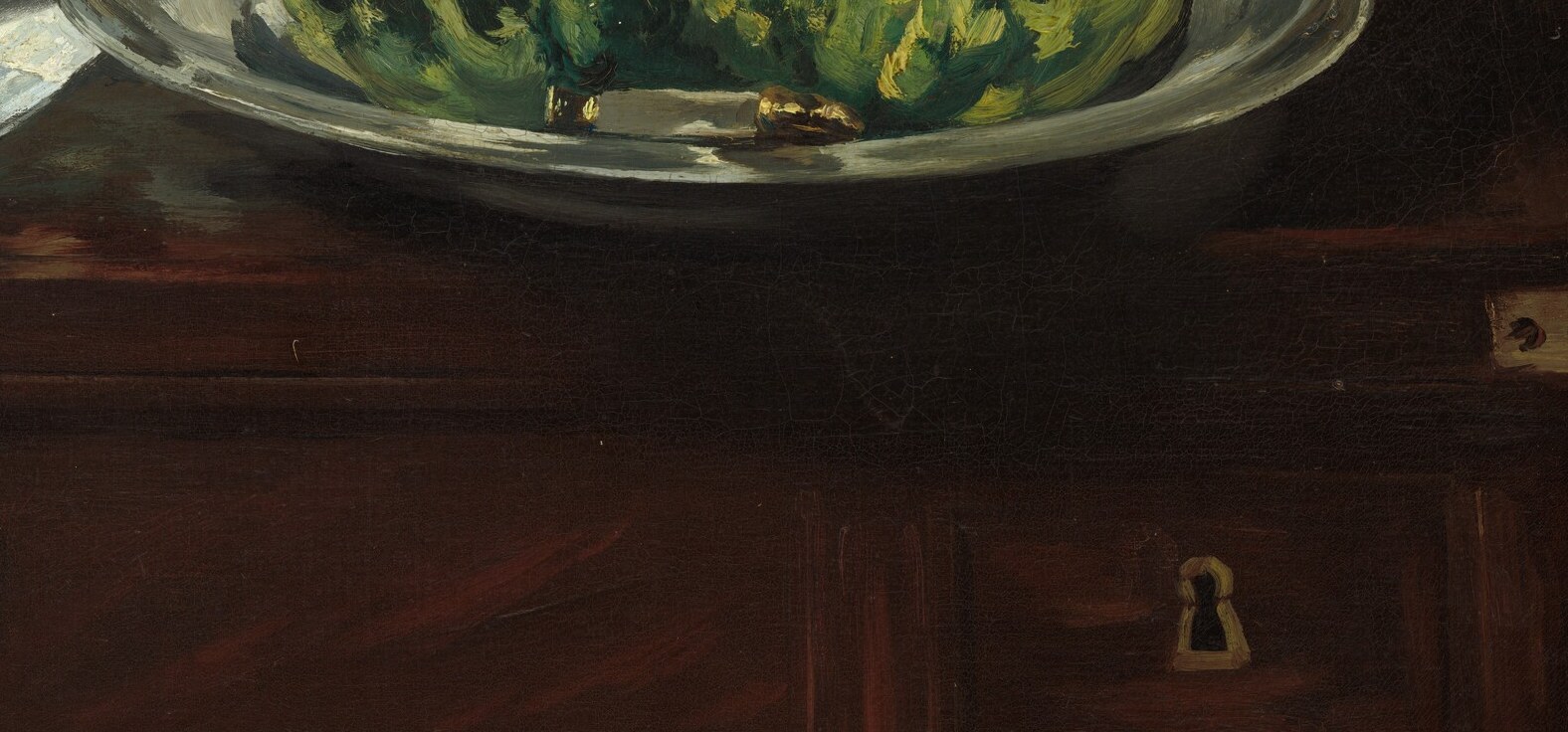
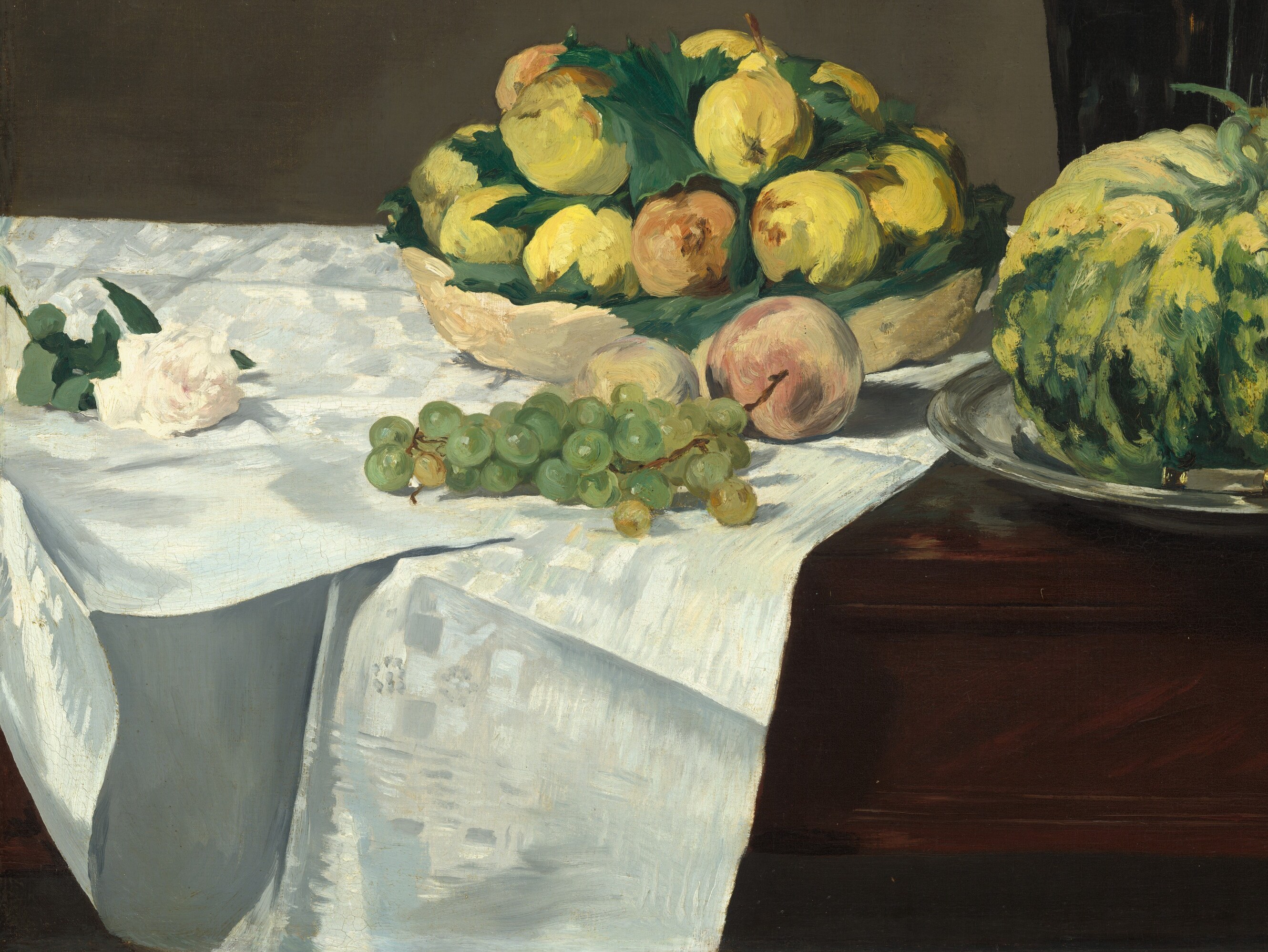
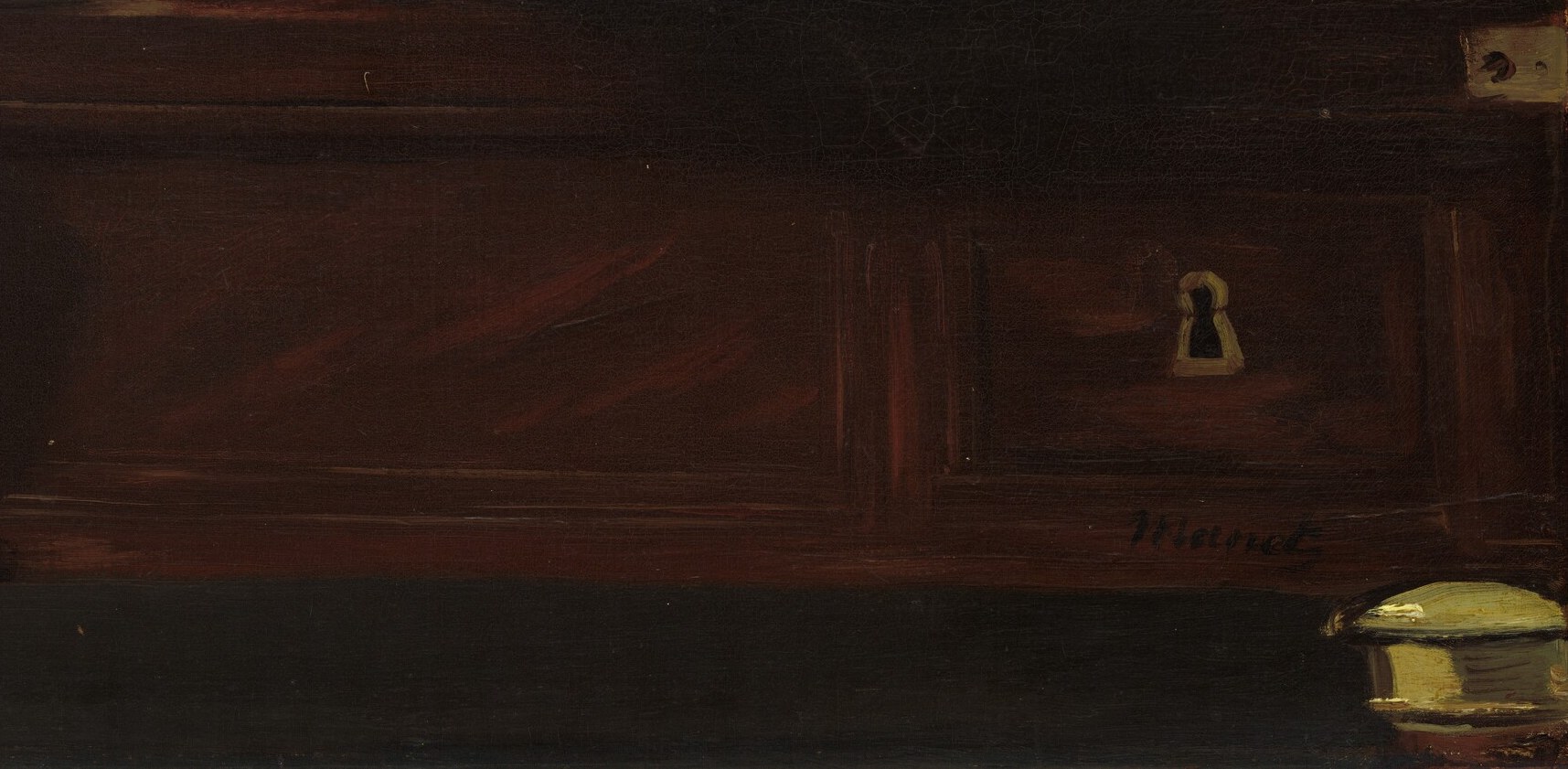
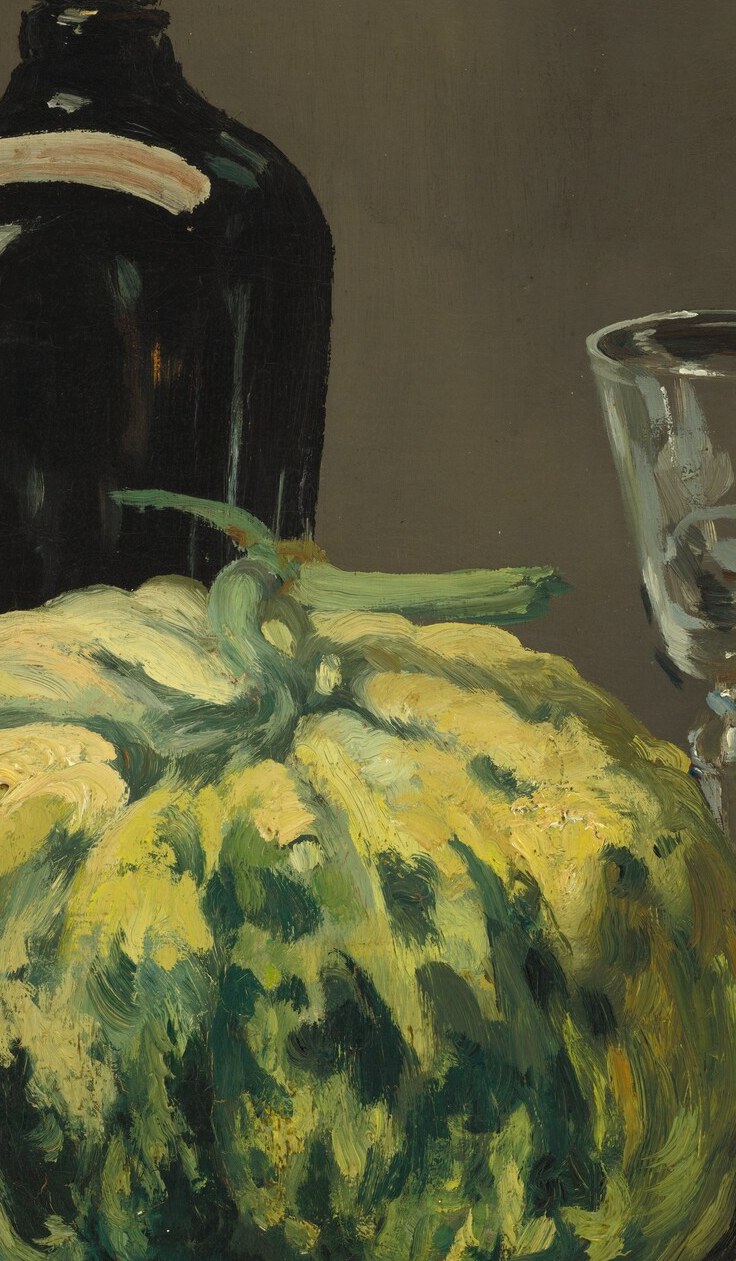
Transcript
The thieves broke into the wrong house in 1866. They wanted the neighbor's silver. They found this instead. They took the painting, wounding the artist's friend with a sword. Manet's friend survived. The painting did not reappear for nearly ten years. When it came back, it was wrapped in a newspaper from 1875. Look at the wine glass. Just a few brushstrokes. This stolen thing was a study in how light touches ordinary life. It hangs today in Washington. No one brings it silver.