The Rape of Proserpine by Turner, Joseph Mallord William
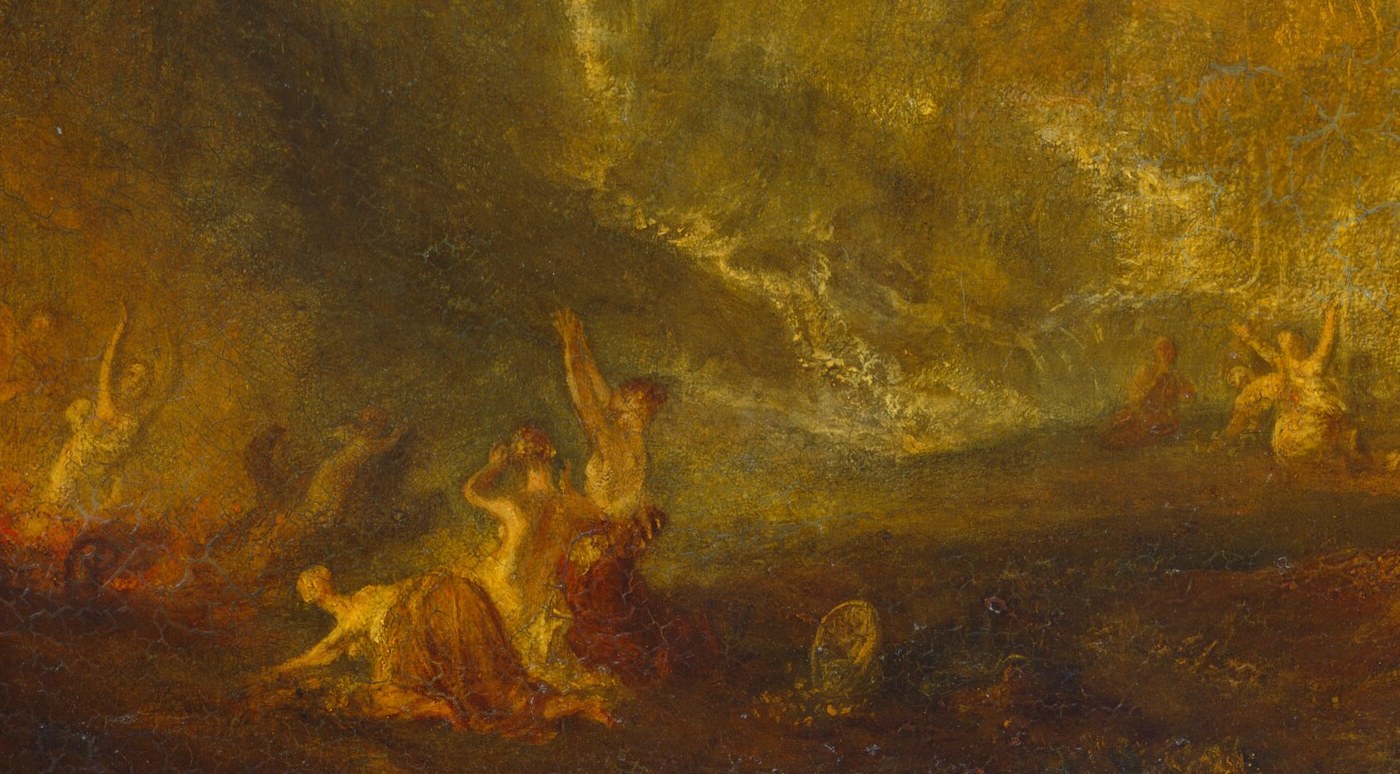
This is J.M.W. Turner’s “The Rape of Proserpine,” painted in 1839 and now rarely exhibited. Turner took a myth of violent abduction, Pluto dragging the goddess Proserpine into the underworld, and buried the human struggle so completely inside an elemental landscape that most viewers scroll right past the figures.
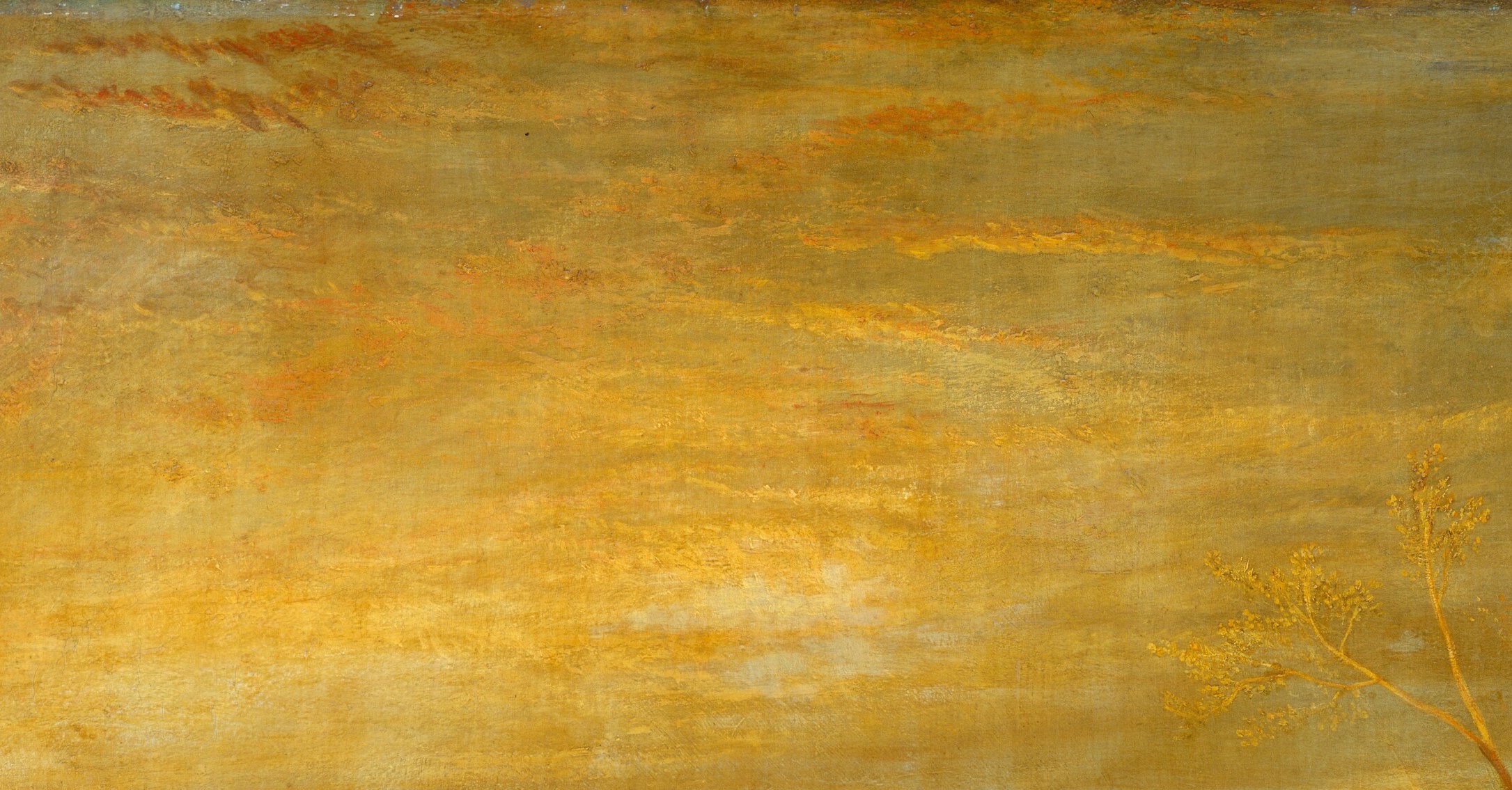
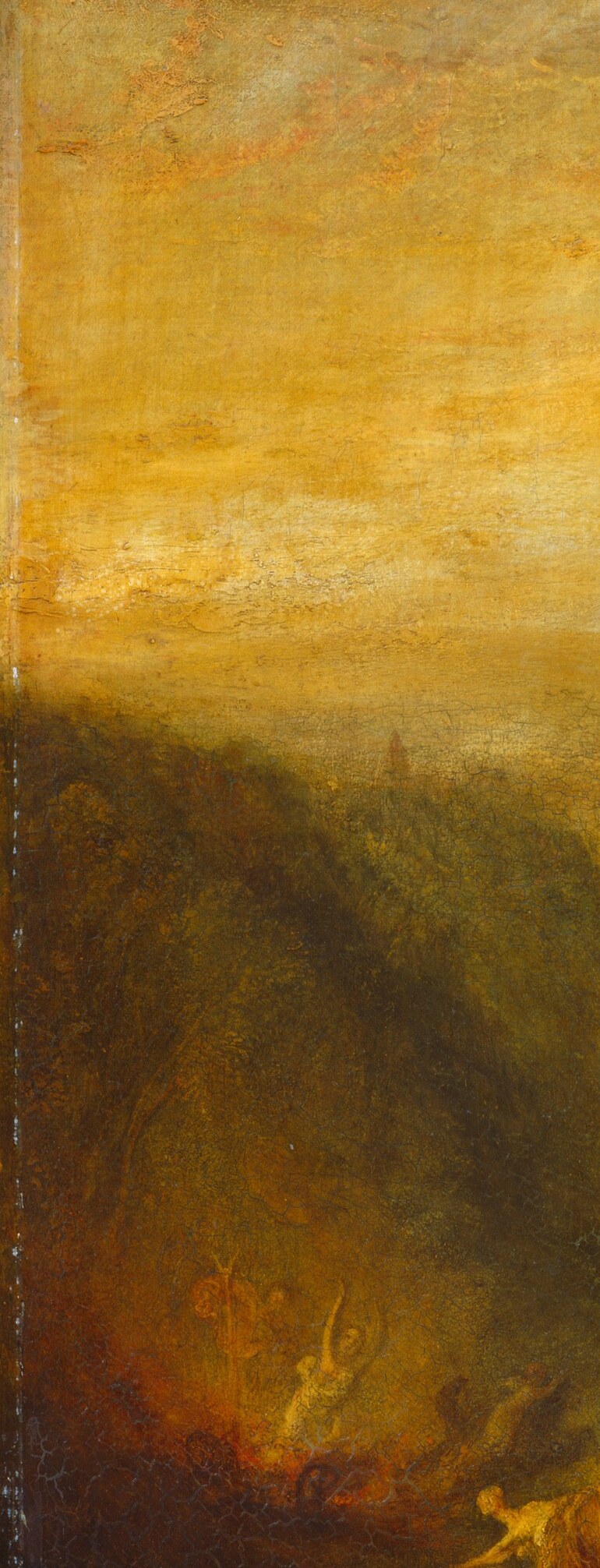
Look into the lower left, just above the darkest shadow. The two bodies are there, tiny, pressed into a corner of the canvas. Above them, a luminous golden sky opens as though the living world is taking one last look. But the dark cliff faces on both sides are already closing in, and a bare dead tree on the right echoes the fall with its skeletal reach.
Turner was around sixty-four when he painted this. He had been a full Academician for decades, a man who never married and who lived with his father until 1829, then later with Sophia Caroline Booth in Chelsea. His late works pushed so far into dissolving light that critics called them yellow fogs. Yet he kept painting the moment before something vanishes forever.
What does it mean to paint the abduction of a goddess and make the viewer strain to see her? Perhaps that is the point. The underworld does not announce itself.
Details


Transcript
Turner painted this in 1839, at the height of his powers. The title tells you it is an abduction. A goddess torn from the earth. But step back. The painting swallows the figures whole. Two bodies, barely there, pressed against a darkness they are about to enter. The bare dead tree echoes their fall. The only hard line in a dissolving world. Turner never married. He lived with his father, then quietly with a widow by the river. Human hands grasping for one another, told only by the light that drowns them.