The Parthenon by Frederic Edwin Church
View the artwork: The Parthenon →
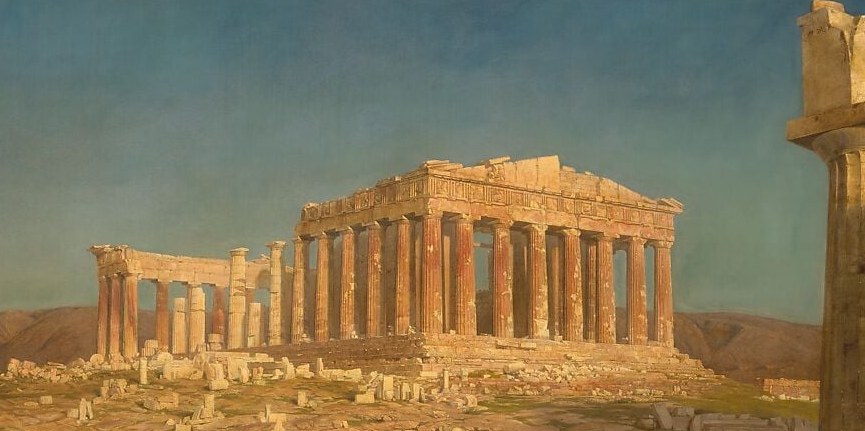
Frederic Edwin Church's 1871 painting "The Parthenon" lives at the Metropolitan Museum of Art, where its golden ruin fills an entire wall. It is a Hudson River School painter's obsession with a crime scene. The ruin wasn't ancient to Church. It was a precise, documented wound.
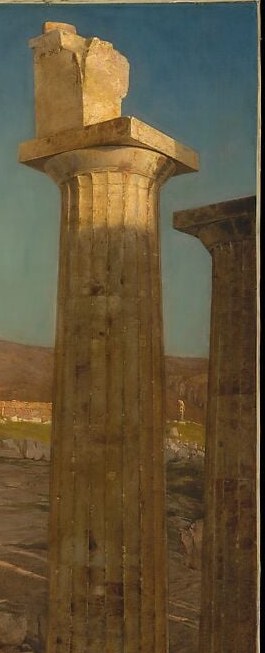
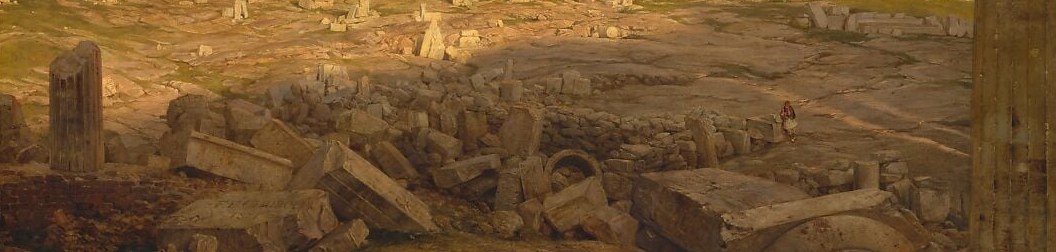
Look at the foreground debris. The carved blocks and column fragments scattered on the bedrock are not weathered smooth by rain. They are jagged, broken edges painted with geological precision. Above them, follow the columns to where the roofline simply stops. Church frames the bright Attic sky through the gap, making the absence the subject.
The catastrophe happened on September 26, 1687. The Parthenon had been converted into a gunpowder magazine by the Ottoman garrison. Venetian forces under Francesco Morosini lobbed a mortar shell through the roof. The explosion blew out the inner cella, killed hundreds, and tore the temple open. It turned a 2,000-year-old sanctuary into the ruin we recognize.
Church traveled to Athens in 1869 and spent weeks making studies, but the painting was finished from a safe vantage in New York. Commissioned by financier Morris K. Jesup, it is large, dramatic, and meticulously faithful to the damage. It is a report on what violence does to a masterpiece, painted by a man who couldn't look away.
#arthistory #fredericchurch #hudsonriverschool
Details


Transcript
The painter traveled to Athens in 1869. He spent weeks sketching this ruin. Look closely at the shattered marble. This damage isn't from centuries of weather. In 1687, Venetian artillery hit the temple. The Ottomans were storing gunpowder inside. The explosion tore the roof off. Church spent two years painting the wound.