Artwork
The Parthenon
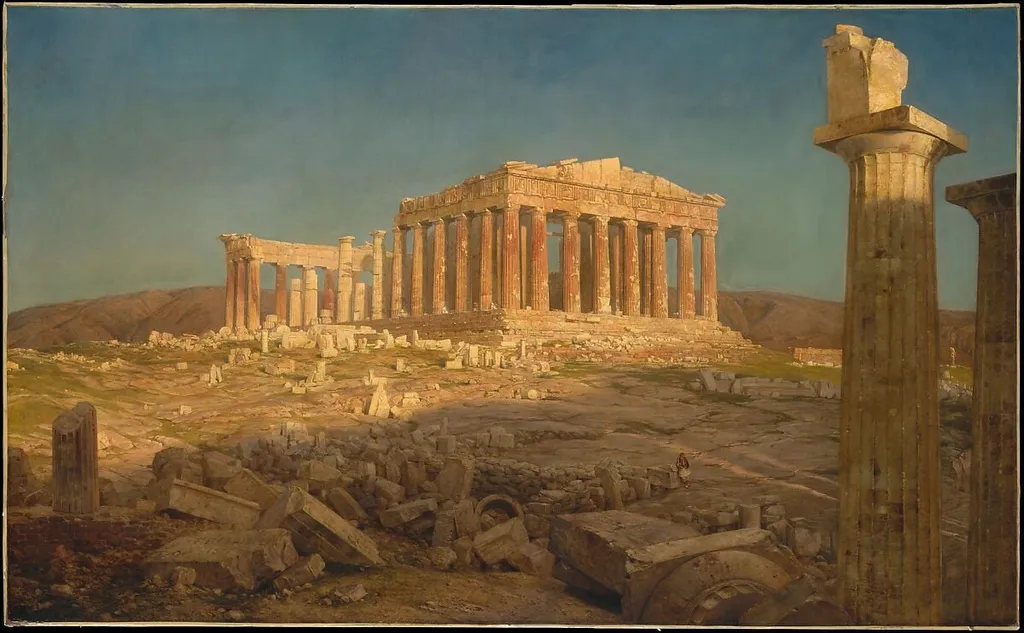
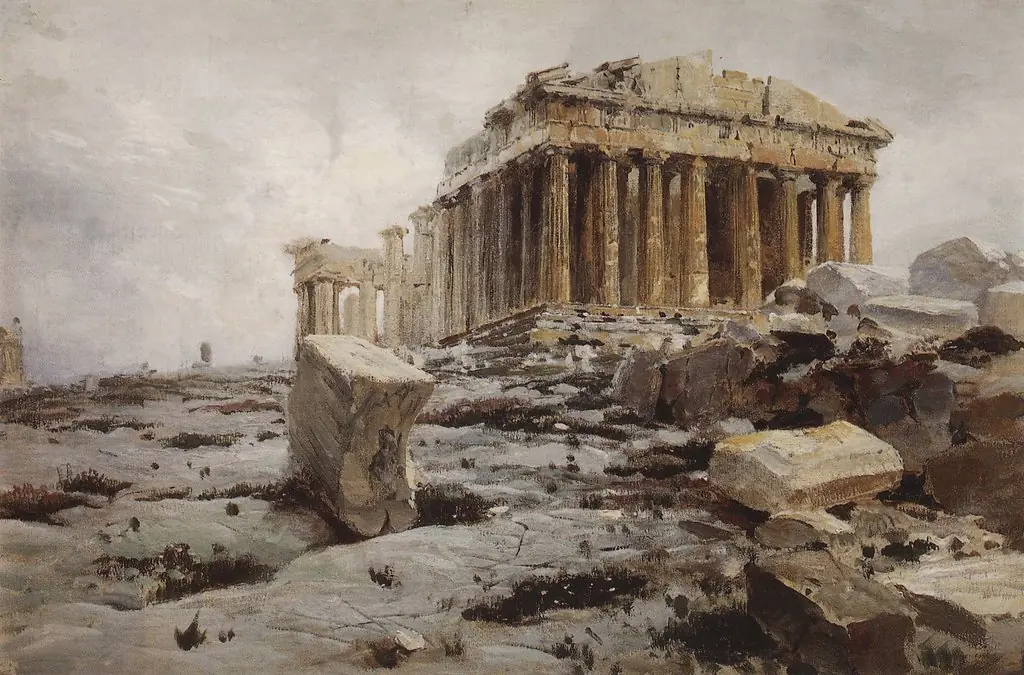
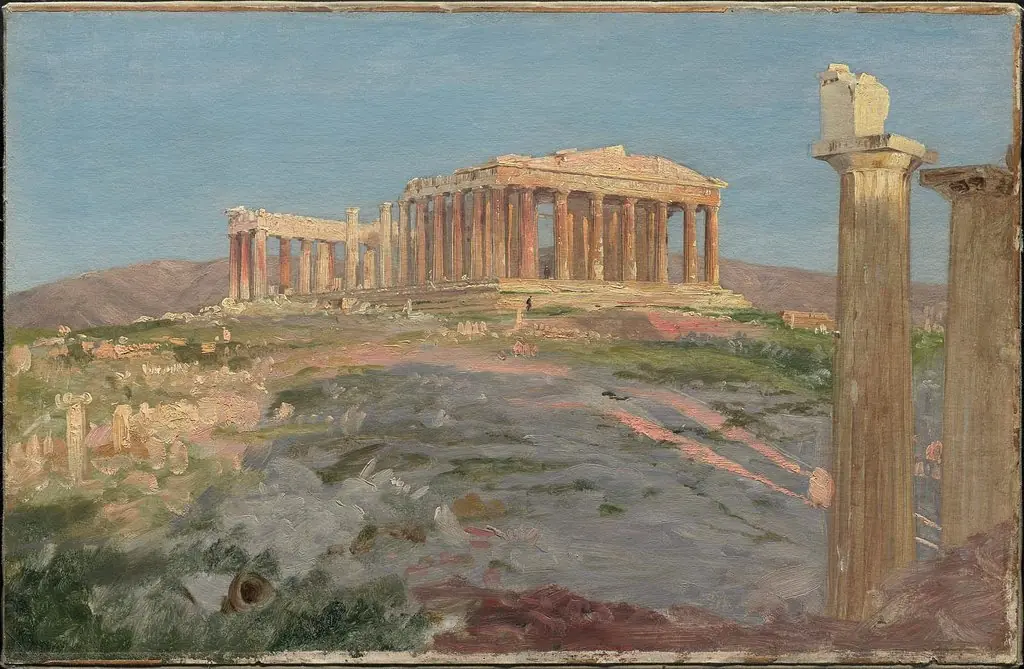
The Parthenon is an oil painting by the Hudson River School artist Frederic Edwin Church. It dates from 1871 and is held in the collection of the Metropolitan Museum of Art.
About this work
Frederic Church sketched the Athenian Acropolis for weeks in 1869, taken by the ruin's charm. Two years later, financier Morris K. Jesup commissioned the canvas. The Doric temple stands in reddish afternoon light, its foreground strewn with fallen capitals and column fragments. Church designed the frame himself, and the picture first showed at Goupil's Gallery in 1872.
Technique & Style
Church employed a large format to capture the monumental scale of the Parthenon from a low-angle viewpoint, emphasizing its ruined grandeur.
The painting is executed in oil on canvas, measuring 113 by 184.5 centimeters. Church employed a large format to capture the monumental scale of the Parthenon from a low-angle viewpoint, emphasizing its ruined grandeur. Stylistically, the work reflects Church's meticulous on-site studies in Athens in 1869, resulting in a detailed architectural view that balances archaeological precision with atmospheric effects inherent to the Hudson River School tradition.
History & Provenance
Frederic Edwin Church painted The Parthenon in 1871, after a formative visit to Greece in 1869 during which he spent several weeks in Athens making detailed studies of the ruins. The work was commissioned by financier and philanthropist Morris K. Jesup, who enabled Church to begin the large canvas. The painting entered the collection of the Metropolitan Museum of Art in New York, where it remains on view in Gallery 760.
Church’s methodical preparation, firsthand sketches followed by a commissioned studio execution, reflects the nineteenth-century transatlantic practice of transforming plein-air studies into monumental, museum-held compositions.
The Parthenon is held in the collection of the Metropolitan Museum of Art in New York City. It was commissioned by financier and philanthropist Morris K. Jesup in 1871, the same year Church completed the work. As of the most recent sources, the painting is on view in the museum's Gallery 760.
Overview
Frederic Edwin Church's large-scale oil painting, The Parthenon, completed in 1871, depicts the ancient Greek temple. This significant work is held in the collection of the Metropolitan Museum of Art in New York City, where it is displayed within the American Wing. The canvas reflects Church's profound engagement with classical antiquity, a theme he explored following his extensive travels.
Subject & Meaning
Church's depiction captures the Doric temple bathed in the warm, reddish glow of afternoon light, emphasizing its weathered grandeur. The foreground is intentionally scattered with architectural debris, including fallen capitals and column fragments, underscoring the ruin's historical narrative. The artist extended his creative vision to the presentation of the work itself, personally designing the frame to complement the painting's classical subject matter.
Artist & collection

Artist
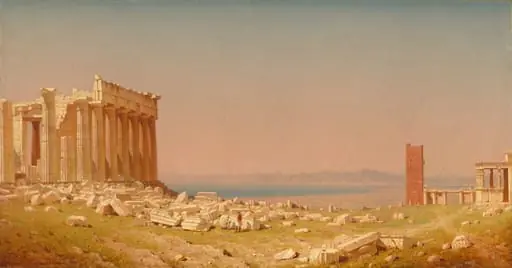
Frederic Edwin Church was an American landscape painter born in Hartford, Connecticut.