Three Pears and an Apple by Johnson, David
This is David Johnson's "Three Pears and an Apple," painted in 1857. It lives in the collection of the Yale University Art Gallery. What first reads as a modest still life is, on any serious look, a quiet demonstration of absolute control over oil paint.
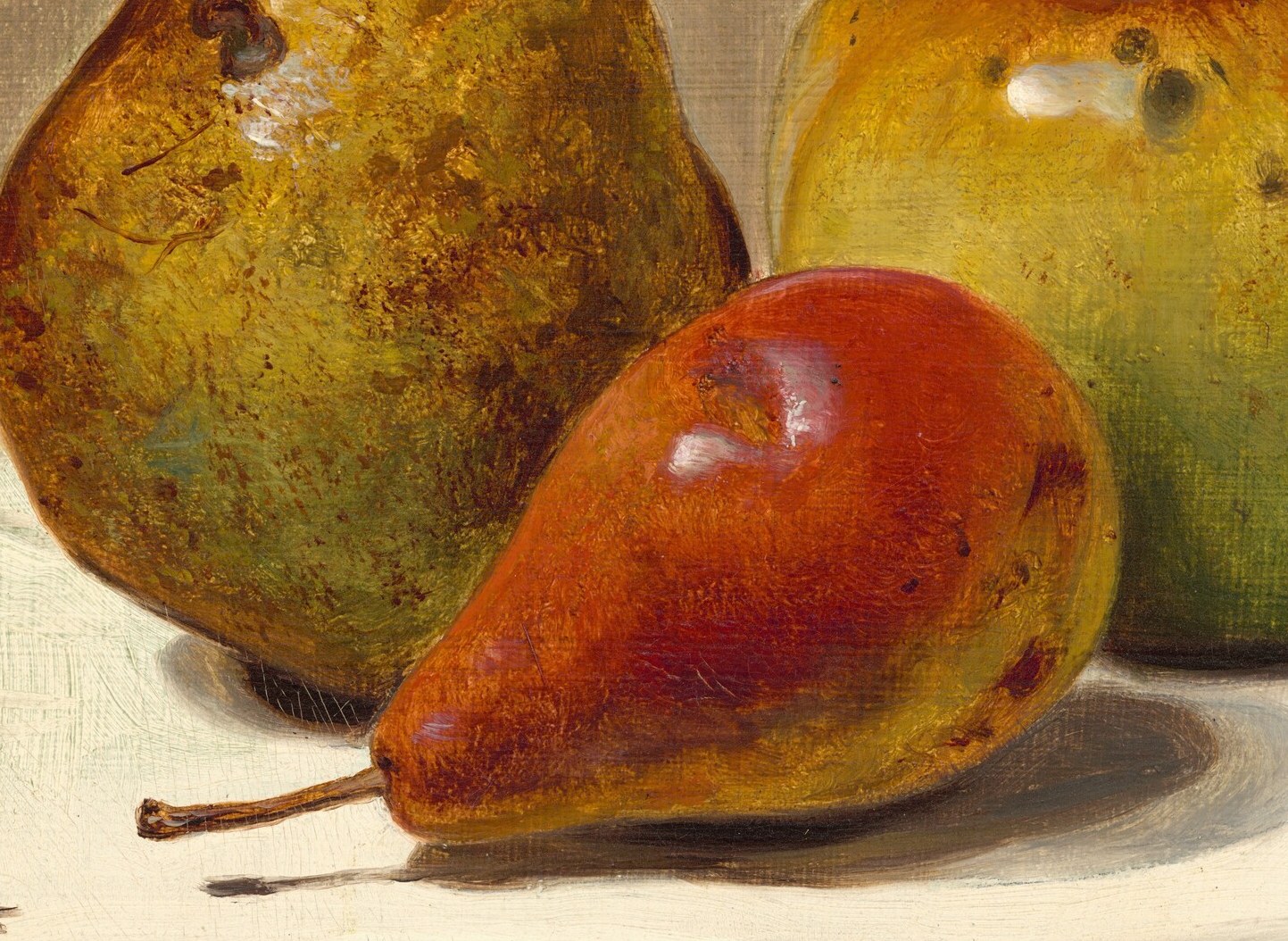
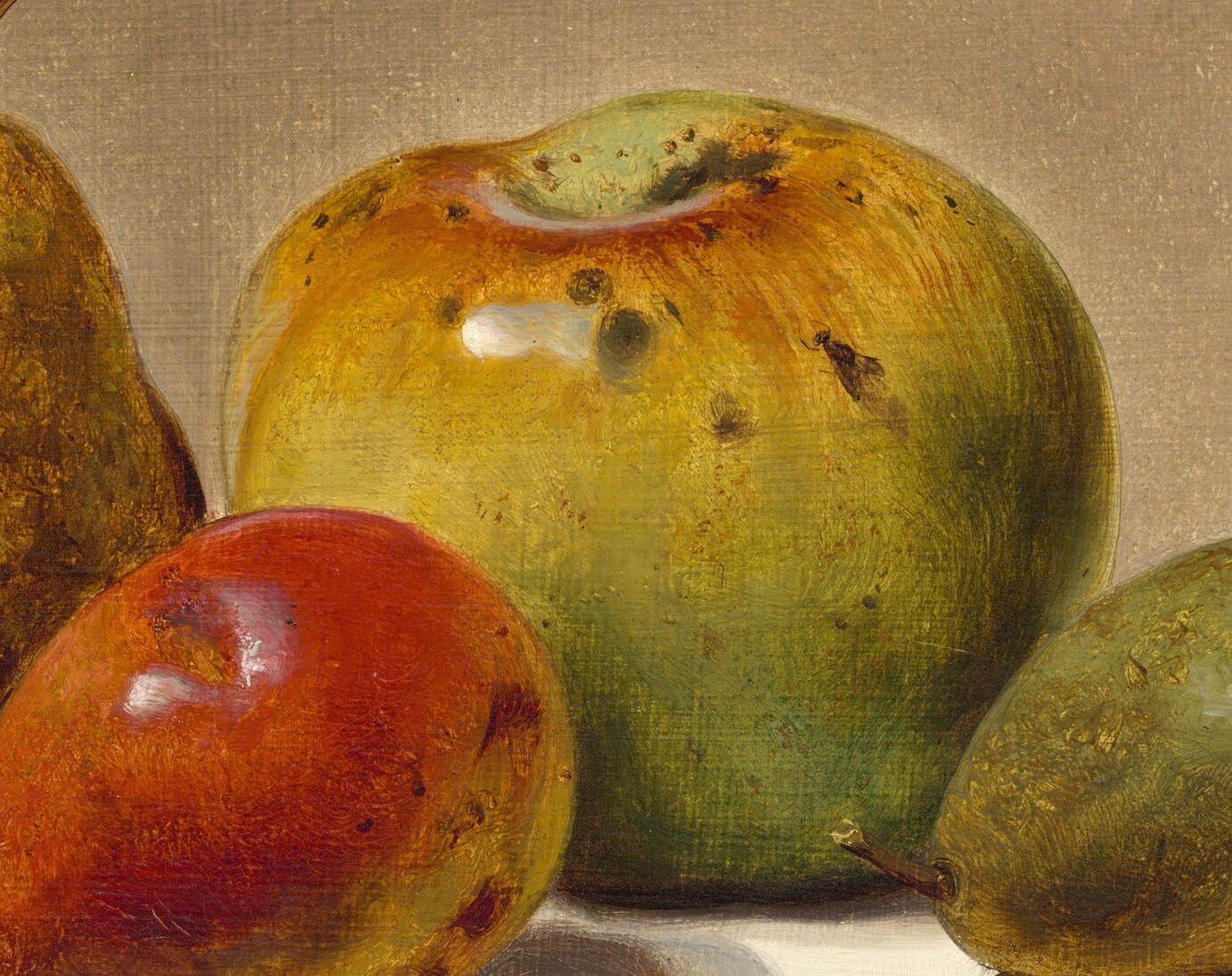
Watch the red pear, Johnson likely worked from a green pear and shifted the color entirely in the studio, building a deep, bruised red through successive thin glazes. The apple's mottled skin is deliberate imperfection, each brown spot a separate layer of paint left to dry before the next went down. A single rough dash of white sits on the red pear where light hits the skin, and it does all the work.
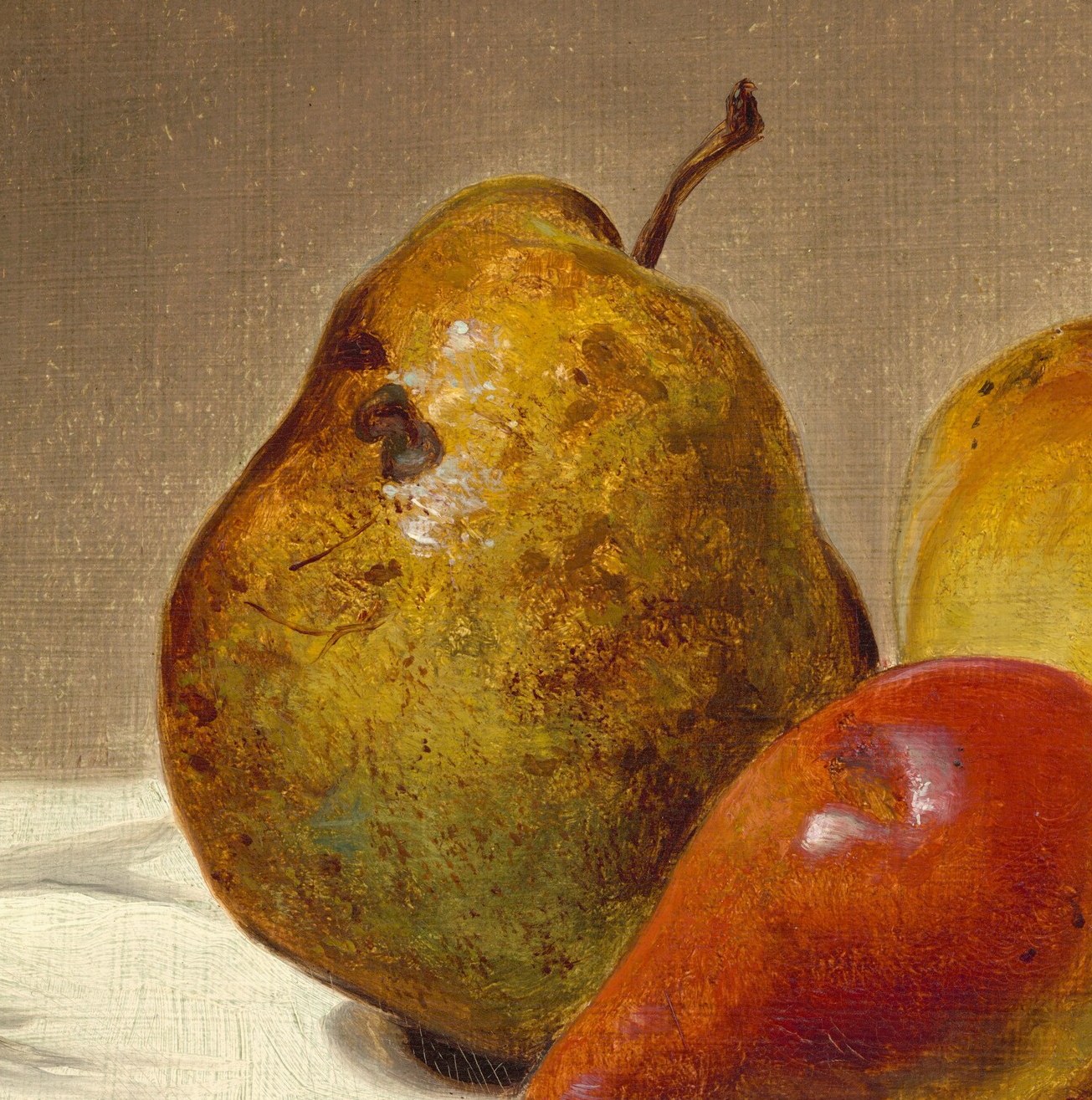
The tiny fly, no bigger than a grain of rice, is two brushstrokes. One for the body, one for the wing. Johnson thinned his paint with turpentine and laid it so sparely that the grain of the wooden board is still visible beneath the background wash. He was twenty-nine and already had the discipline to stop the moment the illusion was complete.
Next time you see a still life, stand close enough to see the board grain. The painter's decisions are all still there.
Details
Transcript
Four pieces of fruit on a rumpled white cloth. Look at this red pear. Nothing is reflected but light. The painter had no red pear in front of him. He built this color wet-on-dry. Every blemish on the apple is a layer. A tiny fly, smaller than your fingernail. Two strokes of the brush. Oil paint thinned with turpentine, laid so thin the board grain shows through. David Johnson was twenty-nine. He knew exactly when to stop.