The Allegory of the Sorbonne by Pierre Puvis de Chavannes
Pierre Puvis de Chavannes's *The Allegory of the Sorbonne*, painted in 1895, is an oil painting now at The Metropolitan Museum of Art. This large-scale work was commissioned for the famed French university and exemplifies the artist's characteristic approach to allegorical subjects.
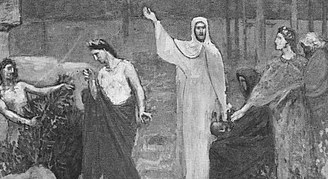
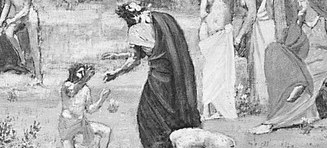
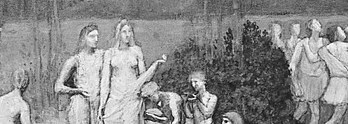
Look closely at the figures; each one symbolizes an aspect of education and the pursuit of knowledge. From the central figure guiding the eye towards enlightenment, to the woman with her book, and those reaching upwards, the painting is a visual representation of academic ideals.
Puvis de Chavannes was a significant French muralist, celebrated for his allegorical compositions that profoundly influenced his contemporaries. As a co-founder of the Société Nationale des Beaux-Arts, his distinctive style played a pivotal role in shaping late 19th-century French art.
What themes of learning do you see reflected in these symbolic figures?
Details
Transcript
This painting represents the grand ideals of learning. It was commissioned for the Sorbonne, a famous French university. The central figure gestures toward the pursuit of knowledge. A woman holds a book, a symbol of academic study. Others reach upward, seeking enlightenment and inspiration. This painter was known for his calm, allegorical murals. He shaped the art of late 19th-century France. Every figure embodies an aspect of education.