Gardanne by Paul Cézanne
Paul Cézanne painted the view from a hilltop in the small French town of Gardanne over a period of months in 1885, producing one of the most quietly radical landscapes in the history of painting. Held by The Metropolitan Museum of Art, this canvas is not really a picture of a town. It is a visual argument that every surface, sky and stone alike, can be constructed from the same deliberate, repeated brushstroke.
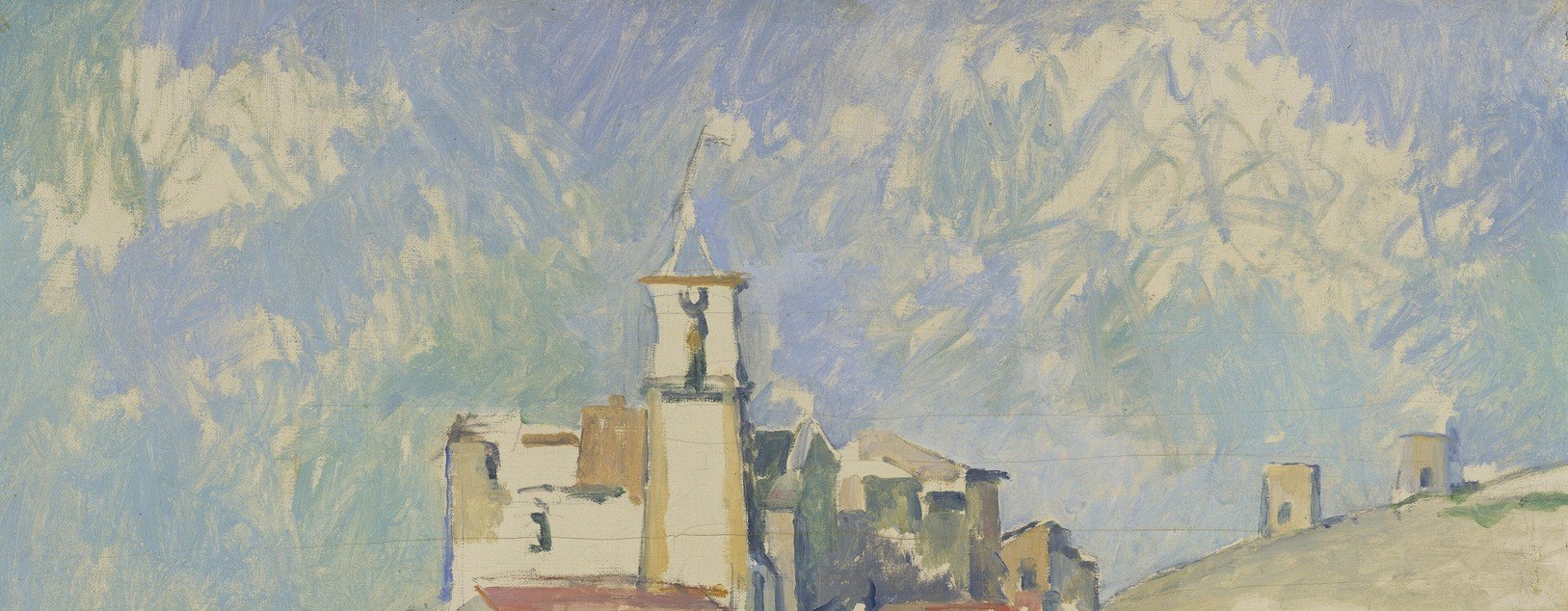
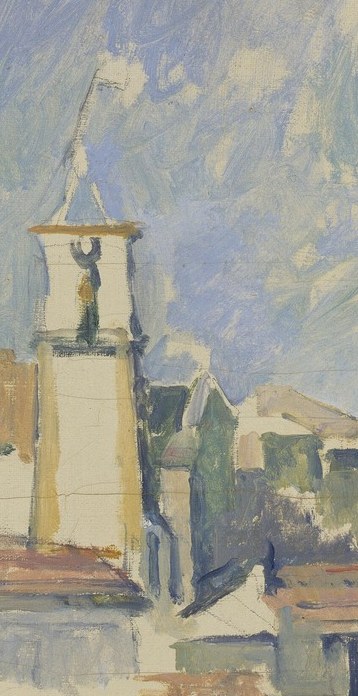
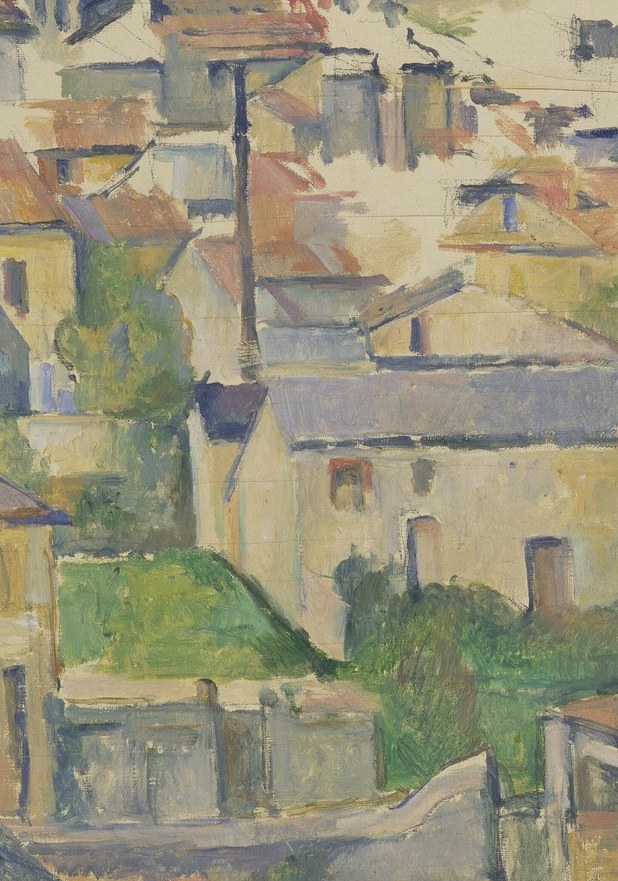
Start with the sky. Even the open air above the church tower is not empty atmosphere; it is built of parallel hatched marks, pale blue and white laid down in short, directional strokes. When that same stroke turns horizontal and ochre, it becomes the warm masonry of the building walls at lower right. The grammar does not change, only the color and the angle. This is what Cézanne called his 'constructive stroke,' and it is the engine of the entire painting.
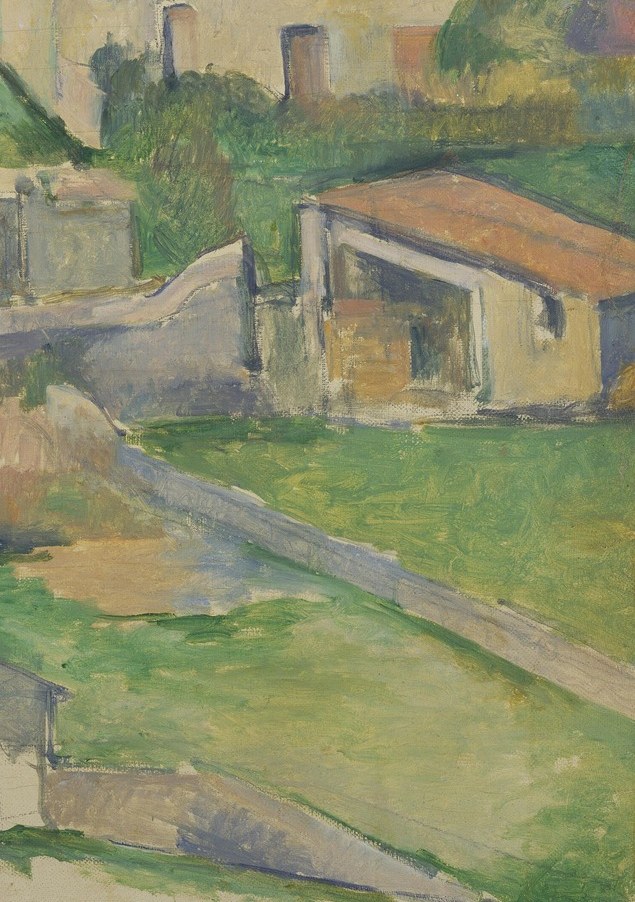
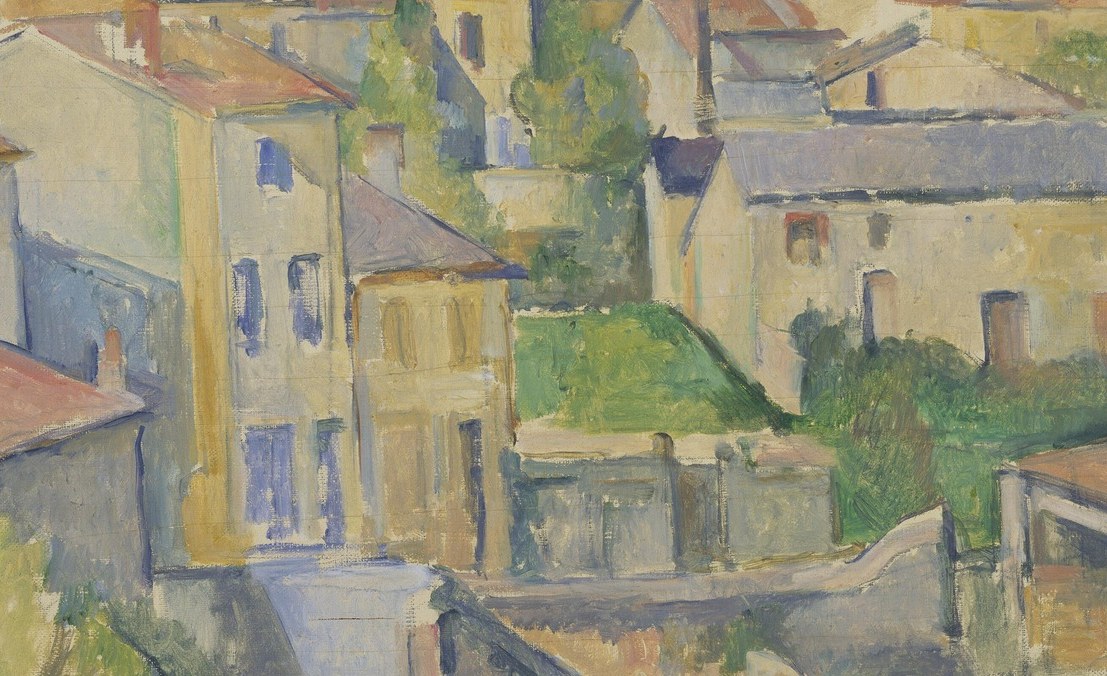
Cézanne was a Post-Impressionist who famously declared he wanted 'to make of Impressionism something solid and durable, like the art of the museums.' Here he systematically breaks with classical perspective. The orange-red roof planes jostle at conflicting angles. Buildings climbing the hillside stack in overlapping slabs rather than receding in space. Even the ground plane near the lower left tips upward, nearly flattening into the picture plane. Depth is not eliminated; it is reorganized around structural logic rather than optical truth.
That reorganization changed everything. A young Pablo Picasso studied this painting and its kin obsessively, calling Cézanne his one true master. In these stacked, faceted planes and the refusal to separate object from void, the scaffolding of Cubism is already visible. What do you notice first in this painting: the solid town, or the marks that built it?
Details
Transcript
Look at the sky. Even his air is built out of parallel marks. Same mark, turned sideways, makes stone. Cézanne called this his 'constructive stroke'. He wanted to make Impressionism 'solid, like the art of the museums.' Each roof plane tilts at a different angle. Perspective collapses so form takes over. Picasso called this man his one true master.