Mt. Fenghuang (Mt. Phoenix) by Song Xu
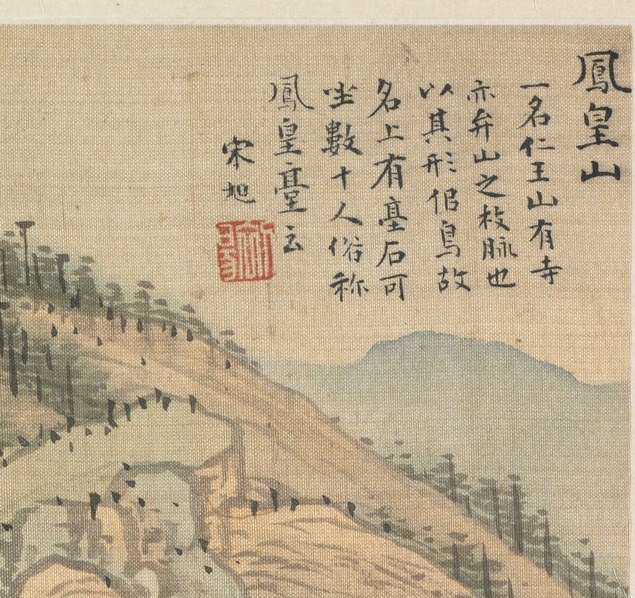
This is Song Xu's "Mt. Fenghuang" (Mt. Phoenix), painted in 1594 and now at the Cleveland Museum of Art. For a Ming dynasty viewer, this was not merely a pretty landscape. It was a dense, legible text built from a shared symbolic vocabulary.
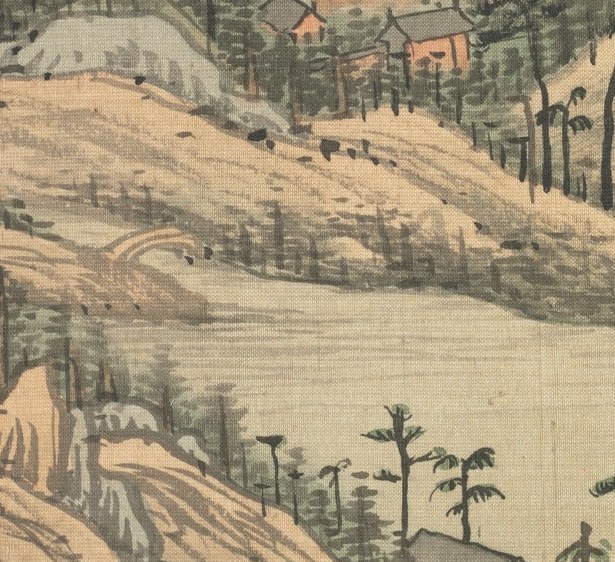
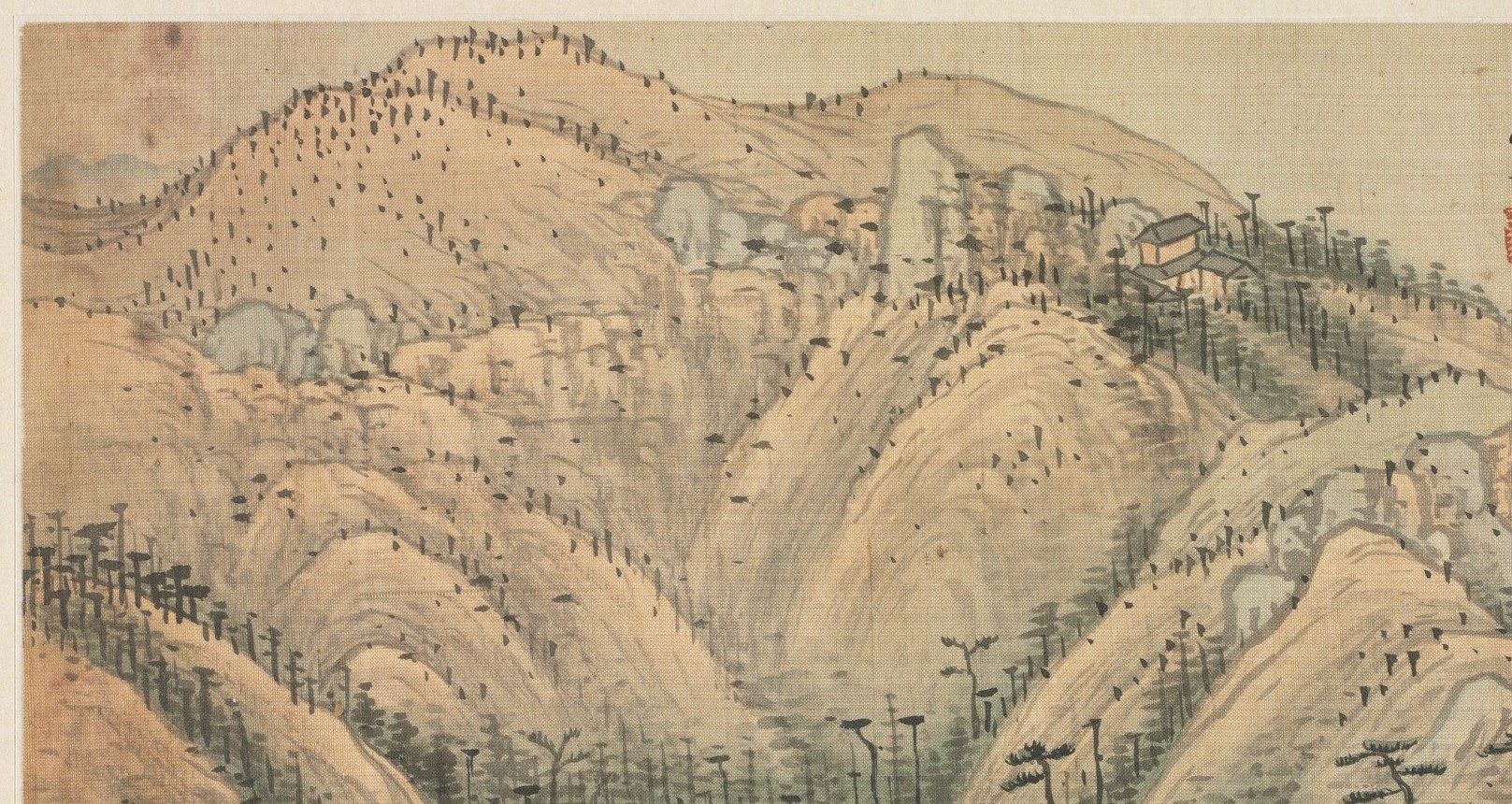
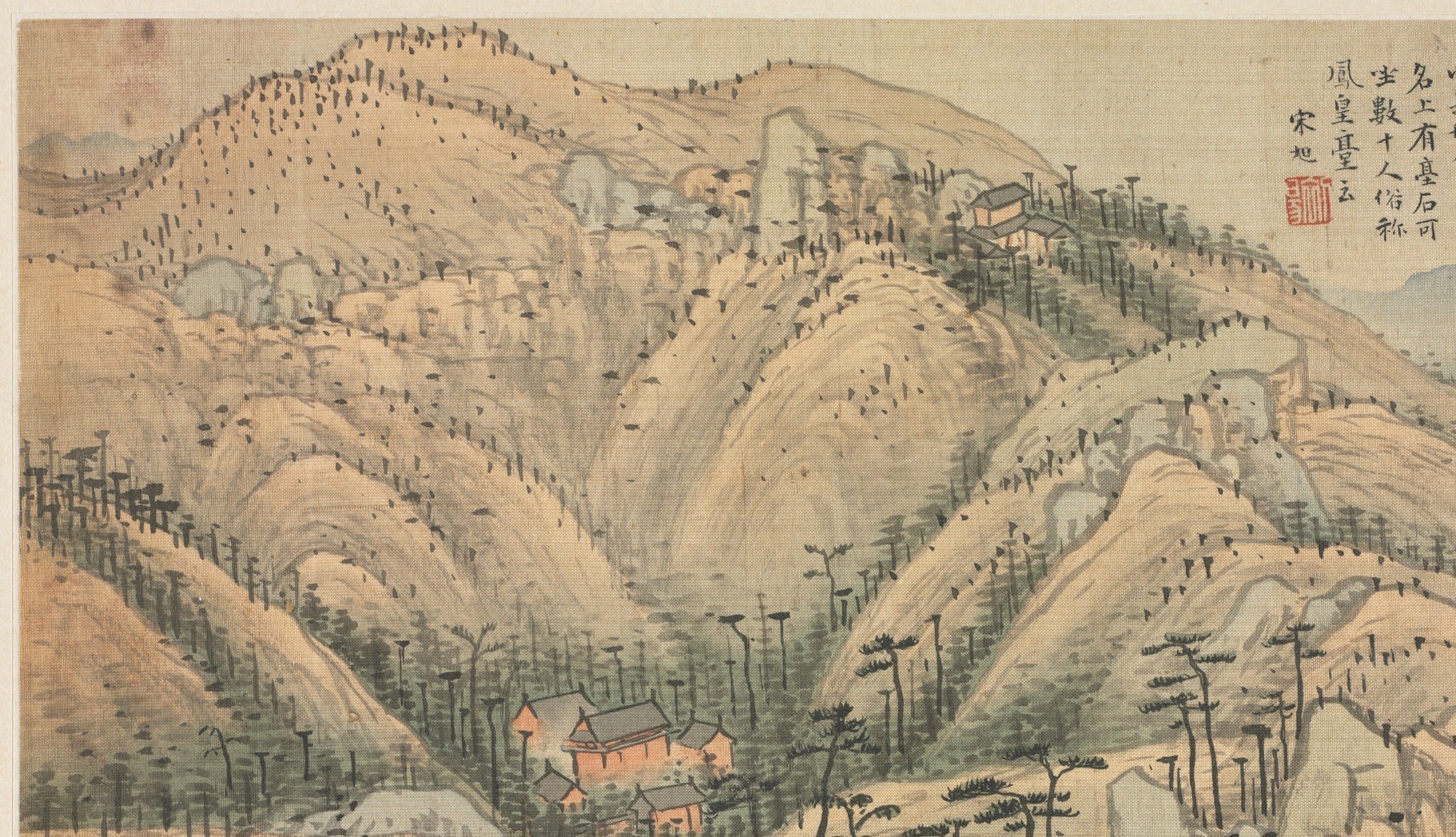
Look first at the cluster of tall, dark pines in the midground. The pine was a central figure in Ming literati thought: a tree that holds its green through winter, that grows tough and gnarled on wind-whipped cliffs. In poetry and painting, the pine meant the virtuous official who refuses to bend to the pressures of court corruption. Now notice the dots stippled across every ridge. Those are all pines too. Song Xu is saying the whole mountain is suffused with this quality, from foreground to farthest peak. The figure on the bridge pauses between the shelter below and the wilderness above, standing at the exact crossing point where a scholar leaves society behind. Even the red-roofed dwelling tucked into the mountain is not just a house. It is the hermit's retreat, the destination the traveler is walking toward, and the quiet, small-scale life of integrity the painting recommends.
Song Xu lived through the late sixteenth century, a period when many educated men were disillusioned with the Ming court. His style continued the literati tradition of painting for fellow scholars rather than patrons, layering brushwork technique with dense cultural meaning. The stippled pines (dian), the stacked pale ridges achieving atmospheric recession (the "three distances"), and the restrained earth-toned palette all belong to a scholar-painter speaking to people who knew how to read his code. The mountain still stands today, outside Hangzhou. But the mountain Song Xu painted is really an interior one: a place you go by looking, where every tree is a principle and every bridge is a decision.
Details
Transcript
A mountain, a bridge, a tiny figure. It looks like a postcard. But in 1594, a Chinese scholar would read this like a book. Start with the pines. Tall, dark, unbending. In Ming poetry, the pine is the virtuous man who won't break in a storm. Now scan the ridges. Thousands of ink dots you'd miss from a foot away. Each dot is a pine. The mountain is thick with integrity. And the figure on the bridge? He's not lost. He's paused. The whole painting is an argument: withdraw from the corrupted city, go into the mountain, stand straight.