An Old Nayas Indian, His Granddaughter, and a Boy by Catlin, George
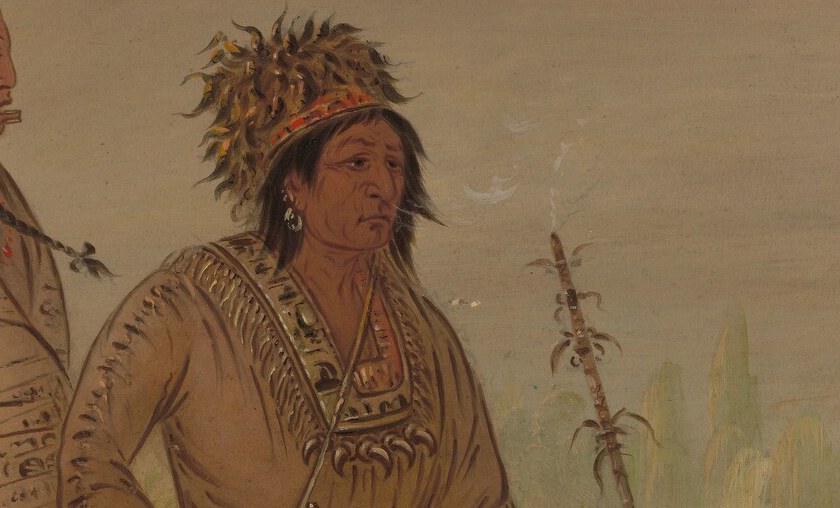
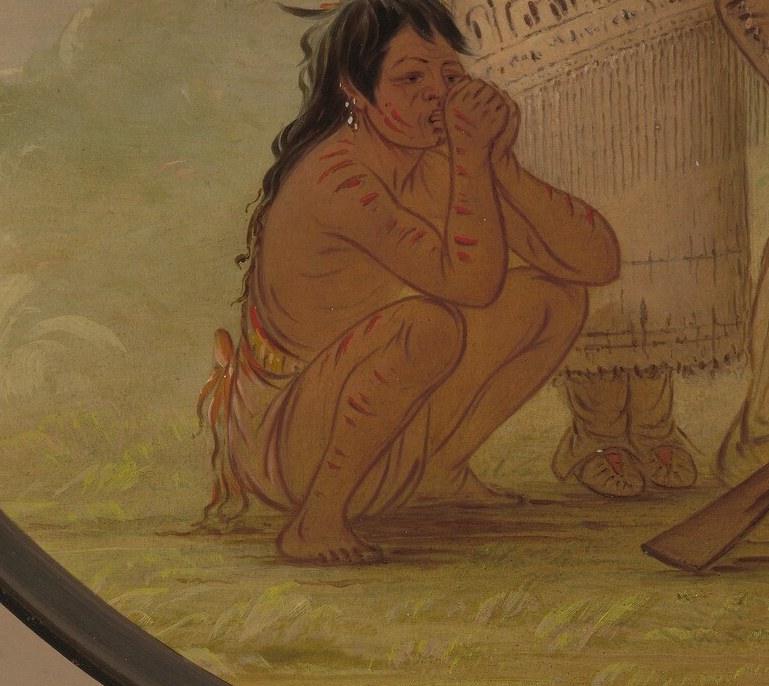
This is 'An Old Nayas Indian, His Granddaughter, and a Boy,' painted in 1862 by the American artist George Catlin. It is an oil painting on card, mounted on paperboard, and it holds a secret most viewers scroll past: a tiny inscription marked 'A 271.'
Look past the old man's dignified face and the girl's quiet gaze. At the very bottom right, beside the man's intricately beaded boot, Catlin wrote a small catalog number directly onto the painting. It reads 'A 271.' This single letter and three digits are a clue to the artist's obsessive, lifelong project.
Catlin was a lawyer who became a self-taught painter and traveled to the American West five times in the 1830s. At a time when Plains Indian societies were facing unrelenting pressure and change, he set out to document their faces, their clothing, and their ceremonies before, as he believed, they vanished completely. He produced hundreds of portraits and scenes, numbering many of them as part of a personal archive.
The number 'A 271' is not just a museum accession code. It is Catlin's own mark, a whisper of his grand attempt to build a visual record so complete that every face and every artifact would be accounted for. It transforms the painting from a simple family portrait into a piece of data in a determined, human effort to hold onto history.
Details
Transcript
An elder, a girl, and a boy. George Catlin spent his life painting Native Americans. He called their faces 'a book for the world to read.' But look at the lower right corner. Catlin cataloged every painting with a tiny number. He built an archive of a world under threat.