Allegory of the Arts by Jacob de Wit
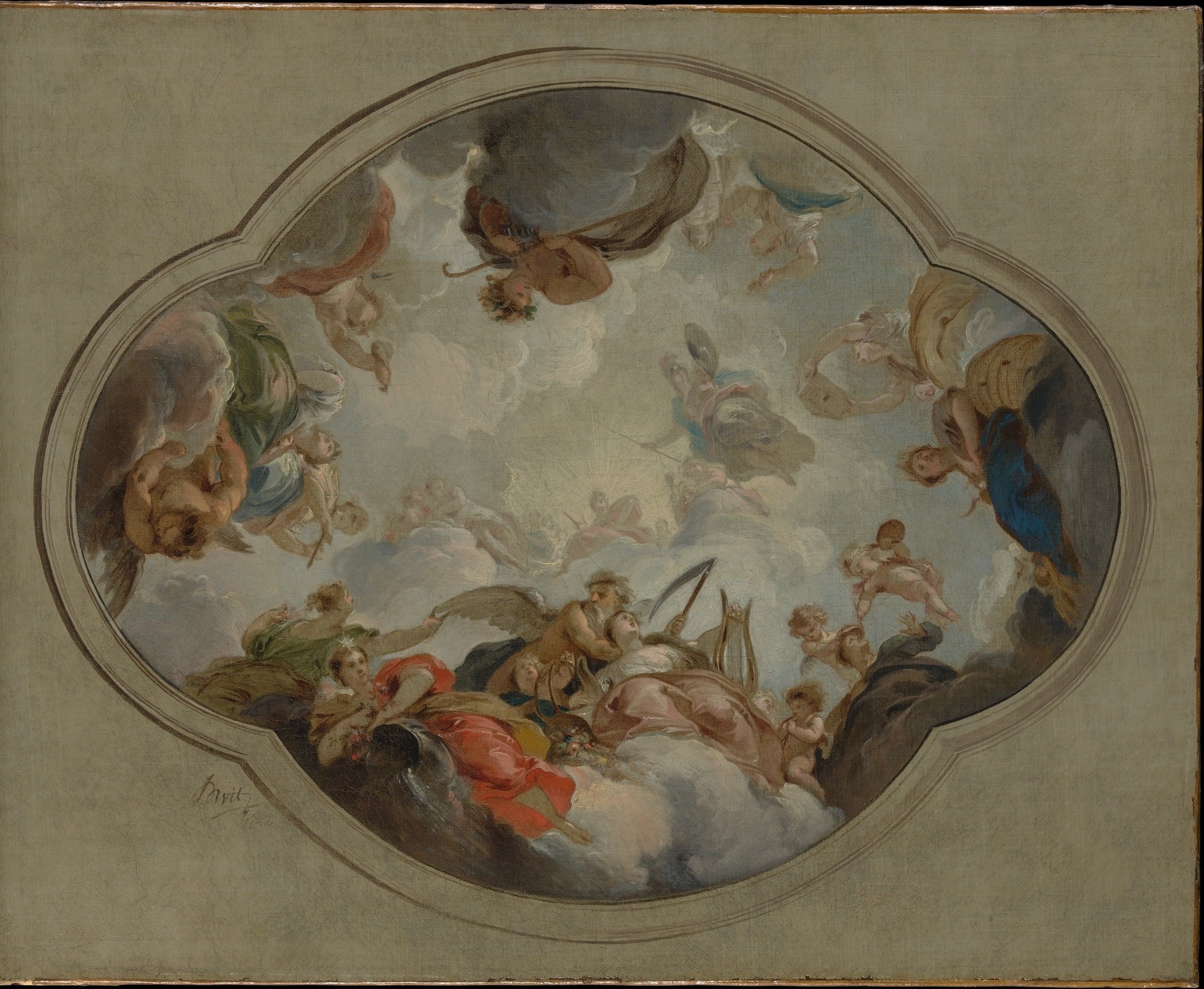
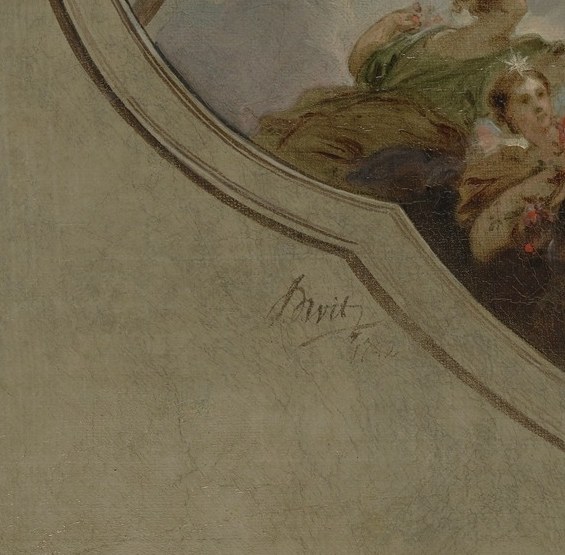
This is Jacob de Wit’s 'Allegory of the Arts', painted in 1742 and now in The Metropolitan Museum of Art. It is not a conventional easel picture. It is a domestic ceiling painting, meant to be installed horizontally over your head, transforming a flat plaster ceiling into a bright, open sky full of floating putti.
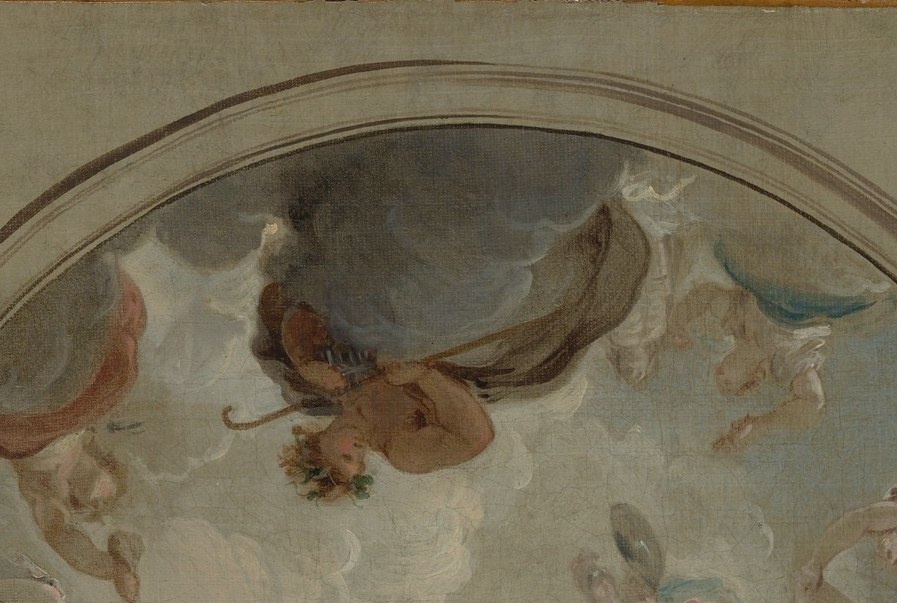
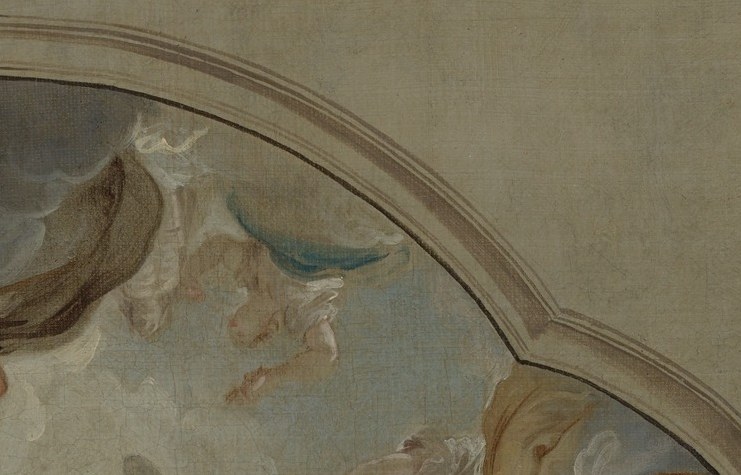
Look at the painted oval frame. On a real ceiling, this trompe-l'oeil border would read as a carved oculus opening to the heavens. The figures are all foreshortened from below: their feet hang closest to you, their heads recede upward into the cloud. De Wit positions the densest knot of action dead center, where you would crane your neck to see it.
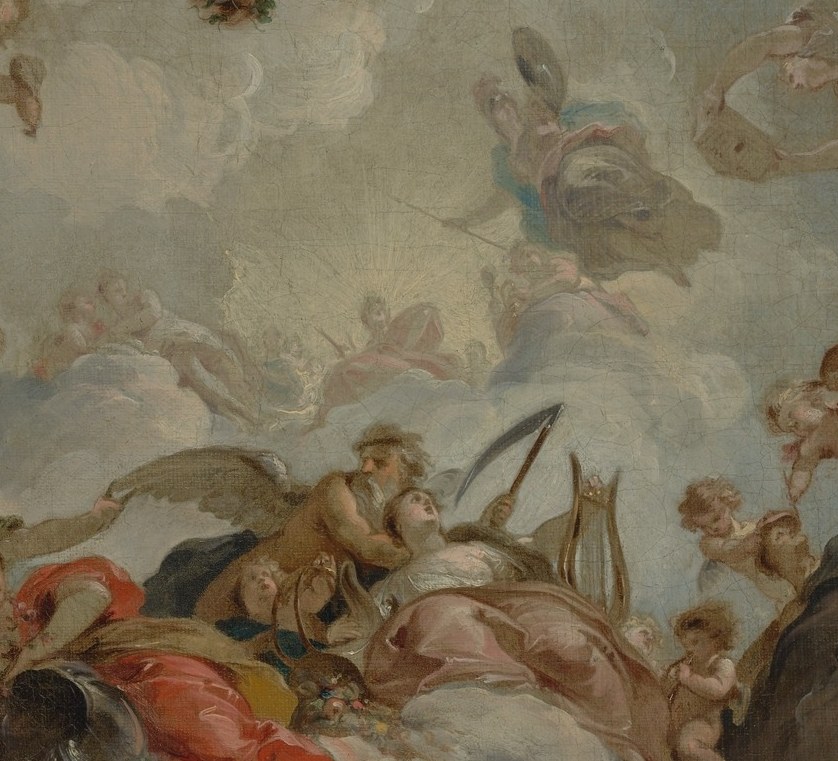
The showpiece is the cloud break in the upper center. De Wit thinned his oil paint to a translucent glaze at those bright edges, letting the white ground glow through to simulate direct sunlight. That small, soft passage of paint did the heaviest lifting: it convinced the eye that a solid roof had dissolved into moving air.
Jacob de Wit was Amsterdam’s master of painted ceilings for private homes, a decorator who could sell the sky by the square foot. This work still floats in its own illusion, even on a vertical museum wall.
Details
Transcript
It looks like an ordinary oval painting of cherubs in a cloud. But the oval border is painted. The canvas itself is shaped like one. De Wit designed this to be mounted flat on a ceiling, looking directly up. So every figure is foreshortened from below. Their feet hang nearer to you. The real trick is the light. Look at the gap between the figures. De Wit dissolved the oil paint into the thinnest glaze here, mimicking a window to the sun. On a ceiling, this burst of light looked like a real hole in the roof. The citizens of Amsterdam paid him to put the sky in their parlors.