Houses in a Village by Eduard Karsen
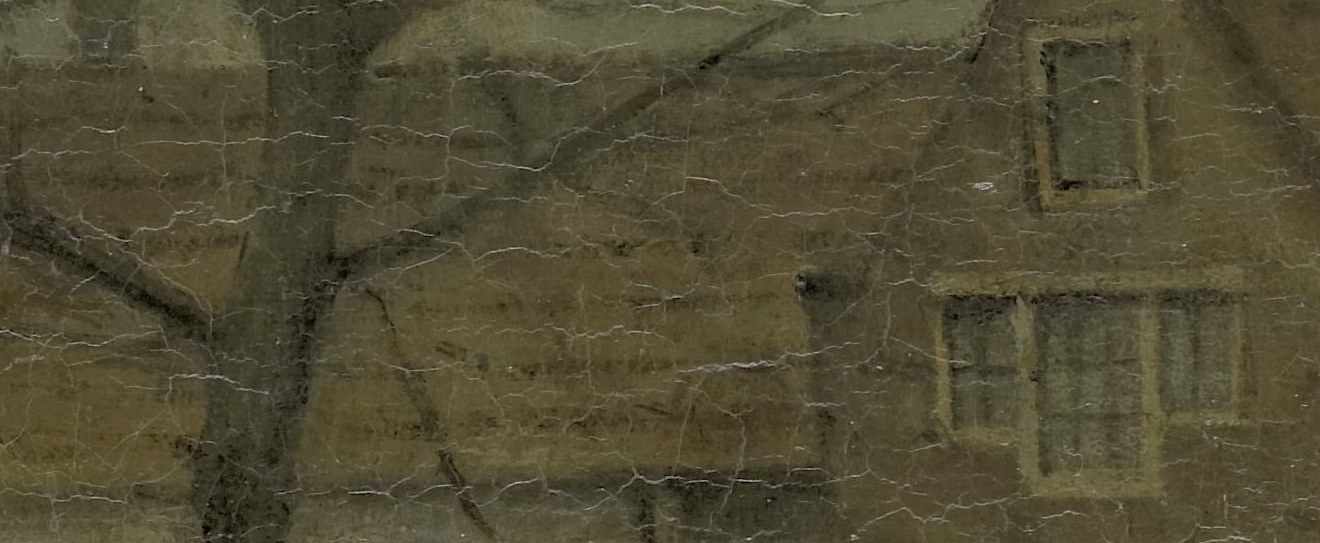
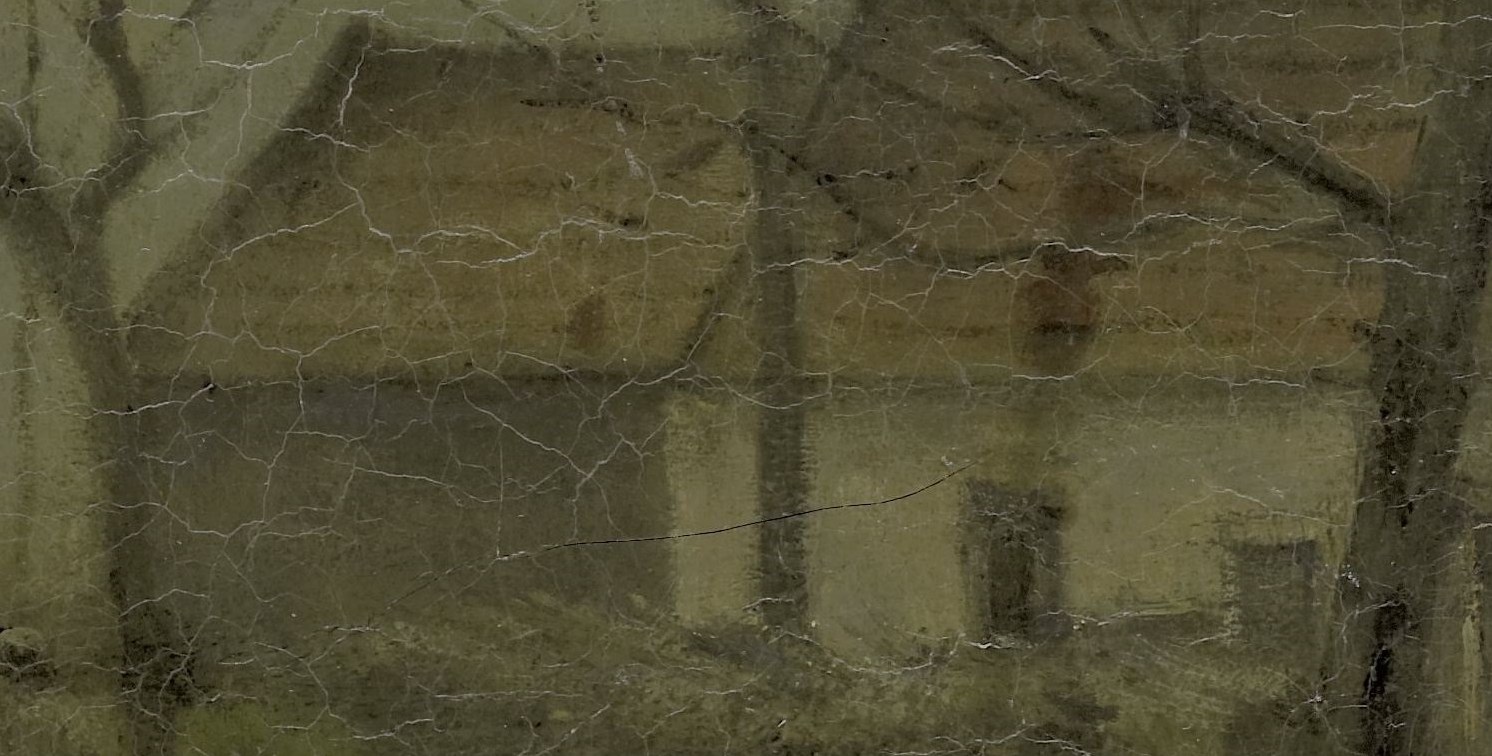
Eduard Karsen's 1898 oil painting, *Houses in a Village*, held at the Rijksmuseum, masterfully employs thin, translucent layers of oil paint to create a calm, dreamlike atmosphere.
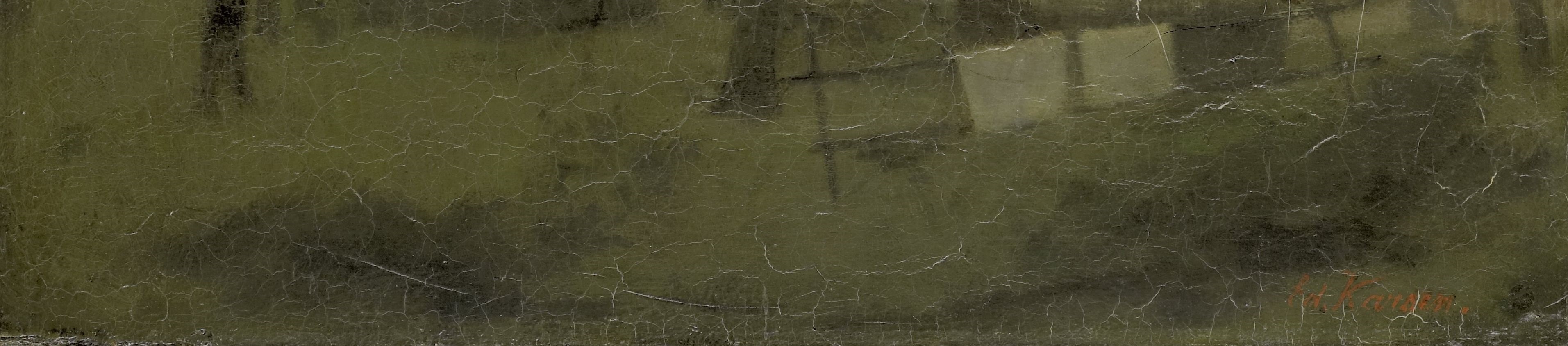
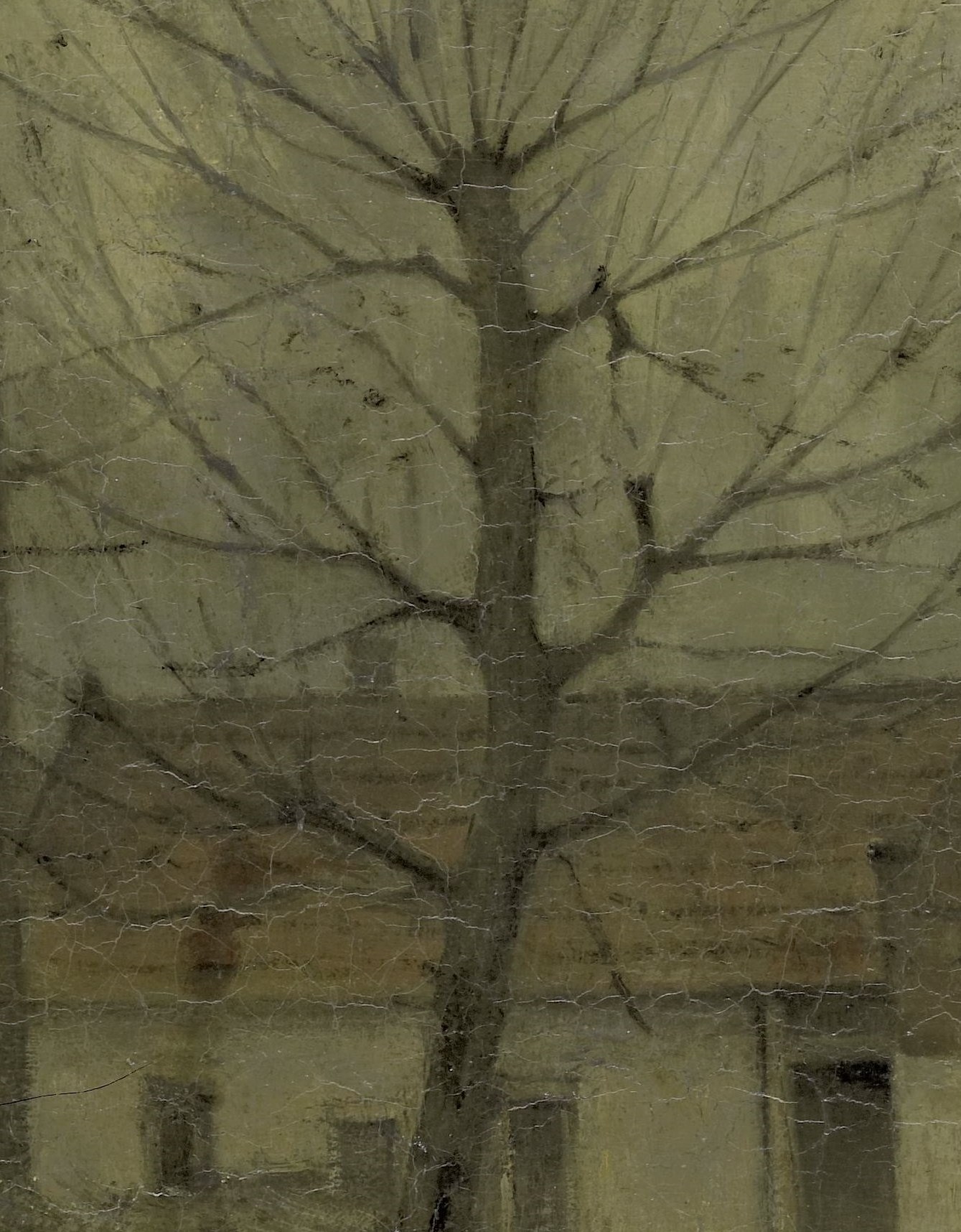
Notice the textured passage of muted green and brown in the foreground, achieved through broken, rapid brushstrokes. Then, observe the intricate network of bare branches of the central tree, silhouetted against the muted sky, also rendered with light, quick touches.
Karsen, a Dutch Post-Impressionist associated with the "Tachtigers" literary movement, was known for these moody rural scenes. His technique, utilizing glazing, allowed him to blend tones softly, conveying a sense of mist or early evening light rather than sharp realism.
The painting reflects the introspective and emotive expression favored during its time, offering a quiet moment in a small settlement. What details do you find most striking?
Details
Transcript
This painter was known for quiet, moody village scenes. See how he captures the rough ground with broken brushstrokes. He built up thin layers of oil paint, almost translucent. That technique gives this painting its calm, dreamlike feel. And look at the delicate branches, against a muted sky. It's all created with light, rapid brushwork, not sharp lines.