Nakhtamun's Funeral Procession, Tomb of Nakhtamun by Nina M. Davies
This is Nina M. Davies's illustration *Nakhtamun's Funeral Procession, Tomb of Nakhtamun* (c. 1250 BCE), held by The Metropolitan Museum of Art. It documents an ancient Egyptian tomb painting, revealing how funerary processions functioned as complex ritual performances.
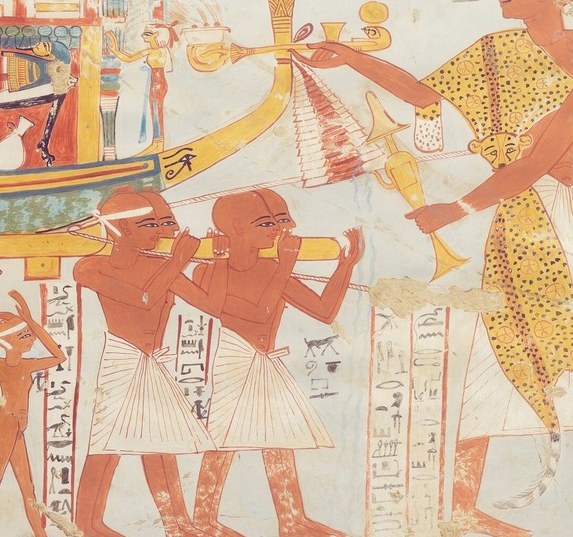
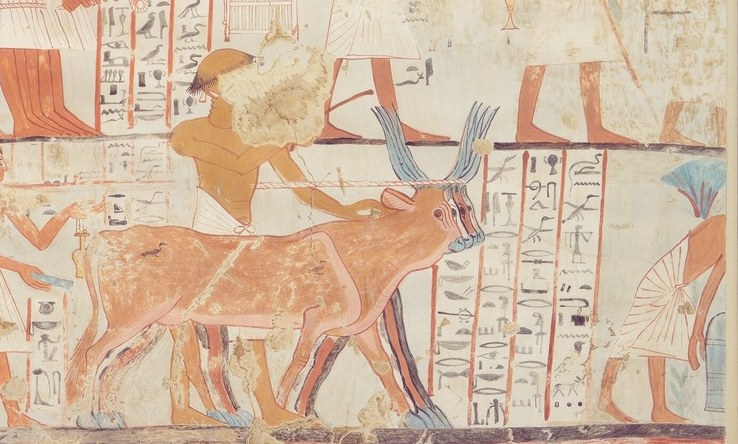
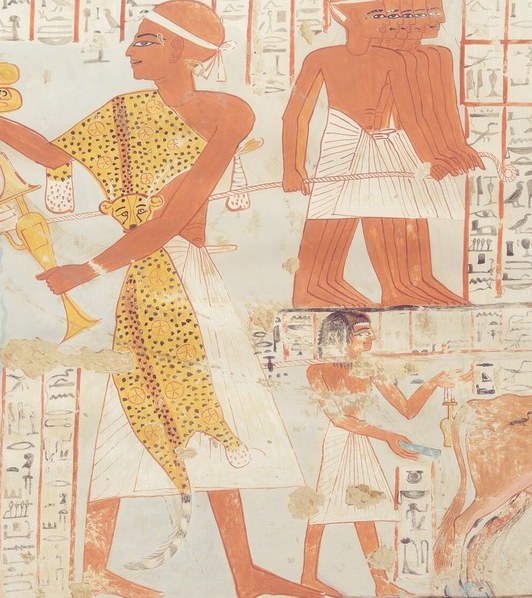
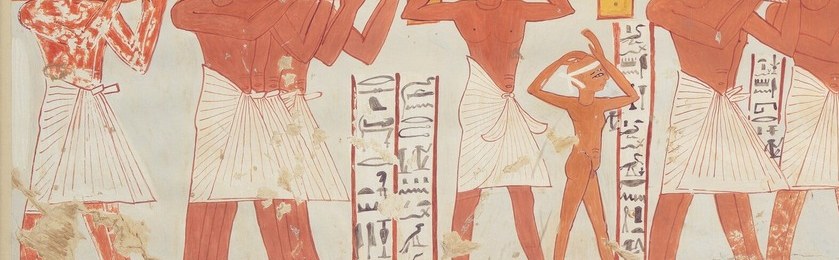
Look at the ornate funeral barque carrying the coffin, the hieroglyphs detailing Nakhtamun's status, and the mourning women performing their lament. The cattle and offerings signify wealth and rank, while the barely visible notation at the edge holds a final dedication.
Nina M. Davies, an Egyptologist and illustrator, created these meticulous copies in the early to mid-twentieth century with her husband Norman. Their work preserved fragile images of ancient Egyptian art for scholarly study, capturing details like the vibrant colors of the boat's hull that are now lost to time.
Each element within the scene is a coded message. Together, they reconstruct Nakhtamun's journey and status in the afterlife.
Details

Transcript
This boat carries the coffin and the deceased. Hieroglyphs above state Nakhtamun's titles and rites. Mourning women perform grief as required liturgy. Oxen for sacrifice proclaimed the deceased's wealth. Each offering item indexes the deceased's rank. Davies's copy shows original colors now lost. The procession moves: an action rare in Egyptian art. This detail at the edge is a dedicatory formula.