Rainy Day in Camp by Winslow Homer (American, 1836–1910)
Rainy Day in Camp, painted in 1871, is Winslow Homer's quiet masterpiece about the boredom of war. The scene shows Union soldiers huddled in the mud, waiting out a rain shower, and the oppressive stillness is almost tangible.
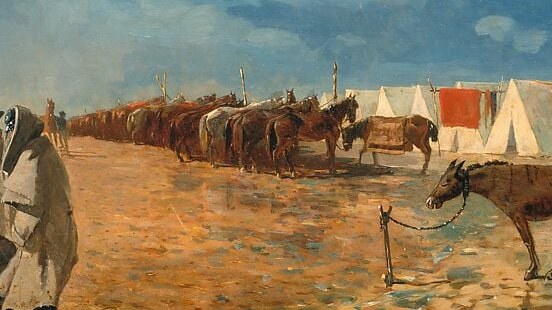
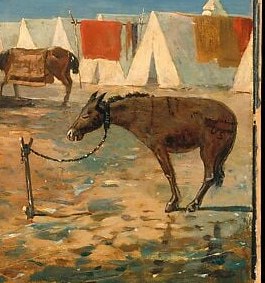
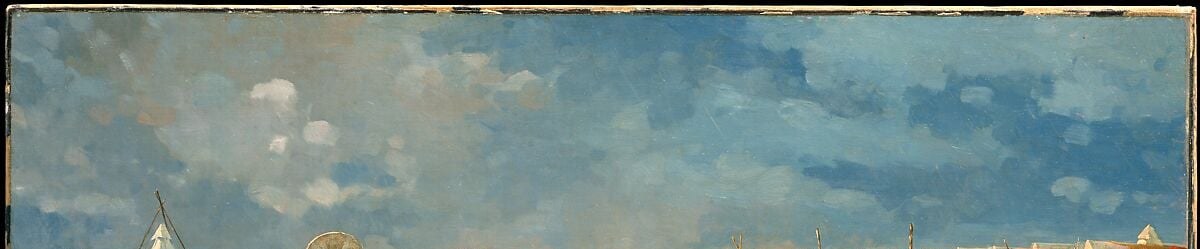
Most attention goes to the foreground huddle, but the real reward lies in the details beyond them. Look past the bright tents and the card players. Homer populated the margins of the camp with tiny figures walking between tent rows and supply wagons sitting idle at the far right edge, revealing the true scale of the encampment.
The painting was created after the war, based on sketches Homer made while embedded as an artist-correspondent for Harper's Weekly. He was largely self-taught and chose to document not the heroism of battle but the mundane, rain-soaked endurance of soldiers in the field, a perspective that challenged traditional war imagery.
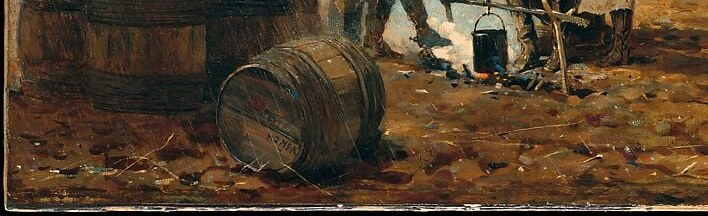
Next time you see mud in a painting, look at how the artist uses it. In this case, the wet, trampled ground is the emotional center, as heavy and real as the overcast sky.
Details
Transcript
They look stuck in a muddy, boring afternoon. This was the reality of Civil War life: endless waiting. Homer painted this in 1871, from sketches he made at the front. He hides the real story of the camp in the background. Between the distant tents, tiny figures are walking. And at the far right, supply wagons sit parked and waiting, just like the men. A single foreground detail anchors it all: the wet, trampled earth.