Wedding of Prince Jérôme Bonaparte and Princess Frédérique-Catherine of Wurtemberg, August 22, 1807 by Jean Baptiste Regnault
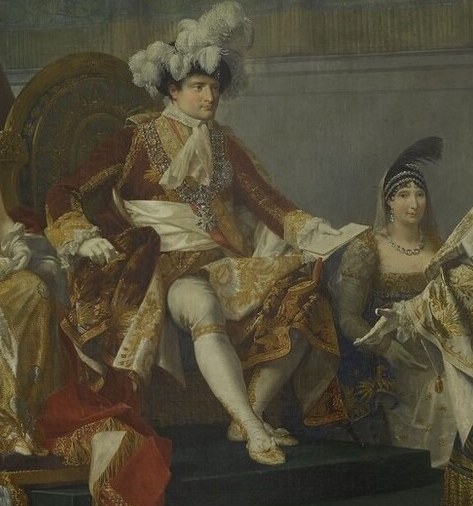
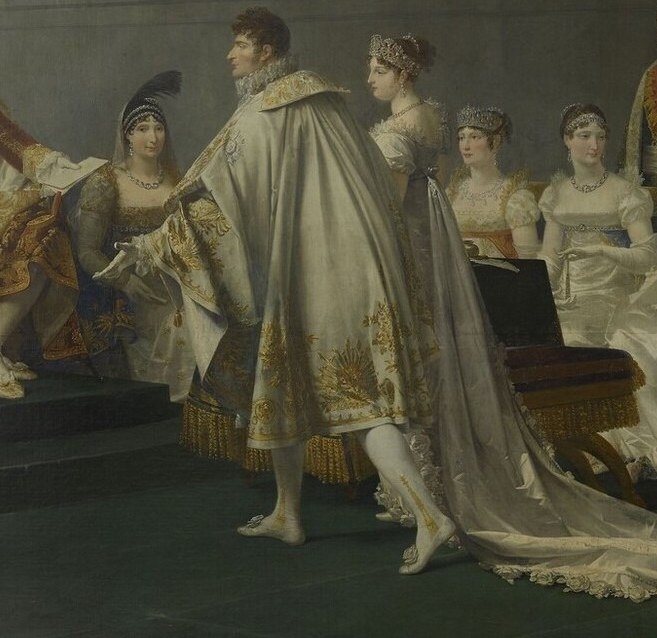
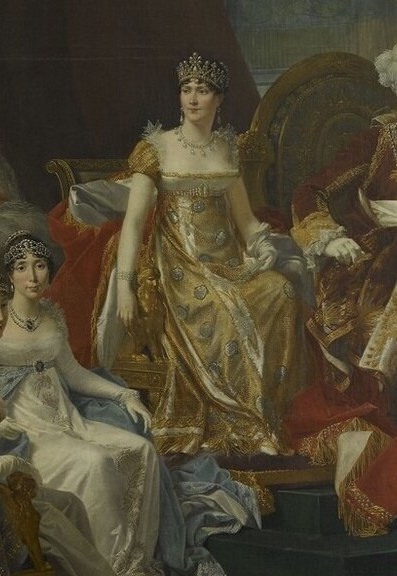
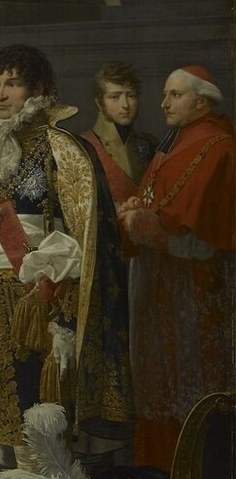
This painting depicts the civil marriage of Prince Jérôme Bonaparte and Princess Frédérique-Catherine of Wurtemberg on August 22, 1807, a dynastic alliance crucial to Napoleon's imperial ambitions. Napoleon coerced his brother Jérôme to annul his prior marriage to Elizabeth Patterson, an American, to secure this politically advantageous union with the daughter of the King of Württemberg. The artwork captures the formality and significance of this strategic alliance, reinforcing French power in Europe. Look at Jérôme's hand reaching towards Catherine, a gesture symbolizing their union. The man in the white robe is a key dignitary, likely officiating the ceremony. Jérôme and Catharina ruled the Kingdom of Westphalia until Napoleon's downfall after the Battle of Leipzig, after which she followed him into exile.
This historical event and its portrayal highlight the complex interplay of personal relationships and political strategy during the Napoleonic era, where familial ties were instrumental in consolidating power and reshaping the European map.
Jean Baptiste Regnault's "The Wedding of Prince Jérôme Bonaparte and Princess Frédérique-Catherine of Wurtemberg" (c. 1807) is housed at the Palace of Versailles.
What does this forced marriage reveal about Napoleon's control over his family?
Details
Transcript
Napoleon forced his brother to annul his first marriage. This wedding was a political move for power. Look at the groom's hand reaching for his bride. His hand signifies their union and the formal act. Here is Prince Jérôme Bonaparte in regal attire. He now reigns over the Kingdom of Westphalia. The man in white robes is a key dignitary. They reigned until Napoleon's defeat at Leipzig.