A Bleaching Field by Jacob Maris
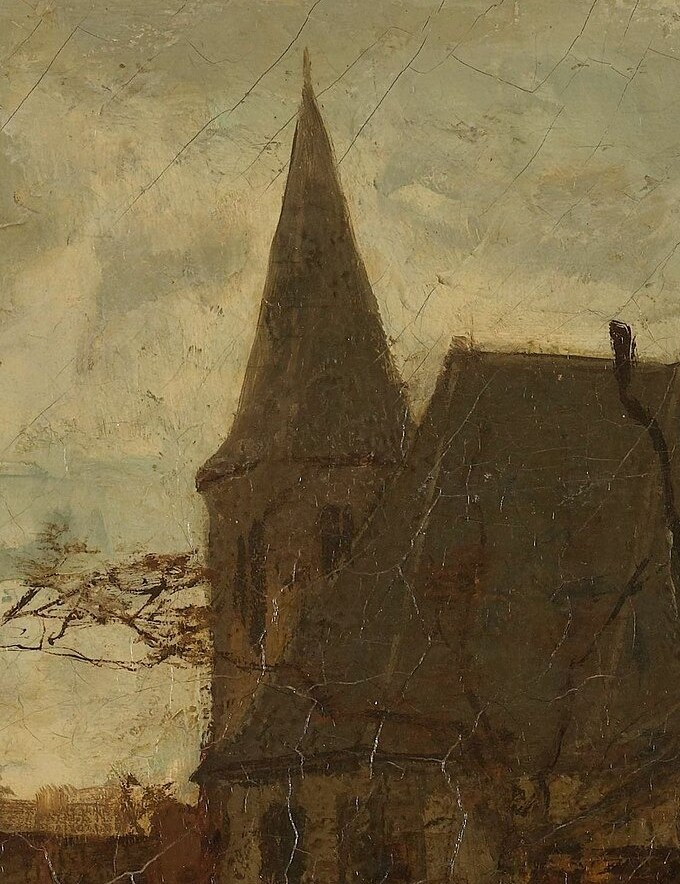
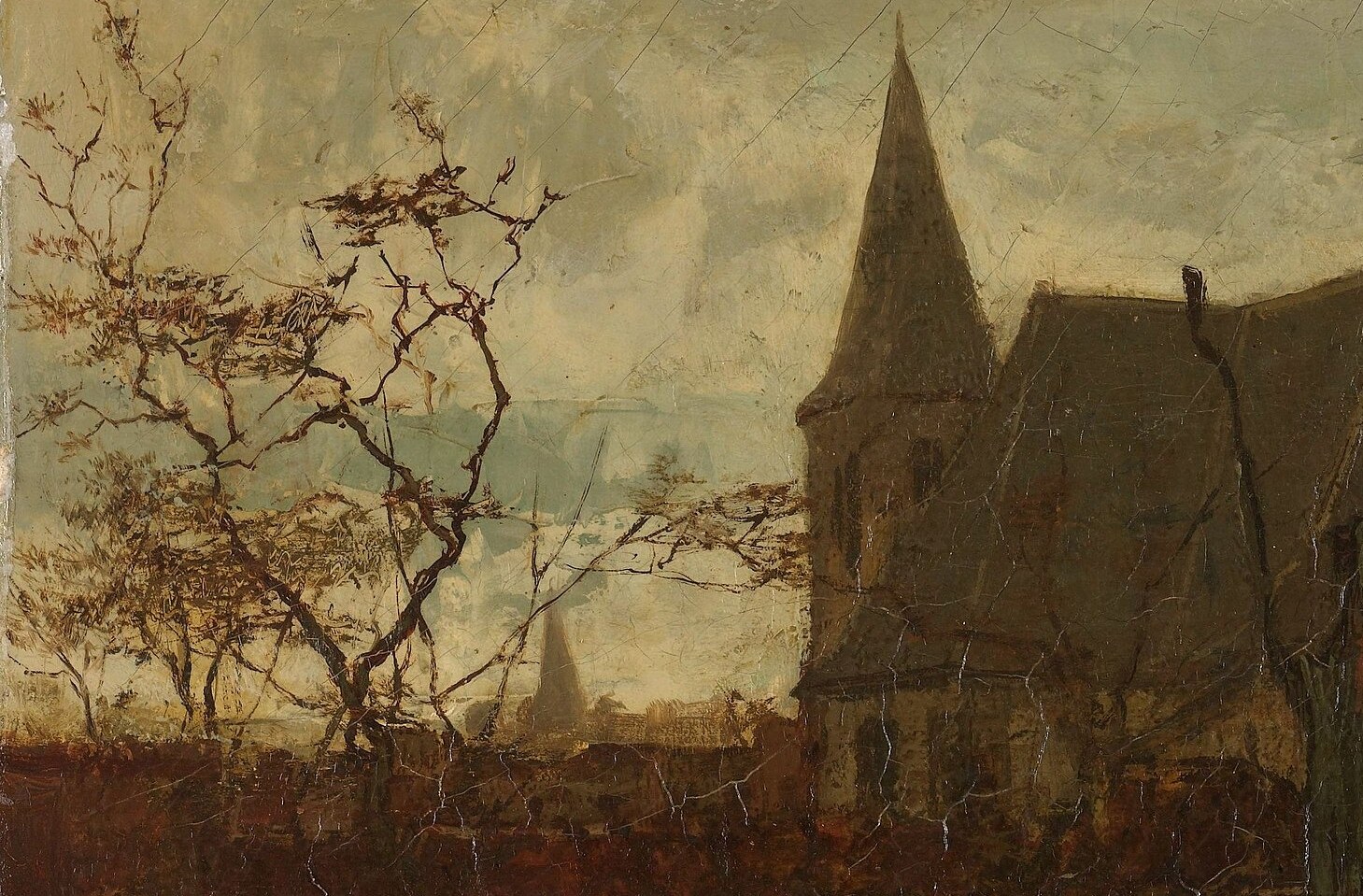
Jacob Maris's 'A Bleaching Field,' painted in 1870, is a quiet yet profound depiction of everyday life in rural Netherlands. This oil painting, part of the Rijksmuseum's collection, is a prime example of the Hague School's focus on realistic landscapes and atmospheric effects.
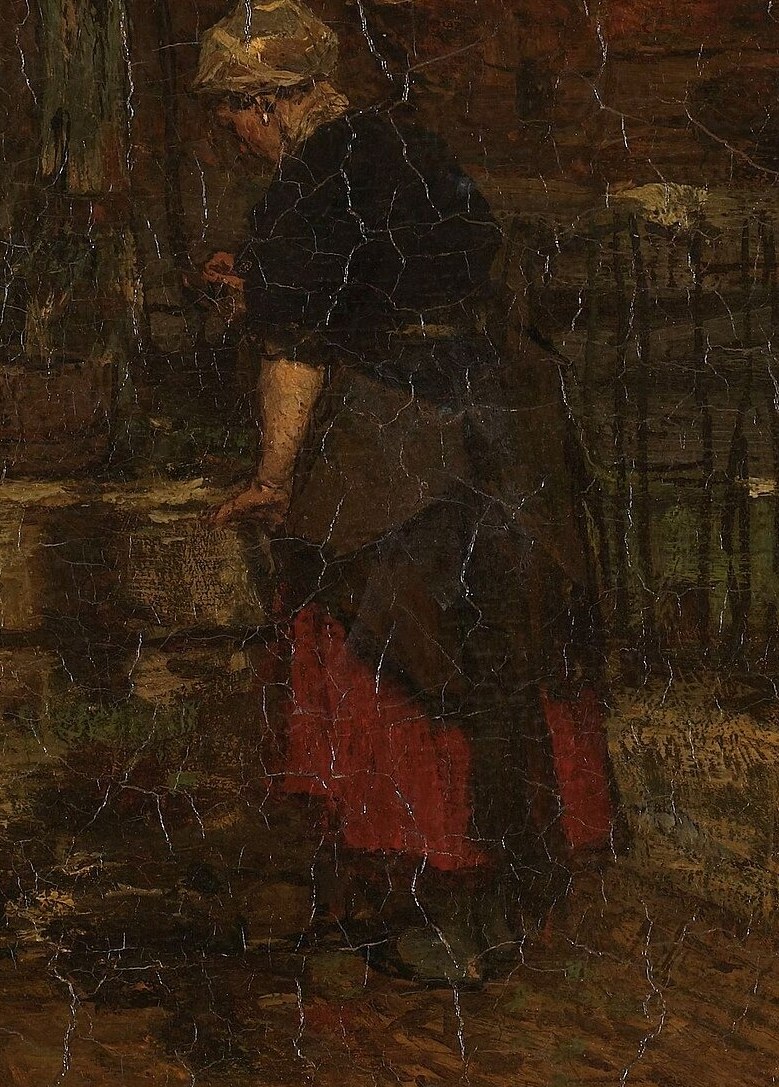
The painting draws you in with its muted tones and the striking red skirt of the woman in the foreground. But if you look closely, a second, almost ghost-like figure can be found in the distant background on the left, silently engaged in the same demanding work.
Maris, a leading figure of the Hague School, elevates this humble scene of a bleachfield, where laundry was spread to whiten in the sun, into a contemplative moment. His technique, with rough brushstrokes and earthy colors, creates a sense of authenticity and immediate presence, capturing the subtle nuances of light and atmosphere.
This painting invites us to appreciate the beauty and dignity in commonplace labor, often overlooked. What other hidden stories do you think landscapes tell?
Details
Transcript
This quiet landscape, painted in 1870, holds daily life. A woman in a red skirt works hard in the foreground. She's at a bleachfield, where laundry dried in the sun. Look closely at the distant background, to the left. Another faint figure works there, nearly hidden. This subtle detail reminds us of humble, everyday labor. The painter, Jacob Maris, signed his name here.