Ophelia by John Everett Millais
John Everett Millais's "Ophelia," painted between 1851 and 1852, is renowned for its lush natural landscape and the meticulous detail of its botanical elements. Now held at Tate Britain in London, the painting depicts a pivotal, tragic moment from Shakespeare's Hamlet.
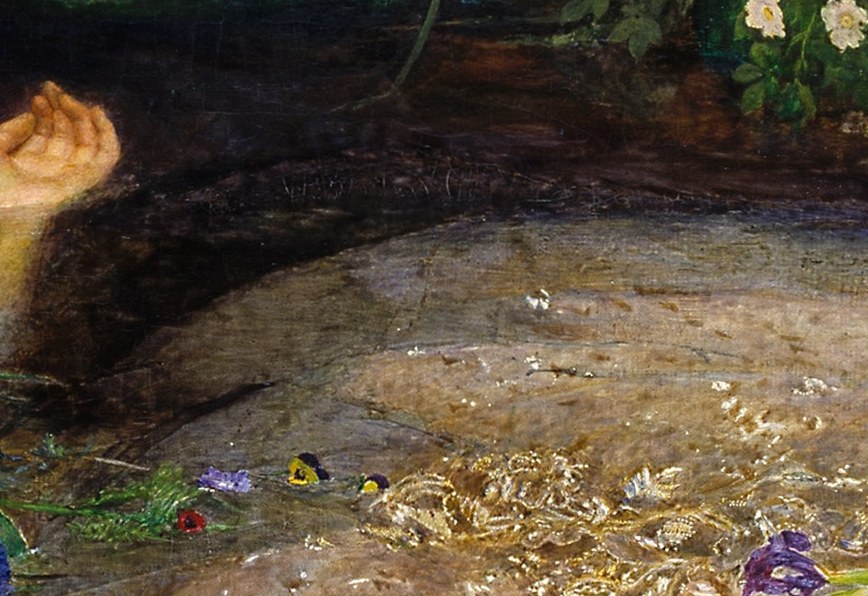
Look closely at the plants surrounding her; Millais rendered each with near-scientific accuracy. The delicate garland of flowers in her hair symbolizes innocence, while the vibrant purple foxgloves can represent poison or deception. A single red poppy by the water's edge often signifies death and remembrance.
Millais, a founder of the Pre-Raphaelite Brotherhood, chose to capture Ophelia's drowning moment, meticulously integrating the flora to deepen the narrative. The model for Ophelia was Elizabeth Siddal, a fellow Pre-Raphaelite artist.
Initially met with mixed reactions, "Ophelia" has become one of the most iconic works of the mid-nineteenth century, influencing countless artists since. What other stories do you see hidden in the details?
Details
Transcript
This painting captures a tragic literary character. The artist rendered every plant with scientific precision. The flowers in her hair are symbols of innocence. These purple foxgloves can symbolize poison or deception. And this single red poppy often means death and remembrance. Each plant tells a part of her sorrowful story.