Virgin and Child by Peter Paul Rubens
Peter Paul Rubens painted this Virgin and Child in 1618, the same year his seven-year-old daughter Clara Serena died. It hangs now in the Metropolitan Museum of Art, a small, quiet panel in a career better known for massive altarpieces and diplomatic pageantry.
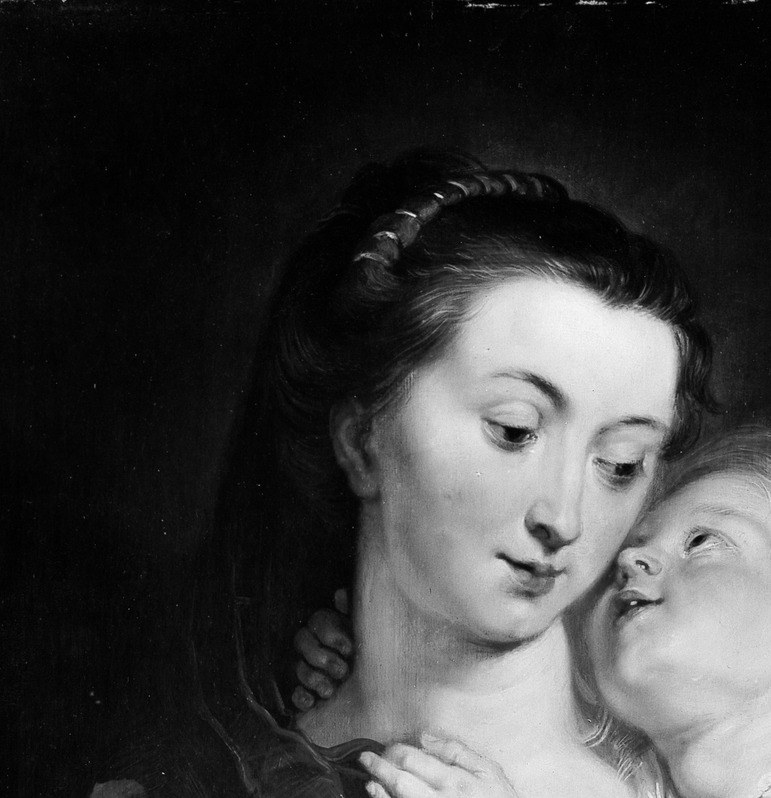
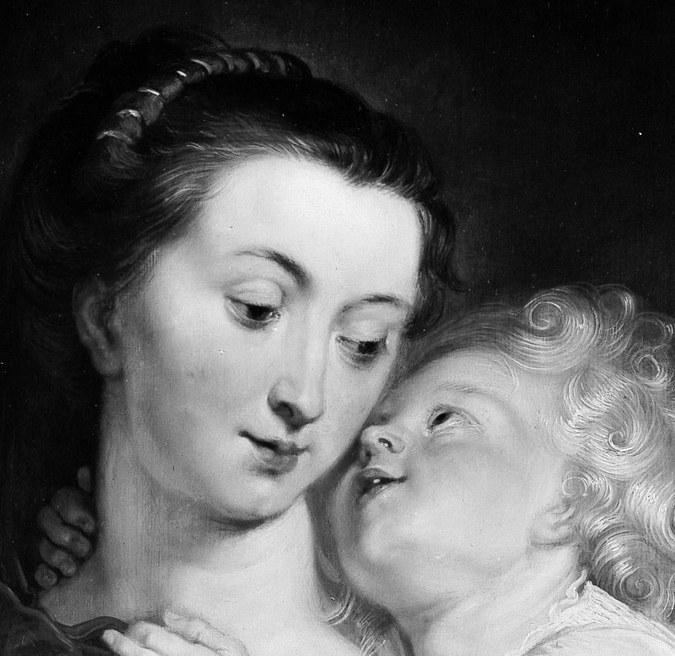
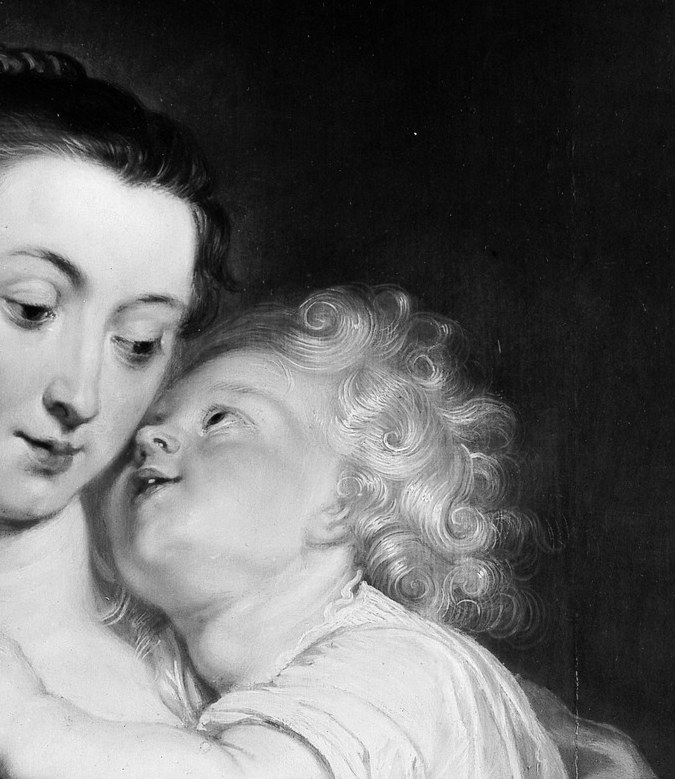
Look at the point where the Child's cheek meets the Virgin's. It is not a formal embrace. He nuzzles into her, cheek to cheek, in a gesture that feels less like a Renaissance devotional formula and more like a parent memorizing the weight and warmth of a living child. Her eyes are closed. She is not offering him to the viewer or gazing heavenward. She is entirely absorbed in the touch.
Rubens was a knight, a scholar, a diplomat trusted by two crowns, and the most sought-after painter in Europe. His workshop produced over a thousand works. But his private letters show a man who never recovered from the loss of his first daughter. After Clara's death, the physicality of his Madonnas changed. The flesh became softer, the embraces tighter, the children more achingly real.
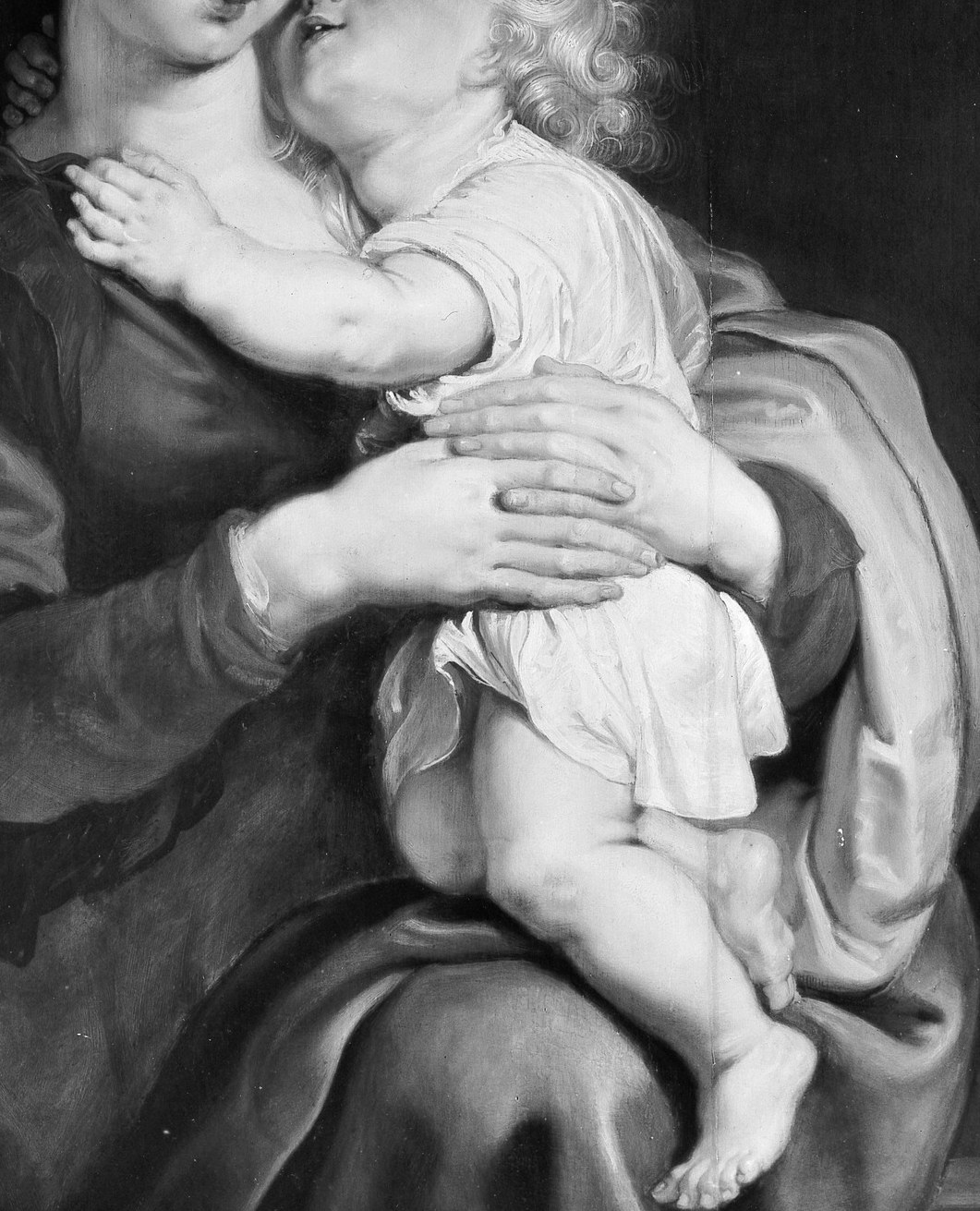
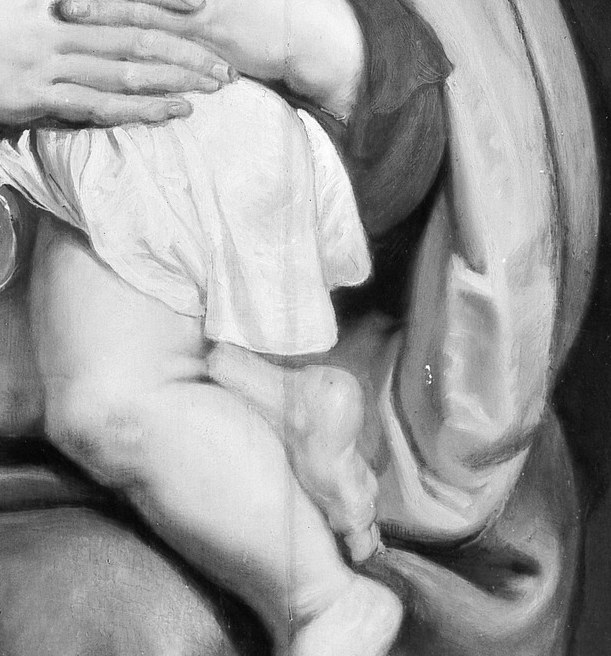
A detail worth your time: the Virgin's left hand, splayed open across the child's back. It is not a symbolic gesture. It is what a mother does to hold a small child close. A protective instinct, rendered in paint by a father who would have given anything for one more such moment.
Details
Transcript
He was a knight, a diplomat, and the most famous painter in Europe. But in 1618, his daughter Clara died. She was seven. He painted this the same year. The Child does not bless or lecture. He nuzzles her. Her eyes are closed. She is nowhere else. His whole body is soft, real infant weight. No symbol, just a child. Rubens called his children his greatest works. He never got past Clara's death.