Right and Left by Homer, Winslow
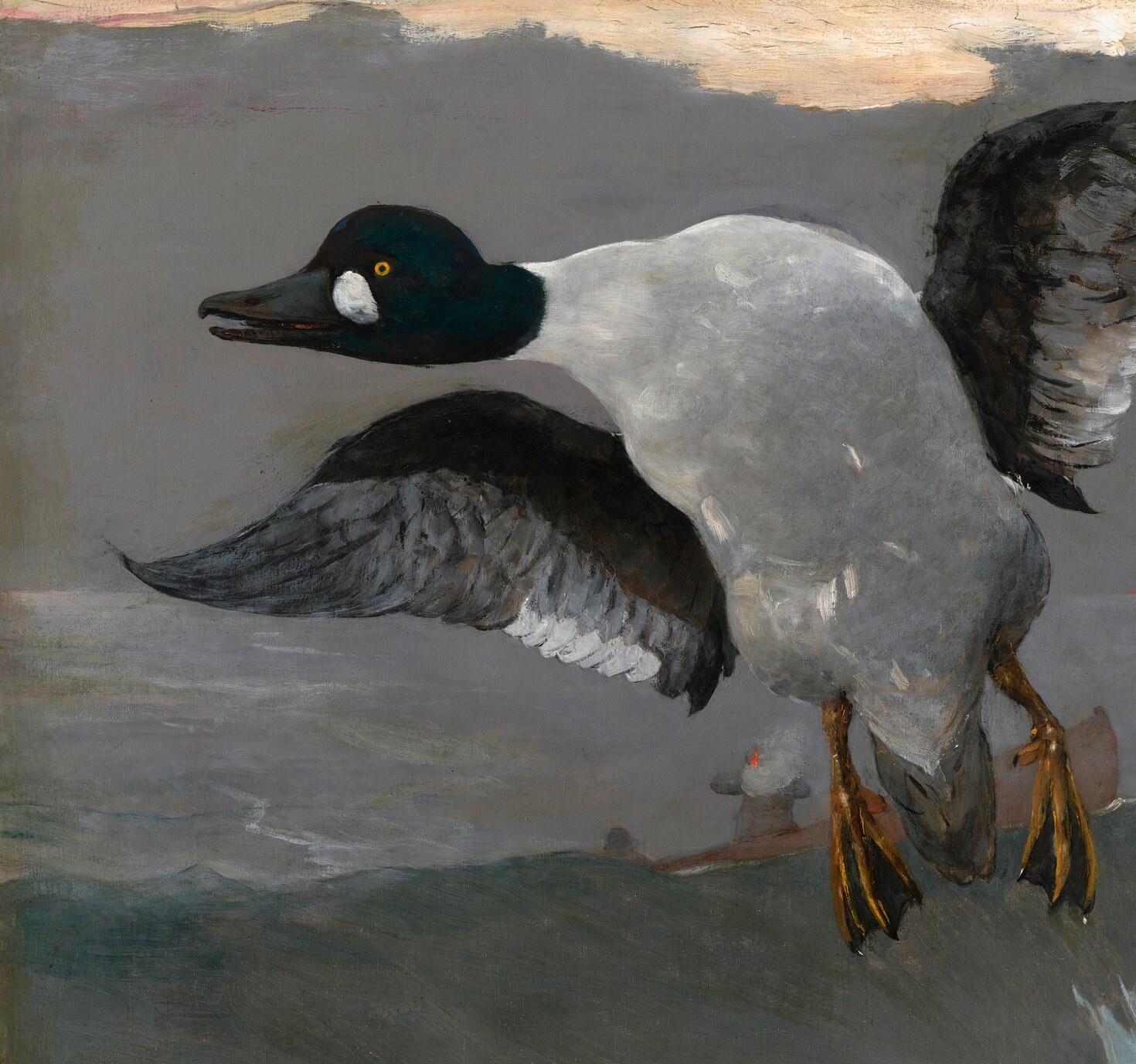
Right and Left is Winslow Homer's final painting of the hunt, completed in 1909 when the artist was seventy-three. He would die less than two years later, and this image, of two common goldeneye ducks struck by a shotgun blast, marks the end of a subject he had explored since his early days as an illustrator. It hangs in the National Gallery of Art in Washington, D.C.
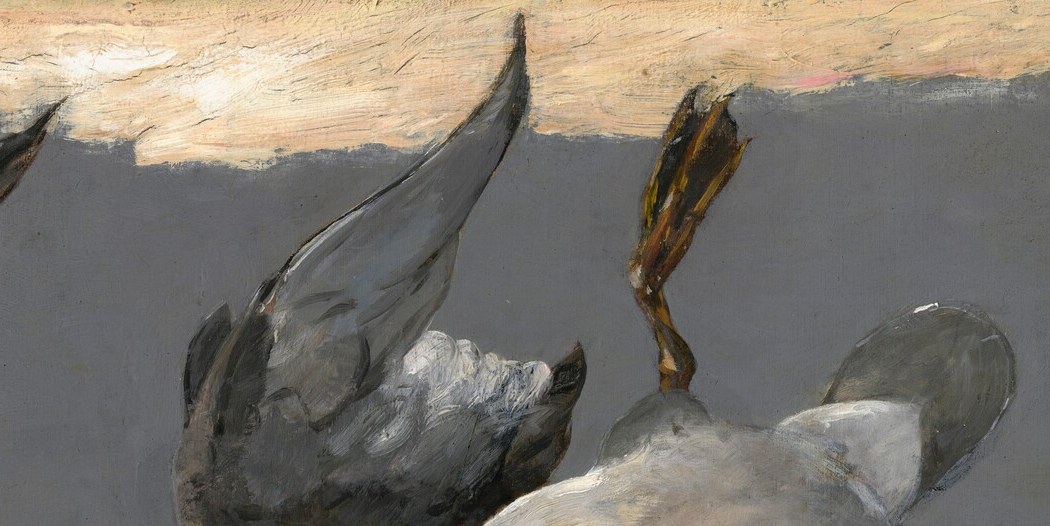
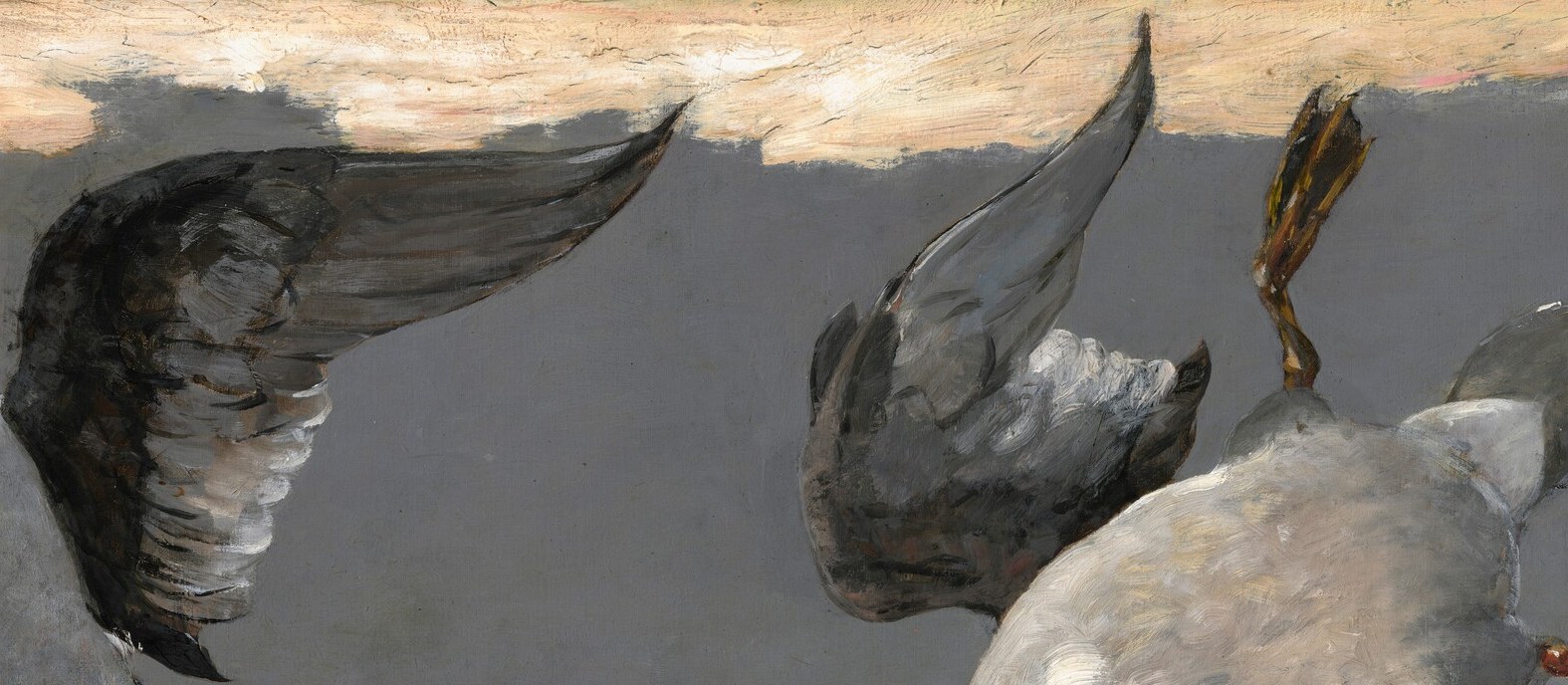
Look first at the left duck's dangling foot. A bird in flight retracts its legs instinctively; this one cannot. The limp, trailing foot is a small, precise biological fact that confirms death before the body even lands, and Homer, a lifelong observer of nature, would have known exactly what it meant. Above it, the second duck still has an alert eye, a split second from sharing the same fate.
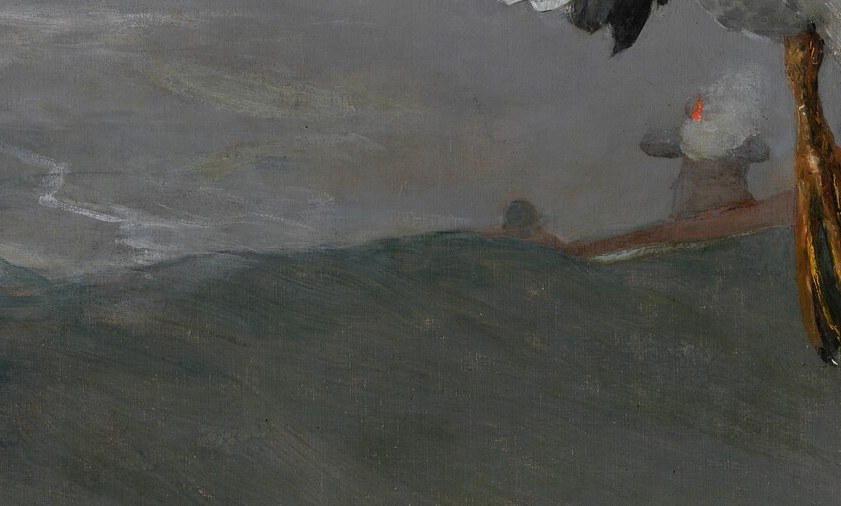
The composition is strikingly modern for 1909. The large flat panels of white wing, the featureless grey sky and the bold, almost abstract division of space recall Japanese woodblock prints. Homer consciously referenced these as well as John James Audubon's engravings. There is no hunter visible, only a faint puff on the far left that might be gun smoke; his absence makes the violence more abstract and more haunting.
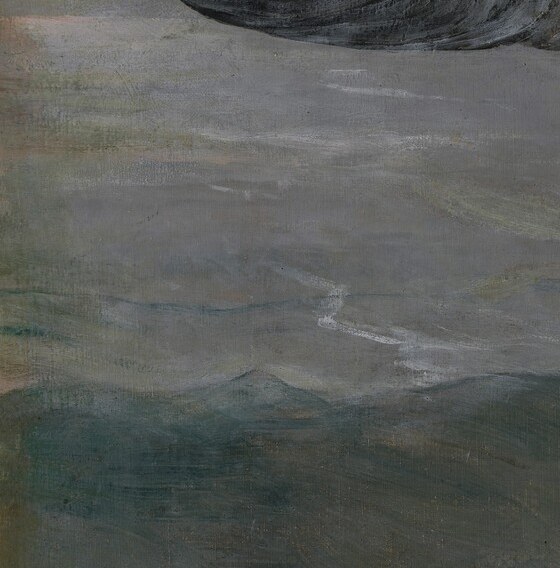
Homer spent his final years in a coastal studio in Maine, painting the sea in increasingly stormy, lonely moods. This work places two vulnerable creatures between a blank sky and a churning sea with no escape in any direction.
What do you see in that last alert eye?
Details
Transcript
Two ducks, a shotgun blast, and a split second frozen in paint. Winslow Homer was seventy-three. This was his last great painting. The duck on the left is already gone. Look at its foot. A bird in flight retracts its feet. This one hangs limp. Now look at its companion. The eye is still alert. The broad white wing panel echoes Audubon's engravings and Japanese woodblocks. He never shows the hunter. Only the kill and the cold sea.