Queen's Gate at Aigues-Mortes by Frédéric Bazille
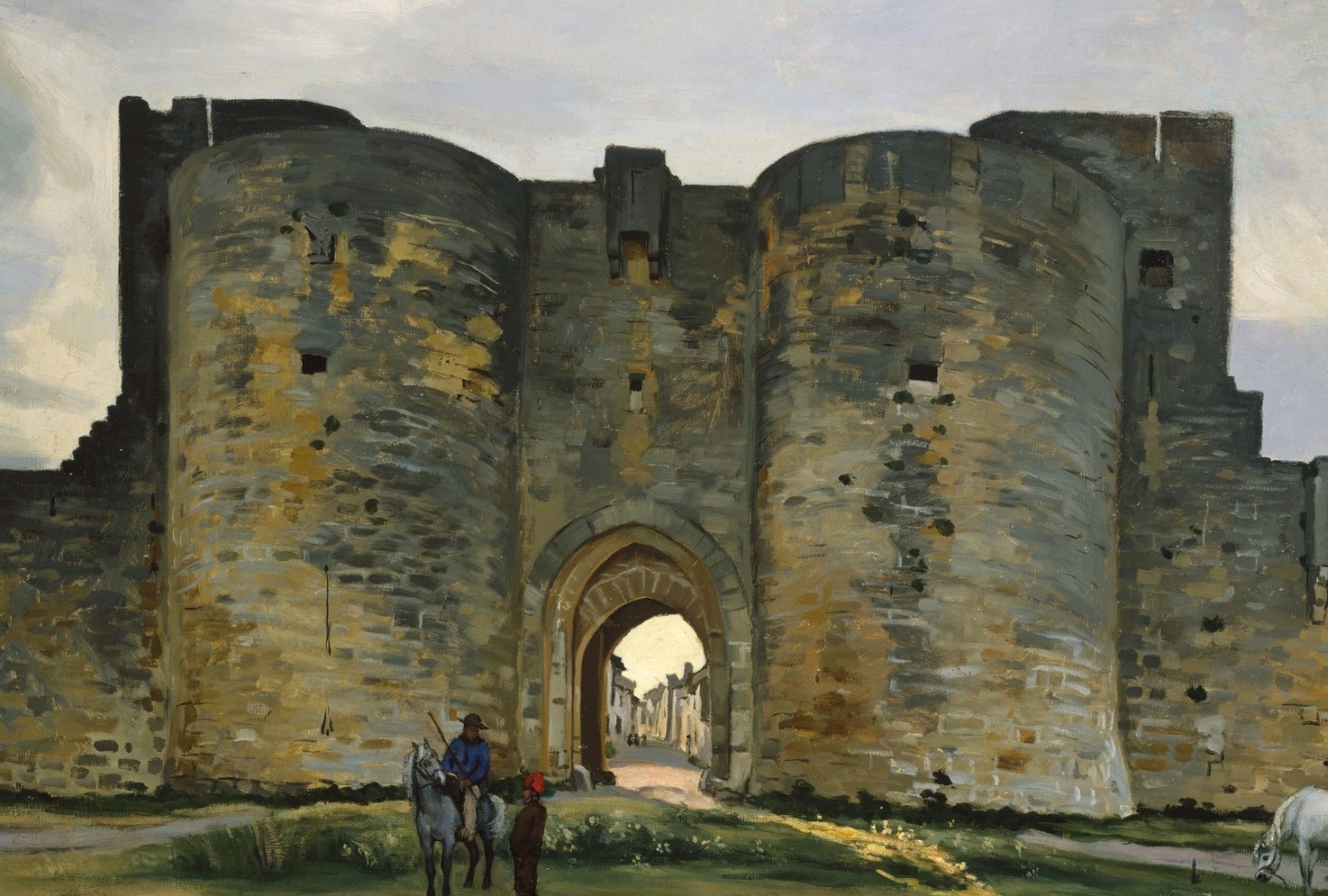
Frédéric Bazille, a promising French Impressionist painter, created "Queen's Gate at Aigues-Mortes" in 1867. This oil painting, held at The Metropolitan Museum of Art, captures a tranquil scene of an ancient city gate, hinting at the life within its walls. It showcases his early exploration of landscape themes with visible, textured brushstrokes.
Look closely at the figures resting near the stream or the distant village through the archway. Bazille, a contemporary of Monet and Renoir, was known for integrating figures into his plein air landscapes.
Tragically, Bazille's career was cut short. He was killed in action during the Franco-Prussian War in November 1870, just before his 29th birthday. His contributions to the nascent Impressionist movement were largely recognized posthumously, leaving us to wonder what more he might have achieved.
His art serves as a poignant reminder of the talent lost to conflict. What do you notice first in this painting?
Details
Transcript
This peaceful scene shows a historic French city gate. The painter was only 25 when he made this work in 1867. He was a key figure in the early Impressionist movement. He died just three years later, in the Franco-Prussian War. He was killed in battle, just days before his 29th birthday. His art was recognized only after his untimely death.