Mississippi Boatman by Bingham, George Caleb
This quiet portrait once served as a decoy. George Caleb Bingham's Mississippi Boatman (1850), now in a regional museum collection, hid a family's valuables during the Civil War.
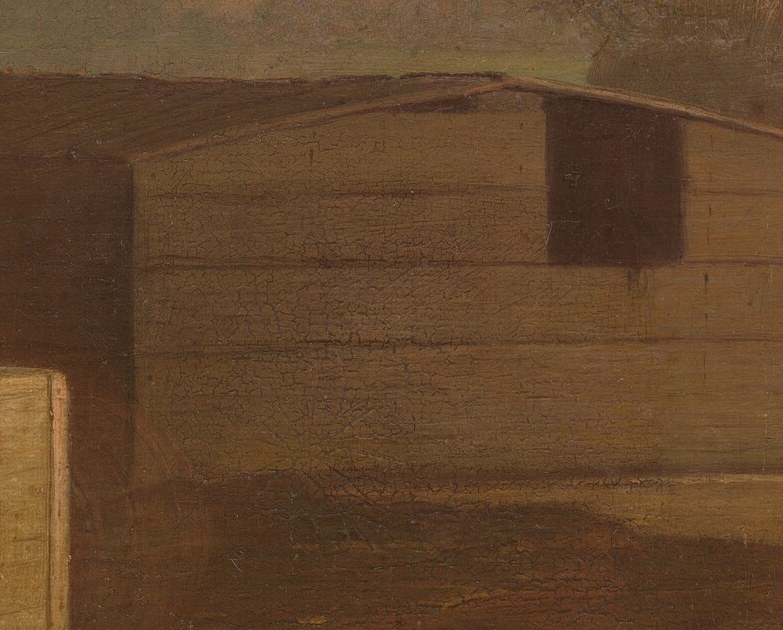
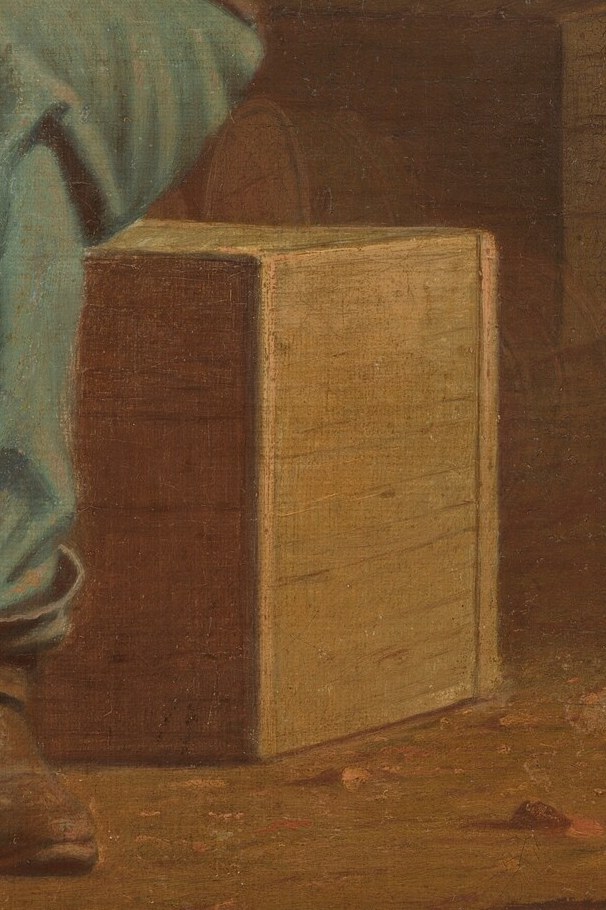
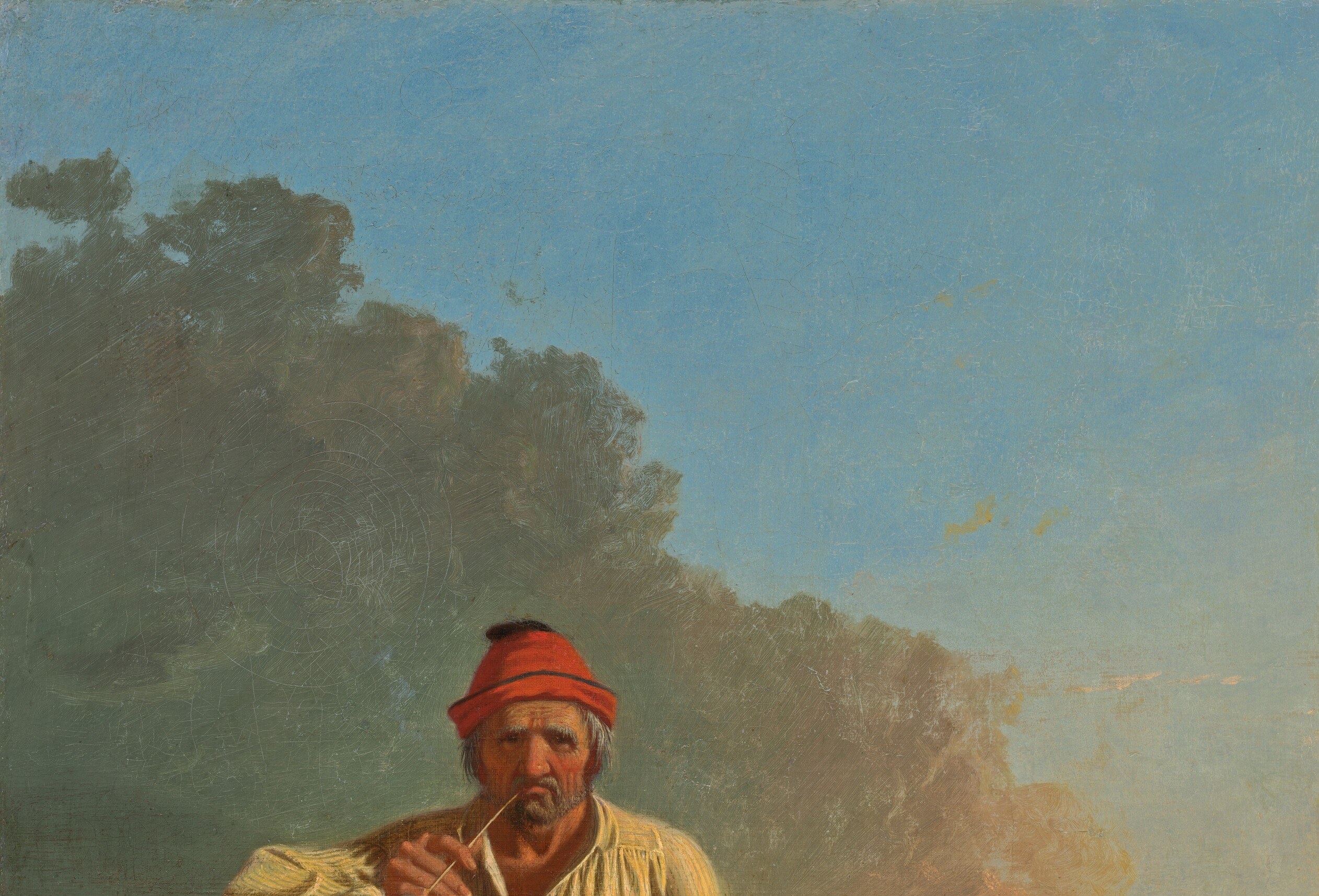
Bingham was known as the painter of Missouri river life. Here, a solitary boatman in a worn yellow shirt and a bright red cap sits on a wooden crate, his pipe in mouth. Barrels and a hazy river landscape surround him. It is an image of everyday frontier labor, direct and unidealized.
The painting's owner feared that approaching armies might ransack his home. So he cut a niche into the wall and placed his silver and cash inside. The canvas, still in its frame, hung over the hollow. When soldiers searched the house, the painting looked like nothing more than a simple genre scene. They passed by it repeatedly, and the valuables went untouched.
A portrait made to celebrate ordinary life ended up serving an extraordinary purpose. What would you risk hiding behind a painting?
Details
Transcript
This painting vanished during the Civil War. Its owner feared advancing armies would loot his home. Look at the boatman's tired face. Behind that face, the owner hid his valuables. He hollowed out a wall niche behind the canvas. The frame went back on. It looked like any other painting. When soldiers searched, they walked past a dozen times. This boatman saved the family's silver and cash.